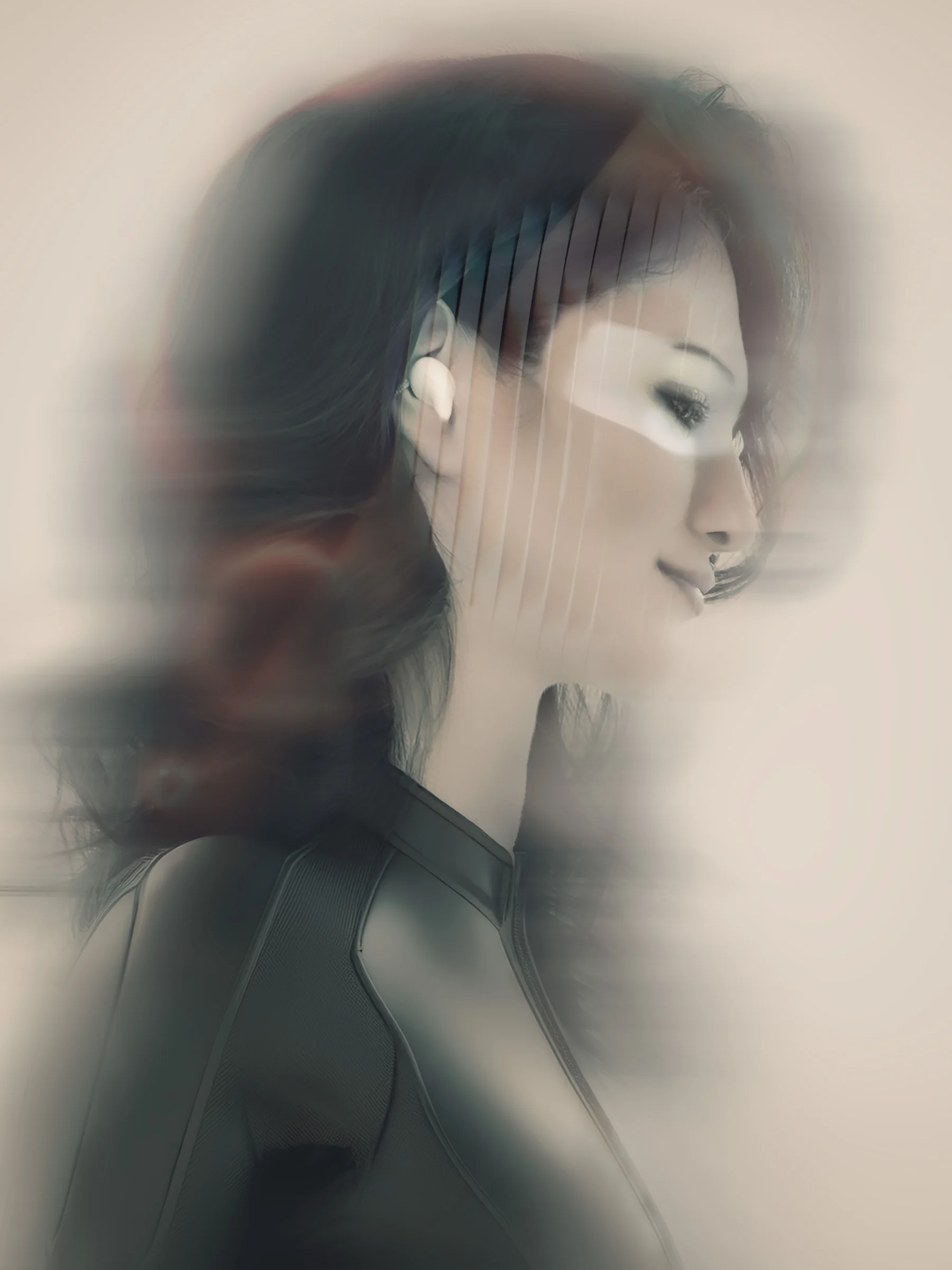
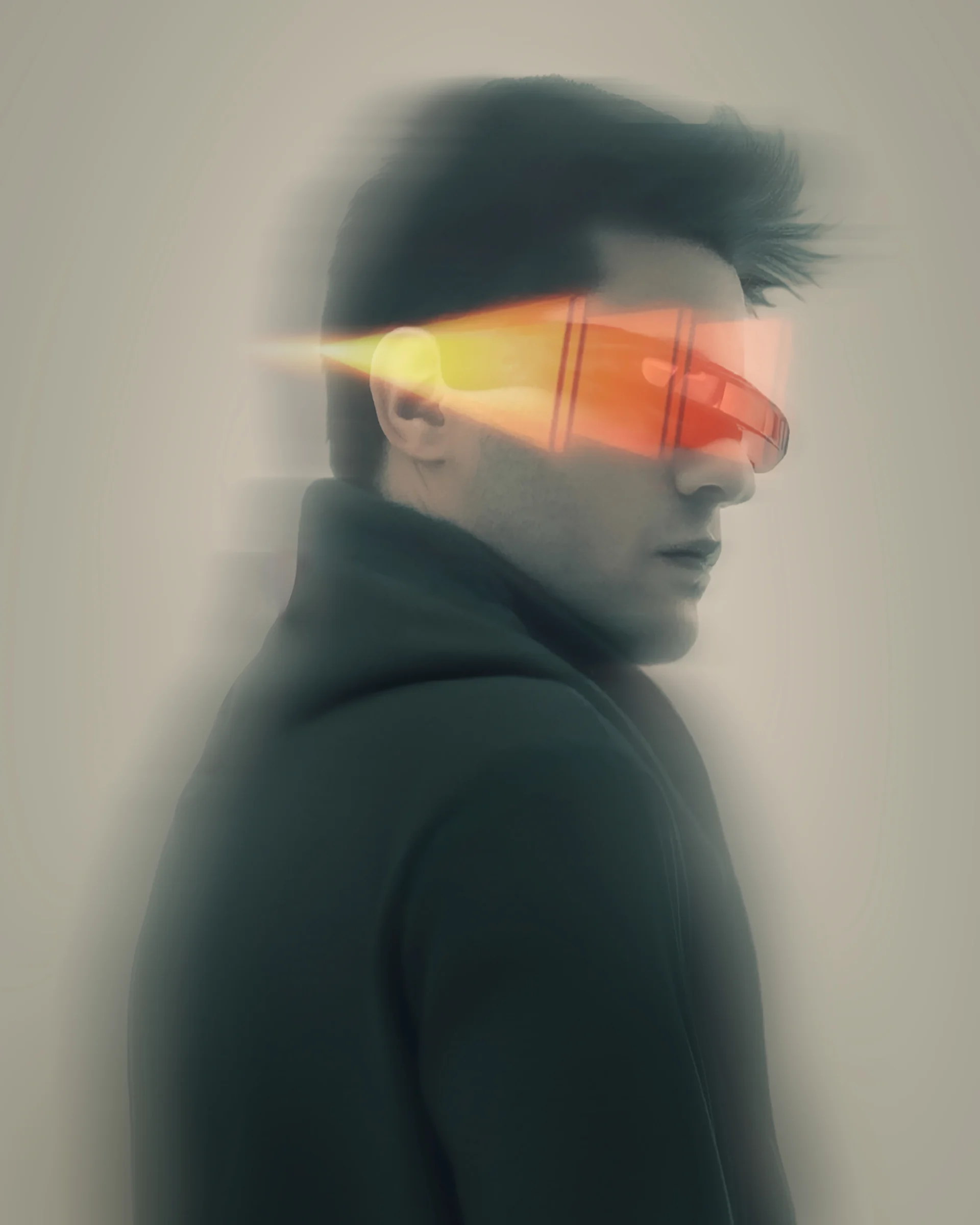
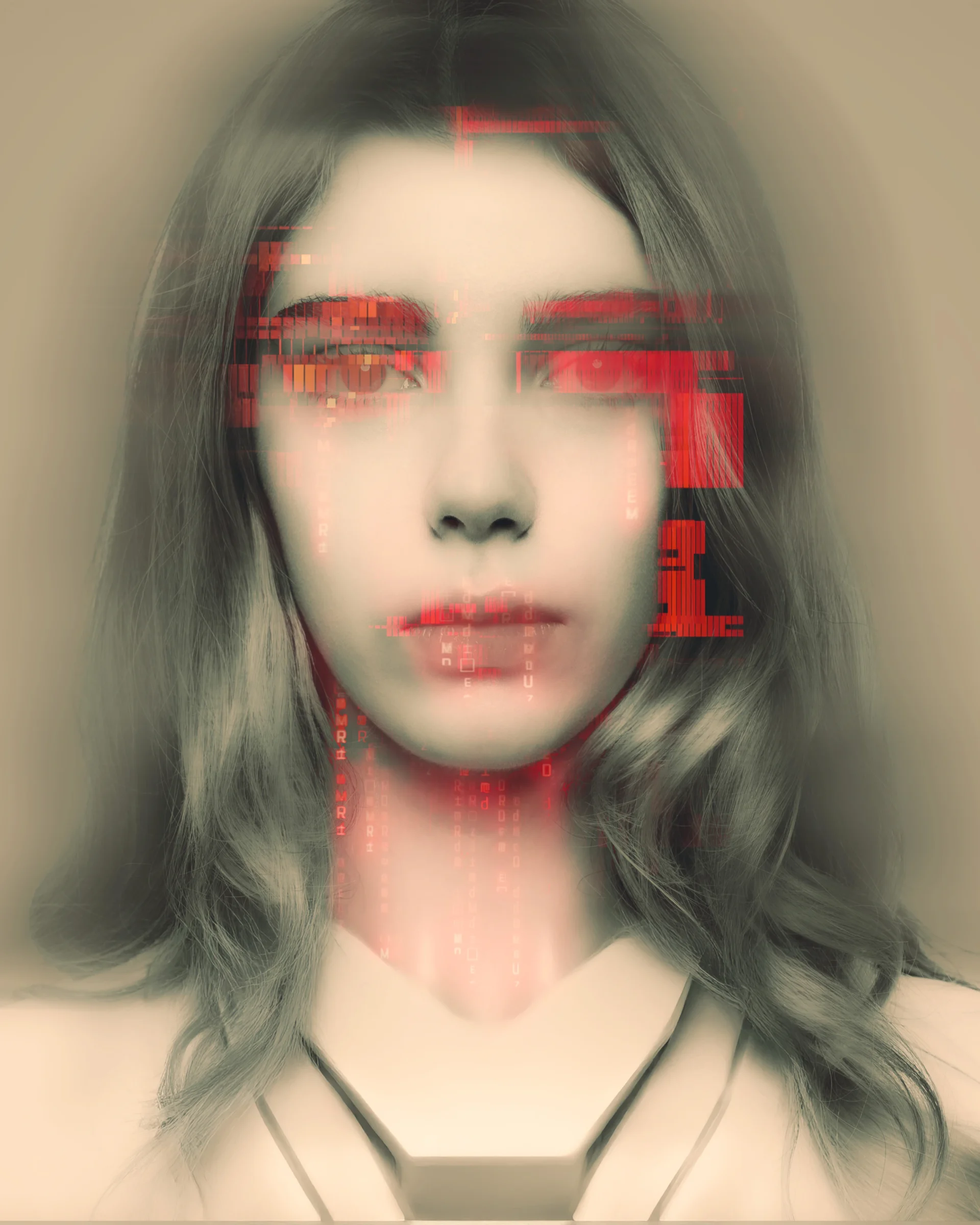
Human After All is a study on the fragility of perception and the ongoing instability of the image as evidence of reality. The human body, while remaining the point of origin, gradually dissolves into visual systems that distort its presence, ultimately questioning its identity. Through varying degrees of interference, the figure moves across states of recognition and loss, oscillating between what appears and what collapses within the act of seeing. The portrait is never a document, but a field of transformation: a territory where signal degradation occurs, visual memory is rewritten, and form becomes doubt. Within this unstable space, technology is not merely a tool but a perceptual filter and a distorted form of memory. The images evoke a suspended temporality in which residues of analog systems and past interferences overlap with contemporary digital logic, generating a visual language built on error, noise, and ambiguity. What remains is an uncertain presence: human only in its possibility of being so.