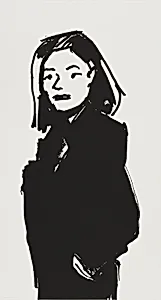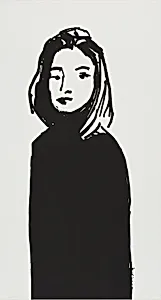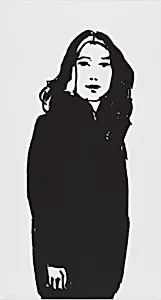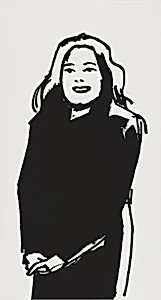
Alex Katz, born on July 24, 1927, in Brooklyn, New York, to Russian émigré parents, grew up in St. Albans, Queens, in a family immersed in the arts—his mother had been an actress in Yiddish theater. Katz honed his skills at Woodrow Wilson High School's arts program before enrolling at The Cooper Union in 1946, where he studied painting under Morris Kantor, absorbing modern art theories and techniques alongside instructors Paul Zucker and Robert Gwathmey. A scholarship took him to the Skowhegan School of Painting and Sculpture in 1949–50, where plein air painting from life, guided by Henry Varnum Poor, ignited his lifelong commitment to direct observation, transforming him from a student of drawings to a painter of immediacy.
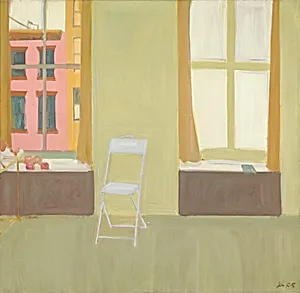
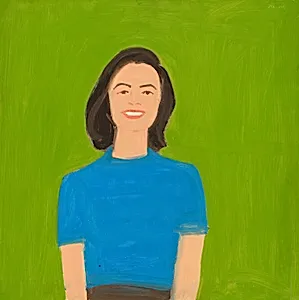
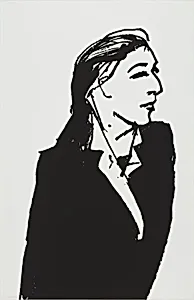
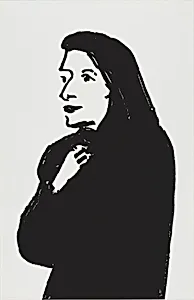
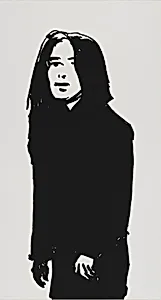
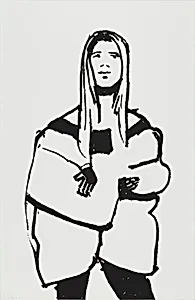
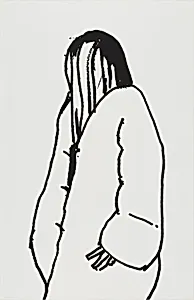
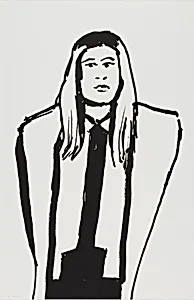
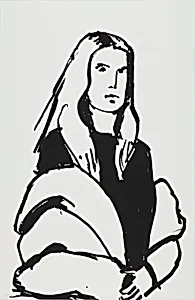
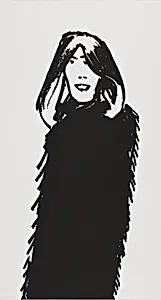
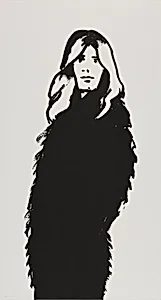
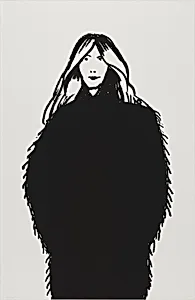
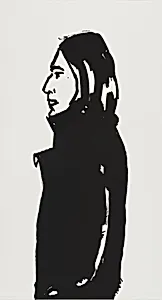
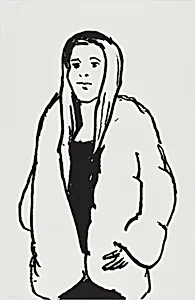
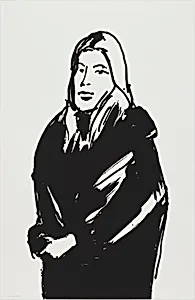
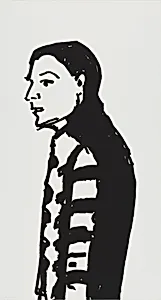
Katz's style emerged as boldly simplified figurative painting—large-scale portraits and landscapes with flat color fields, cropped compositions, and emotional coolness, bridging Abstract Expressionism and Pop Art while standing apart in its economy of line and heightened hues. He pioneered painted cutouts in 1959, freestanding figures on wood or aluminum that blur painting and sculpture, as in *Frank O'Hara* (1959–60). His wife Ada, married in 1958 and muse for over 250 works, anchors iconic portraits like *Ada on Blue* (1959), *The Black Dress* (1960), and *Red Smile* (1963), while group scenes such as *Lawn Party* (1965) capture urban intellectuals and dancers from his Paul Taylor Dance Company collaborations. Landscapes like *Blue Umbrella 2* (1972) and later environmental series, including *Black Brook 11* (1990), explore light and nature with painterly freedom.
Katz's legacy endures through over 250 solo exhibitions since his 1954 debut at Roko Gallery, including retrospectives at the Whitney (1986), Guggenheim (2022–23), and Colby College Museum of Art, home to the world's largest Katz collection. Honored with a Guggenheim Fellowship (1972), induction into the American Academy of Arts and Letters (1988), and Lifetime Achievement from the National Academy of Design (2007), he has influenced generations, from Elizabeth Peyton to Richard Prince, affirming his vision of painting as a cool, present-tense distillation of everyday glamour. At 98, Katz remains prolific, with recent works like *Ada* (2023) in major museums worldwide.