Ctrl K
1899–1964
Alfred Bendiner (July 23, 1899 – March 19, 1964) was a Philadelphia-based architect, artist, caricaturist, and writer whose career demonstrated a rare synthesis of technical precision and wit. Born in Pittsburgh, Pennsylvania, to Hungarian immigrant parents, Bendiner moved with his family to Philadelphia, where he attended the Pennsylvania Museum School of Industrial Arts before serving in the military during World War I. After the war he enrolled at the University of Pennsylvania, where he studied architecture under the renowned French-American architect Paul Philippe Cret, earning his bachelor of architecture in 1922 and a master's degree in 1927. He deepened his training with a year at the American Academy in Rome from 1928 to 1929.
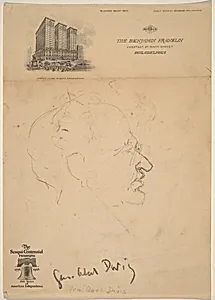
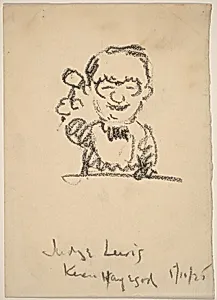
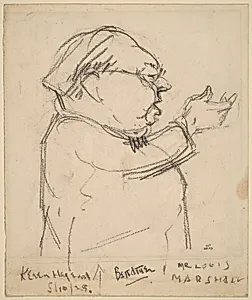
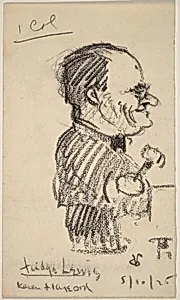
Bendiner's architectural career was distinguished: he worked first at Stewardson & Page, then spent nearly a decade in Cret's office, contributing to major institutional commissions including the Detroit Institute of Arts and the Folger Shakespeare Library. He opened his own Philadelphia practice in 1933. But it was his parallel career as an artist and caricaturist that brought him widespread popular recognition. Beginning in 1938, Bendiner contributed caricatures of musicians — drawn during live performances — to the Philadelphia Evening Bulletin alongside music criticism, earning the epithet "The Hirschfeld of Philadelphia" for his incisive and affectionate line work. He collected these drawings and reviews in the 1952 book Music to My Eyes. He also served as artist-draftsman on the University of Pennsylvania Museum's archaeological expeditions to Tepe Gawra and Khafaji, Iraq (1937), and later to Tikal, Guatemala (1960).
Bendiner's mural commissions included twin paintings for Fidelity Bank's Rittenhouse Square branch, murals for the offices of Blue Cross of Greater Philadelphia (1959), and The Story of Man for the University of Pennsylvania Museum. He served as president of the Philadelphia chapter of the American Institute of Architects and was a Fellow of the A.I.A. His lithographs, watercolors, and drawings are held in the collections of the Philadelphia Museum of Art and the National Gallery of Art. His publications — including Bendiner's Philadelphia (1964) and the posthumously published Translated from the Hungarian: Notes toward an Autobiography (1967) — reveal a man of broad curiosity and deep affection for his adopted city.
All 4 artworks loaded