Ctrl K
1799–1871
Anna Atkins (née Children), born on March 16, 1799, in Tonbridge, Kent, England, grew up immersed in the world of science thanks to her father, John George Children, a prominent chemist, zoologist, and curator at the British Museum. After her mother Hester's death shortly after childbirth in 1800, Anna formed a close bond with her father, receiving an exceptional scientific education rare for women of her era. She honed her illustrative skills early, producing 256 precise watercolor and graphite drawings of shells for his 1823 English translation of Jean-Baptiste Lamarck's *Genera of Shells*. In 1825, she married John Pelly Atkins, a wealthy West India merchant, and settled at Halstead Place in Kent, where she pursued botany avidly, amassing a herbarium and joining the London Botanical Society in 1839.
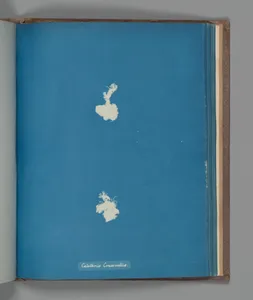
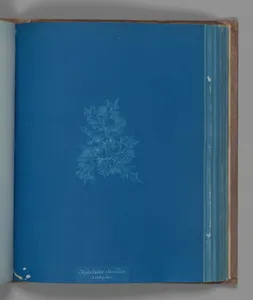
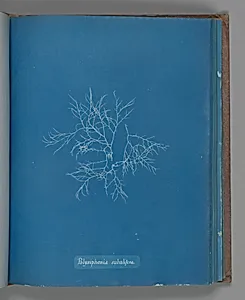
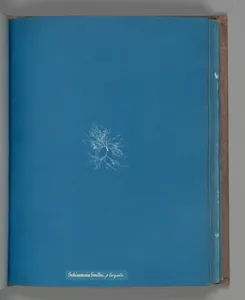
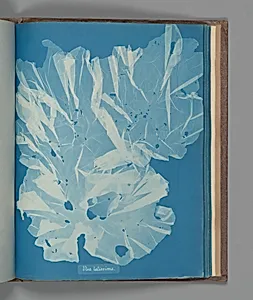
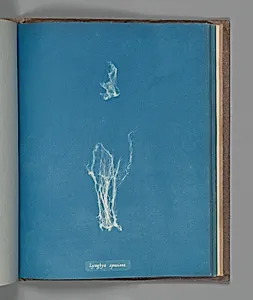
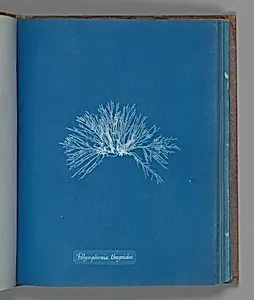
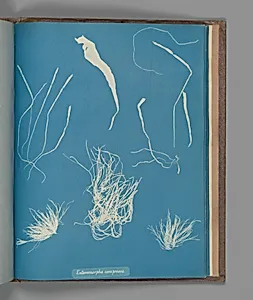
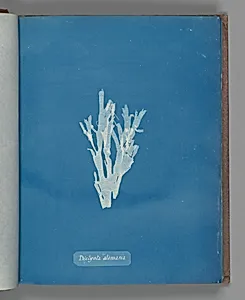
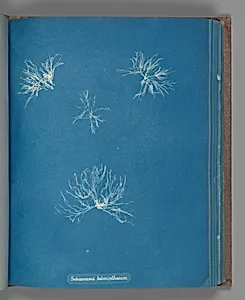
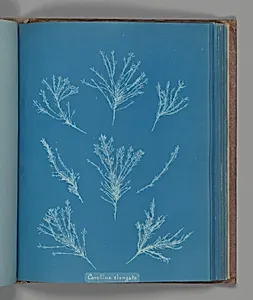
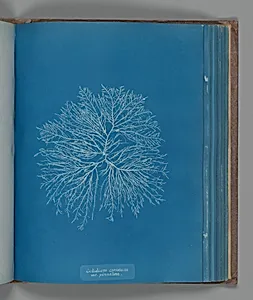
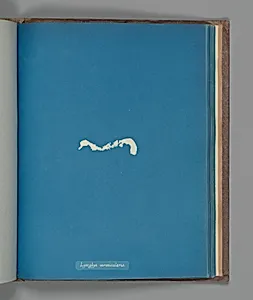
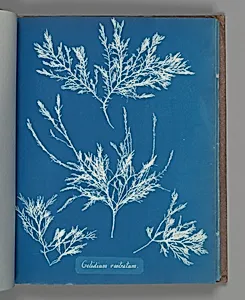
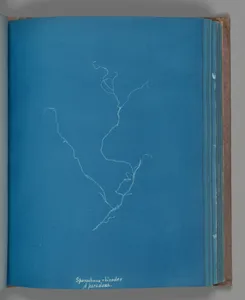
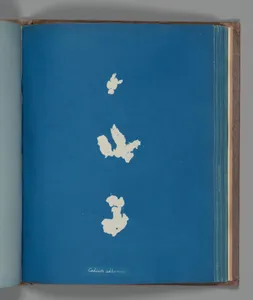
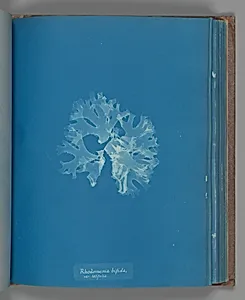
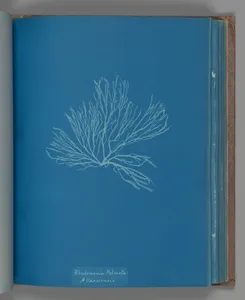
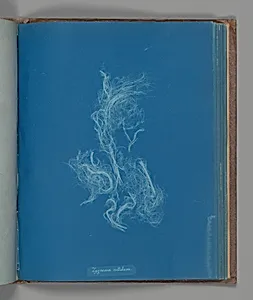
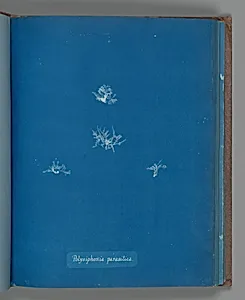
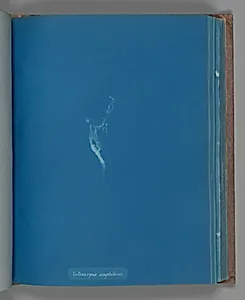
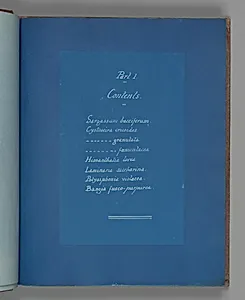
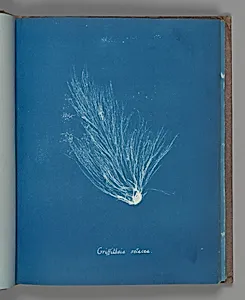
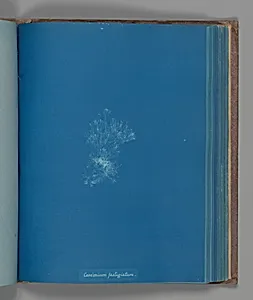
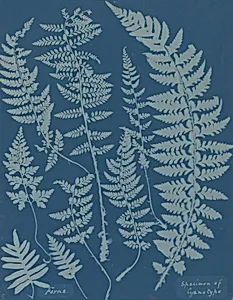
Atkins's pivotal leap into photography came through family connections: she learned William Henry Fox Talbot's photogenic drawing and calotype processes directly from him, a friend of her father and husband, and adopted Sir John Herschel's newly invented cyanotype technique in 1842. Motivated to surpass the inaccuracies of hand-drawn illustrations in William Henry Harvey's 1841 *Manual of the British Algae*, she produced the world's first book illustrated entirely with photographs: *Photographs of British Algae: Cyanotype Impressions* (1843–1853). This three-volume masterpiece, with its 411 handmade cyanotype plates of algae specimens, featured her handwritten captions as photographic facsimiles, even incorporating seaweed strands for text. Later collaborations with longtime friend Anne Dixon yielded *Cyanotypes of British and Foreign Ferns* (1853) and *Cyanotypes of British and Foreign Flowering Plants and Ferns* (1854), showcasing ferns and blooms in elegant arrangements.
Atkins pioneered cyanotype photograms—direct contact prints where specimens were laid on sensitized paper and exposed to sunlight, yielding pristine white silhouettes against Prussian blue grounds. This "blueprint" method, simple yet revolutionary, merged botanical precision with artistic composition, elevating photography from novelty to scientific tool and aesthetic marvel. Her works transcend mere documentation, transforming algae fronds and fern fronds into poetic studies of nature's forms.
Atkins's legacy endures as the first woman—and arguably the first person—to publish a photographically illustrated book, predating Talbot's *Pencil of Nature* and proving photography's dual power in art and science. She donated her herbarium to the British Museum in 1865, and her rare volumes grace institutions like the Metropolitan Museum of Art and the Natural History Museum. Celebrated in exhibitions, Google Doodles, and poetry, Atkins remains a trailblazer whose cyanotypes continue to inspire artists and scientists alike.