1763–1810
Antoine-Denis Chaudet (1763–1810) was a prominent French neoclassical sculptor whose career bridged the late Ancien Régime and the Napoleonic era. Born in Paris on March 3, 1763, he received his initial training under Jean-Baptiste Stouf and Étienne Gois père at the Royal Academy of Painting and Sculpture. In 1784, his bas-relief *Joseph Sold into Slavery by His Brothers* earned him the prestigious Prix de Rome, granting him four formative years at the French Academy in Rome, where he immersed himself in ancient sculpture. Returning to Paris in 1789 amid the Revolution, Chaudet was admitted as an agréé to the Academy, solidifying his place in the neoclassical tradition that emphasized clarity, proportion, and heroic idealism inspired by antiquity.
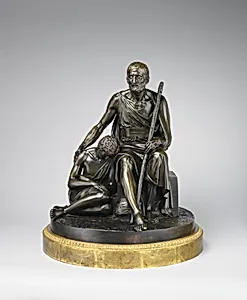
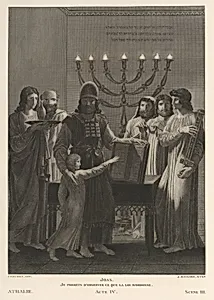
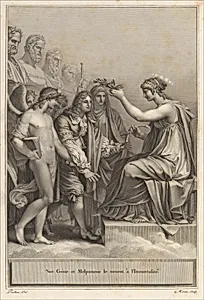
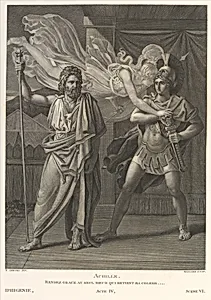
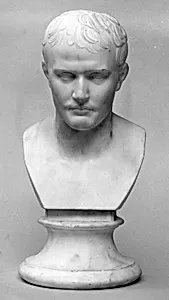
Chaudet's neoclassical style shone in both sculpture and collaborative projects. He produced intricate bas-reliefs and statues that captured moral and historical narratives with refined elegance. In 1801, he contributed Biblical scenes to Firmin Didot's illustrated edition of Jean Racine's collected works. His marriage around this time to Jeanne-Élisabeth Gabiou, one of his own students and a painter in her own right, intertwined their artistic lives; she benefited from his connections at early Salons. Chaudet's most iconic commission came in 1810: the colossal statue of Napoleon I as imperator atop the Vendôme Column, symbolizing imperial triumph—though it was later removed and melted down after Napoleon's fall.
Elected to the Institut de France in 1805, Chaudet capped his career as a professor at the École des Beaux-Arts in February 1810, succeeding Louis-Jean-François Lagrenée. His untimely death in Paris that April at age 47 left a void, but his influence endured through pupils and the enduring neoclassical canon. Works like his Vendôme statue, though transient, exemplify how Chaudet fused Roman grandeur with revolutionary zeal, training a generation in the disciplined beauty of the style that defined early 19th-century French art. Today, his sculptures grace collections such as the Louvre, reminding us of neoclassicism's poised power amid turbulent times.
(Word count: 348)
All 7 artworks loaded