Ctrl K
1862–1928
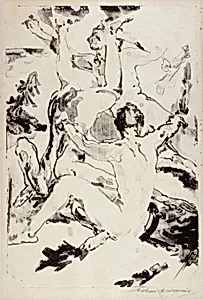
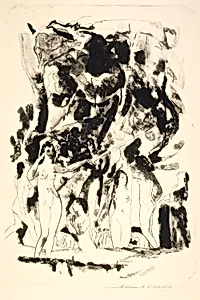
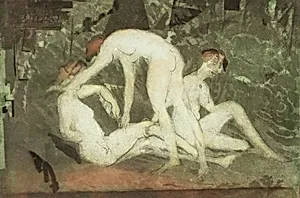
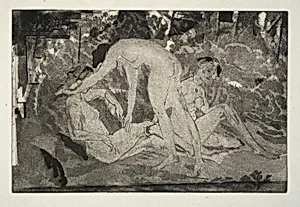
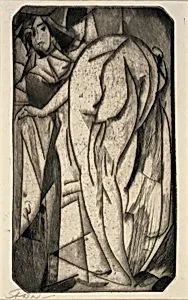
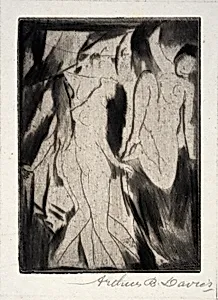
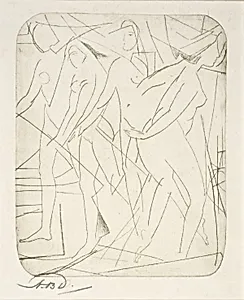
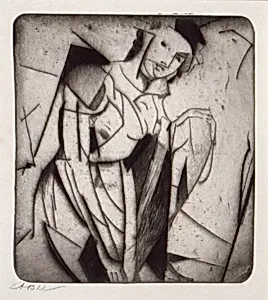
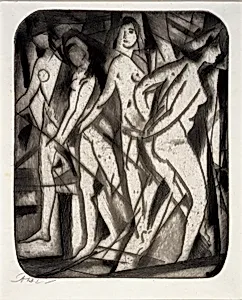
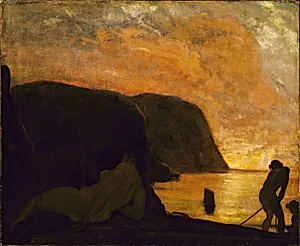
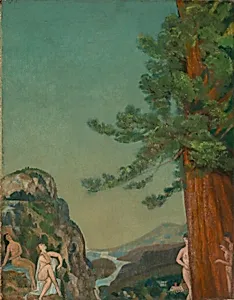
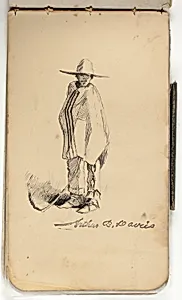
Arthur Bowen Davies (1862–1928) occupies one of the most paradoxical positions in American art history: a painter whose own canvases were lyrical, dreamlike, and rooted in the classical tradition, yet whose organizational energy and curatorial vision helped force American audiences into direct confrontation with the European avant-garde. Born on 26 September 1862 in Utica, New York, to English and Welsh immigrant parents, Davies showed early artistic aptitude and studied at the Chicago Academy of Design following his family's move to Chicago. He later attended the School of the Art Institute of Chicago and, after relocating to New York, enrolled at the Art Students League, where he refined the technical foundations for the ethereal figure paintings that would define his reputation.
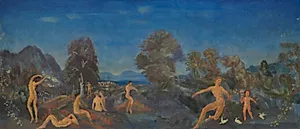
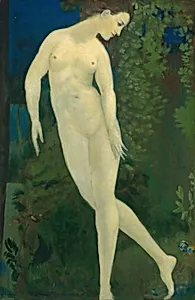
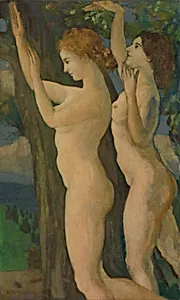
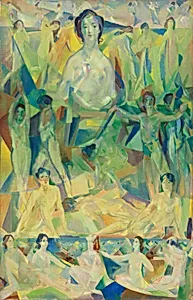
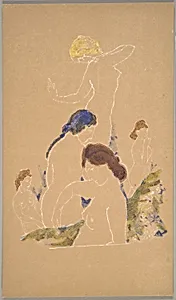
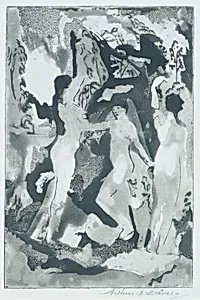
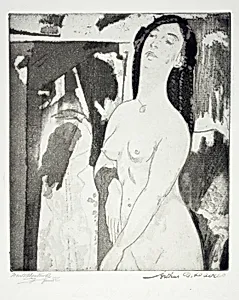
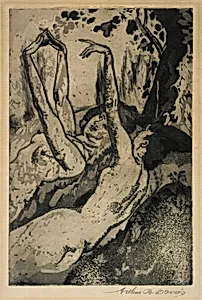
Davies drew his imagery from a wide range of sources — Hellenistic sculpture, Botticelli, the Swiss Symbolist Arnold Böcklin, and the French muralist Pierre Puvis de Chavannes — weaving them into a personal idiom of pale, atmospheric figures set in idyllic landscapes. His most celebrated painting, Unicorns: Legend, Sea Calm (1906), now in the collection of the Metropolitan Museum of Art, exemplifies the mood of reverie and quiet enchantment that distinguished his work. In 1908, despite not being a realist, he exhibited alongside the group known as The Eight in New York, demonstrating the breadth of his sympathies and his commitment to independent exhibition outside academic structures.
Davies's most consequential act was his role as the principal organizer of the International Exhibition of Modern Art — the Armory Show of 1913 — which introduced American audiences to the work of Cézanne, Matisse, Duchamp, and Picasso, among many others, and fundamentally altered the trajectory of American art. He served as president of the Society of Independent Artists and subsequently became a trusted adviser to collectors including Lillie P. Bliss and Abby Aldrich Rockefeller, whose holdings formed the founding core of the Museum of Modern Art.
By the 1920s, Davies's paintings commanded high prices and he was recognized as one of America's most esteemed artists. He died of a heart attack in Florence on 24 October 1928. His legacy is dual: as a painter of quiet, personal vision, and as the impresario whose ambition transformed the landscape of American modernism.