
Ctrl K
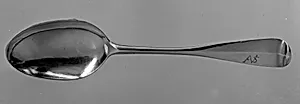
1714–1795
**Barent Ten Eyck (1714–1795)**
Barent C. Ten Eyck was born in September 1714 in Albany, New York, and baptized on October 3, the son of prominent silversmith Coenraedt Ten Eyck and Gerritje Van Schaick. Growing up in a bustling household in Albany's second ward amid a large family of ten children, including future silversmith Jacob Coenraedt Ten Eyck, Barent immersed himself in the family trade from youth. His father's business ventures took the sons to New York City and the frontier, where they learned silversmithing alongside commerce, establishing a foundational training in the craft without formal apprenticeship records beyond the paternal workshop.
Active as a silversmith in Albany from at least 1735, Ten Eyck worked in the colonial Dutch-American tradition, crafting utilitarian yet elegantly inscribed silverware reflective of the region's mercantile elite. He resided and operated in the second ward, balancing his trade with civic duties as firemaster in 1742 and 1767, and assistant alderman in 1746 and 1747. In 1756, at age 42, he married 27-year-old Elsje Cuyler, a union that appears childless but deeply embedded in Albany's Dutch Reformed community as pewholders and baptism sponsors; she predeceased him in 1791. Notable surviving works include a silver table spoon (1740–50) at The Metropolitan Museum of Art, bearing a Dutch inscription commemorating Patroon Kiliaen van Rensselaer (1655–1687), and two tablespoons (c. 1745) in the Albany Institute of History & Art's collection.
Ten Eyck's later years involved real estate dealings, city contracts, and property in Watervliet with relatives, culminating in a 1794 subscription of £40 to Union College and a will bequeathing his estate to a deceased brother and nephews. Dying in late February 1795 at age 80, he left a legacy as a pillar of Albany's silversmith dynasty, his refined objects embodying the craftsmanship that bridged Dutch heritage and emerging American identity amid the Revolutionary era. His work endures in major collections, illuminating the artistry of everyday colonial silver.