Ctrl K
1650–1702
Occupations
Richard Brakenburgh, baptized on May 22, 1650, in Haarlem, emerged as a prominent figure in the Dutch Golden Age, born to Menno Rychards and Vroutien Alberts. The son of relatively modest parents—his father a craftsman who died in 1658—he trained under the landscape painter Hendrick Mommers and the genre master Adriaen van Ostade, honing skills that blended rustic scenes with bourgeois domesticity. He married Aaltje Hendriks Fenema, a Frisian woman, and relocated to Leeuwarden around 1670, where he painted an equestrian portrait of Hendrik Casimir II of Nassau before returning to Haarlem in 1687. There, he joined the Guild of St. Luke and local rhetoricians' chambers, embedding himself in Haarlem's vibrant artistic community.
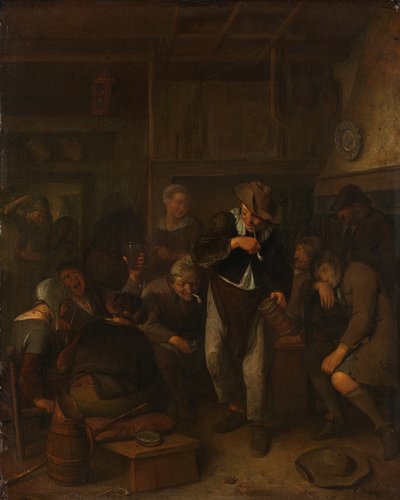
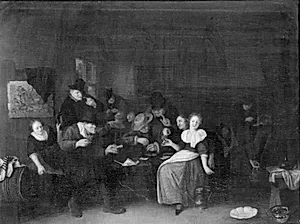
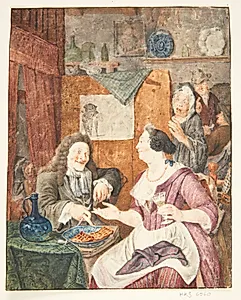
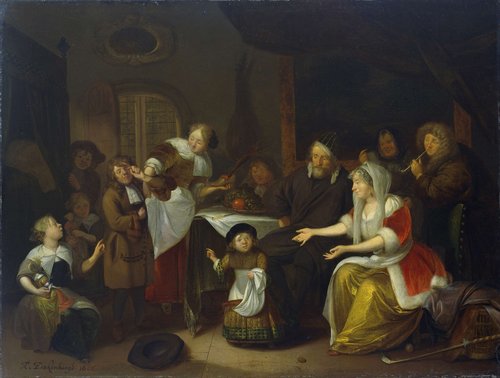
Brakenburgh specialized in lively genre scenes, capturing merry tavern gatherings, festive interiors, and peasant revelries in the tradition of van Ostade and his profound influence, Jan Steen—whose boisterous compositions he emulated with a lighter, more mannered touch. His works excel in chiaroscuro, ingeniously composed with warm colors and facility, though figures often betray imprecise drawing from life. Standouts include *Celebration of a Birth* (1683, Dulwich Picture Gallery), mocking proud fathers amid twins and midwives; *Country Inn* (Rijksmuseum); *The Feast of St. Nicholas* (Q17524222); *Doctor's Visit* (1696, Rotterdam); *Children's Feast* (1698, Brussels); and *Peasant Scenes* (1690, Vienna and elsewhere). He also ventured into portraits, history pieces, Italianate landscapes, and produced etchings.
In his later years, Brakenburgh intermittently revisited Leeuwarden, amassing a collection of French and Italian masters auctioned posthumously. His prolific output—paintings, 80 etchings, and hundreds of drawings—ensured financial success, allowing his widow to secure an annuity in Friesland. He mentored Wigerus Vitringa, Abraham Pardanus, and Gillis de Winter, perpetuating Haarlem's genre legacy amid the era's shift toward refined petit-bourgeois themes. Brakenburgh died in Haarlem on December 28, 1702, his vivid depictions of human folly enduring as charming windows into 17th-century Dutch life.
Wikidata (CC0); Getty ULAN (ODC-By)