Ctrl K
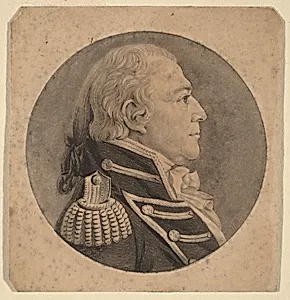
1770–1852
**Charles Balthazar Julien Févret de Saint-Mémin**
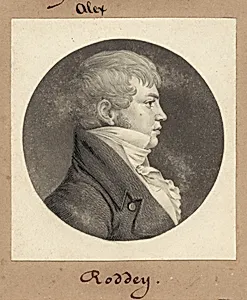
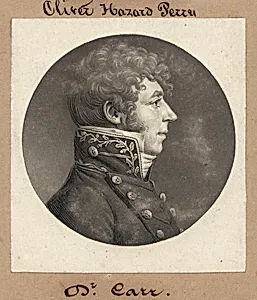
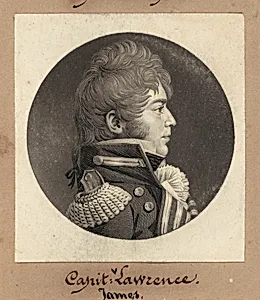
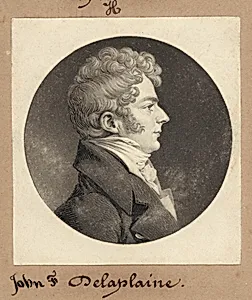
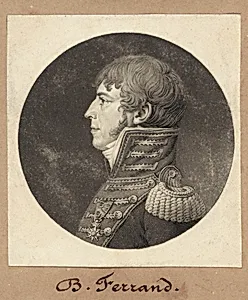
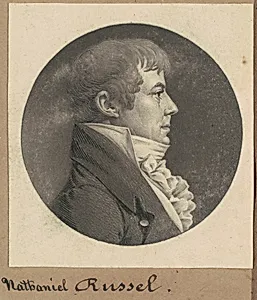
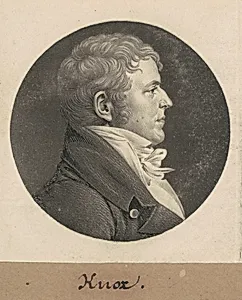
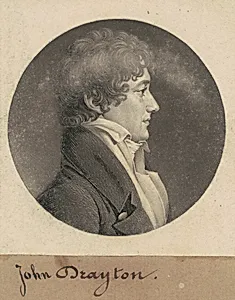
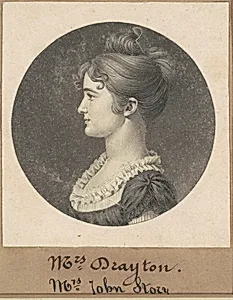
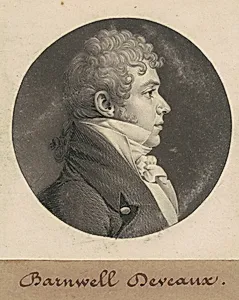
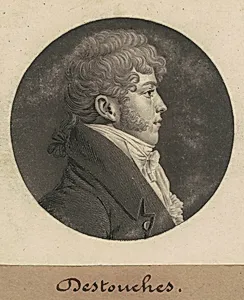
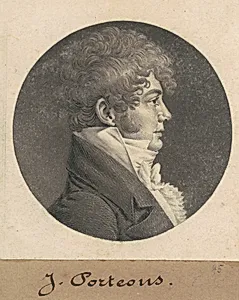
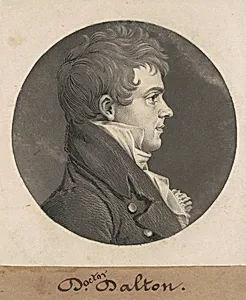
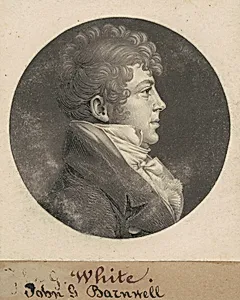
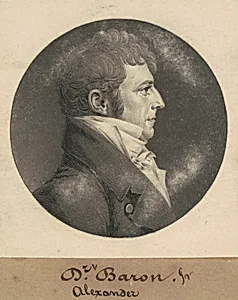
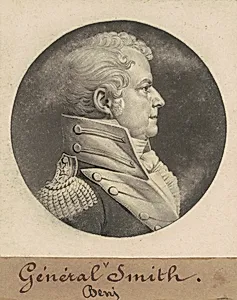
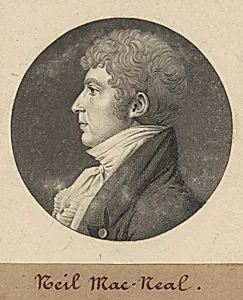
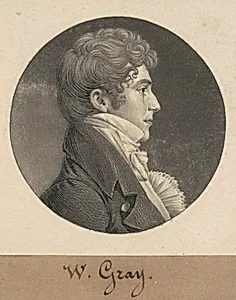
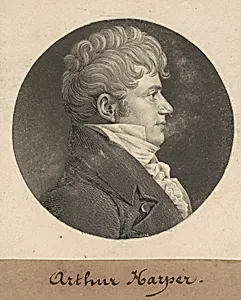
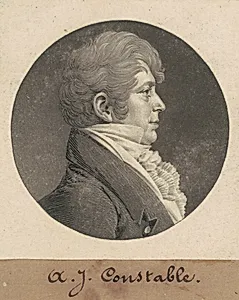
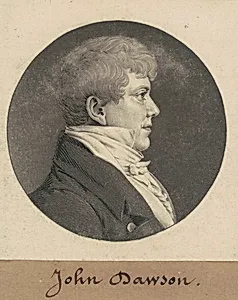
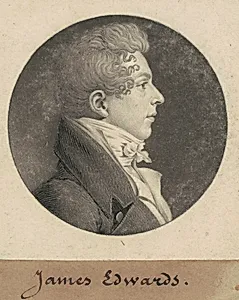
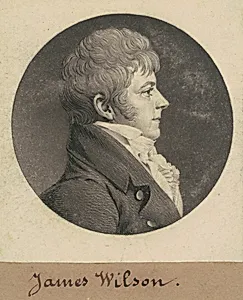
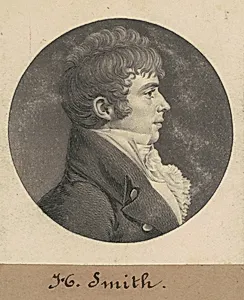
Born on March 12, 1770, in Dijon, France, to marquis Bénigne-Charles Févret de Saint-Mémin, a former conseiller au Parlement de Bourgogne, and Victoire-Marie de Motmans, a creole from Port-au-Prince, Charles Balthazar Julien Févret de Saint-Mémin received a military education at the École Militaire in Paris, graduating in 1785. He served as a cadet in the Gardes-Françaises from 1784 and rose to enseigne by 1788. Amid the French Revolution, he fled with his family first to Switzerland, where he learned engraving, then to New York in 1793 after abandoning plans for Saint-Domingue due to the Haitian Revolution. There, partnering with fellow French émigré artist Thomas Bluget de Valdenuit, he pivoted from failed vegetable farming to portraiture, introducing the innovative physionotrace—a mechanical pantograph device invented by Gilles-Louis Chrétien—to America.
Saint-Mémin's neoclassical profile portraits, rendered in colored chalk crayons from physionotrace tracings and often engraved for wider distribution, captured over 800 prominent Americans between 1793 and 1814. Working in New York, Philadelphia, and Baltimore, he depicted luminaries like George Washington, Thomas Jefferson (1804), John Marshall (1808 engraving), Paul Revere (1804 drawing), and Meriwether Lewis (1806–1807), as well as Native American leaders including Payouska, Chief of the Great Osage (1804), Sheheke (Shahaka), Chief of the Mandans (1806–1807), and his wife Yellow Corn (1806–1807). His precise, silhouette-like profiles in oval format embodied Enlightenment ideals of rationality and likeness, collaborating with engravers to produce affordable prints that democratized portraiture.
Returning to France in 1814, Saint-Mémin became director of the Musée des Beaux-Arts de Dijon in 1817, serving until his death on June 23, 1852; the museum holds his self-portrait. His American oeuvre, preserved in institutions like the National Gallery of Art, New-York Historical Society, and Smithsonian American Art Museum, endures as a vital visual record of early Republic elites and indigenous figures, celebrated in Ellen G. Miles's *Saint-Mémin and the Neoclassical Profile Portrait in America* for pioneering a uniquely mechanical yet elegant mode of portraiture.