Ctrl K
1756–1829
Chôbunsai Eishi, born Hosoda Tokitomi in 1756 to a prosperous samurai family of the Fujiwara clan in Edo, inherited a substantial stipend of 500 koku of rice annually. His grandfather had served as the shogunate's Treasury Minister, and upon his father Hosoda Tokiyuki's death in 1772, Eishi became family head while holding a position in Shogun Tokugawa Ieharu's palace from 1781. Unusually for a ukiyo-e artist, he began his artistic training under Kanō Eisen'in Michinobu (1730–1790) of the prestigious Kanō school, likely receiving his art name Eishi from this mentor or the shogun himself; around 1784, he resigned his official duties and briefly trained under the ukiyo-e master Torii Bunryūsai. In 1789, he fully relinquished samurai status, entrusting the family to his adopted son Tokitoyo.
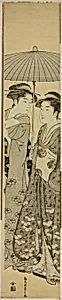
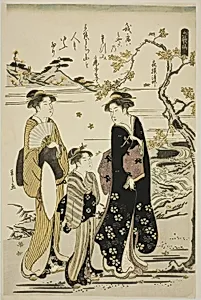
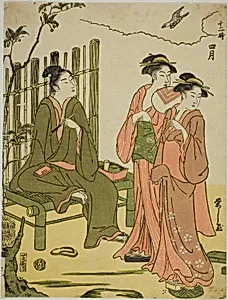
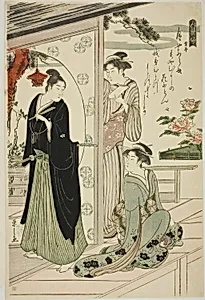
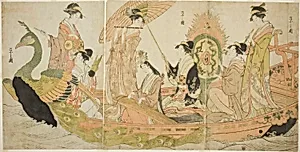
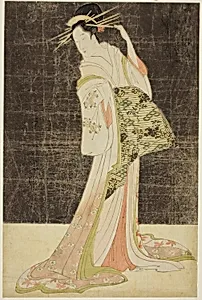
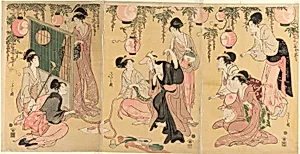
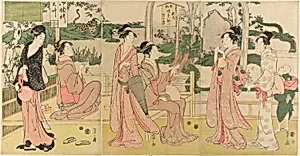
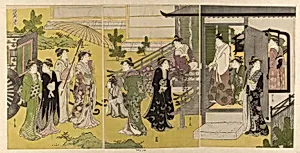
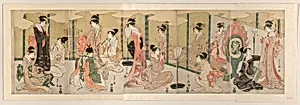
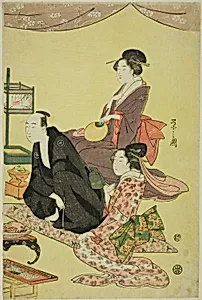
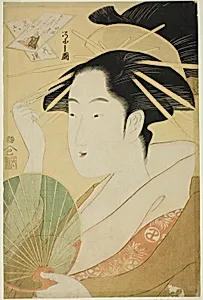
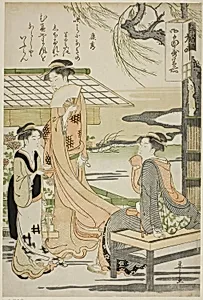
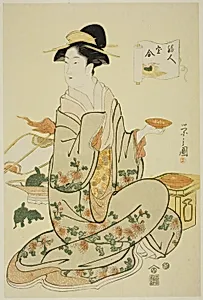
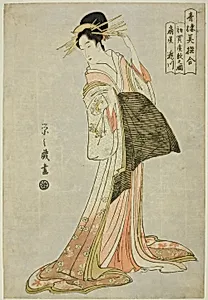
Transitioning to ukiyo-e, Eishi specialized in bijin-ga (pictures of beautiful women), depicting tall, ethereally slender courtesans and ladies with elongated necks and figures whose heads were often just one-twelfth their height—more exaggerated even than those of his rival Kitagawa Utamaro. Influenced by Torii Kiyonaga's graceful forms, his compositions evolved from courtesans in Kiyonaga's manner to seated women in daily pursuits against vibrant backgrounds, then to elongated standing figures on minimalist, subdued settings, adhering to era's anti-ostentation laws. Establishing his own school, he mentored pupils including Eiri and Chōkōsai Eishō, blending Kanō refinement with ukiyo-e vitality to create patrician, mythical beauties.
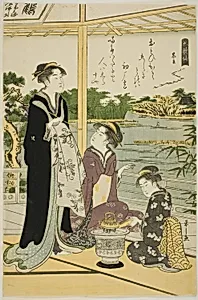
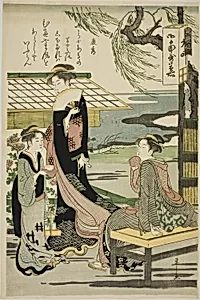
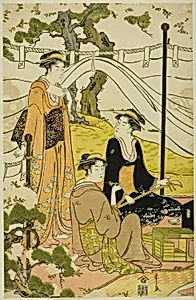
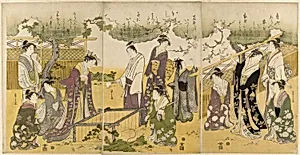
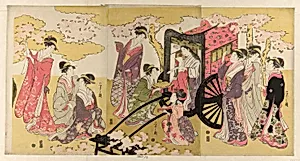
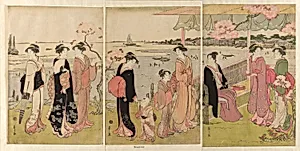
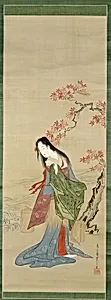
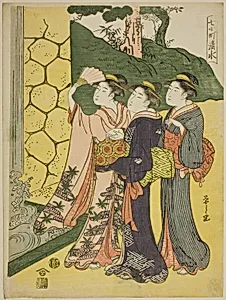
Eishi's print career peaked in the 1790s with masterpieces like *Hana no En* from *Eight Views of Disguised Genji* (c. 1787–1793), *Cherry Blossom Viewing at Gotenyama Hill* (c. 1791–1797), the series *Seirô bisen awase* featuring Takigawa of the Ōgiya (c. 1794–95), and *Yatsushi Rokkasen* (c. 1796). From 1801, he shifted to painting, producing over 200–300 extant works, including *Summer* from *Pleasure Competition in the Four Seasons* (c. 1794–1801); in 1800, one entered Cloistered Empress Go-Sakuramachi's collection, earning him the title Jibukyō.
Eishi's legacy endures as a ukiyo-e pinnacle, rivaling Utamaro and Kiyonaga while elevating bijin-ga to aristocratic poise, his prints and paintings capturing Yoshiwara's fleeting elegance until his death in 1829.