Ctrl K
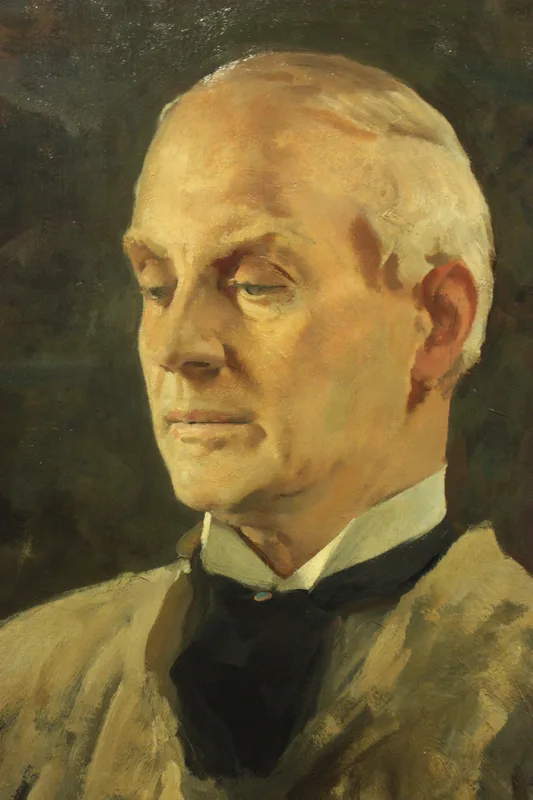
1865–1945
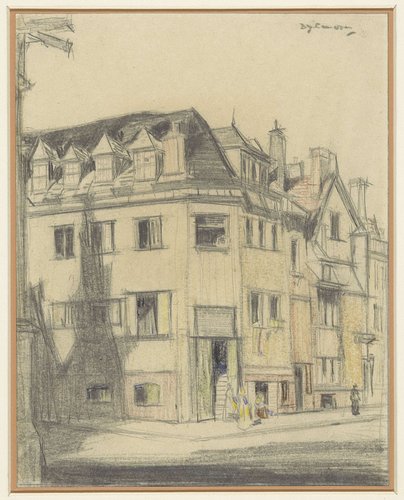
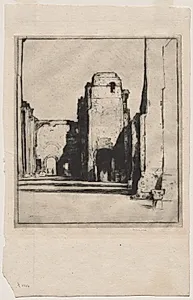
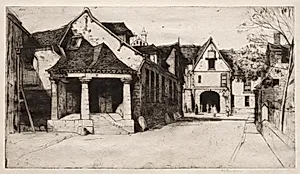
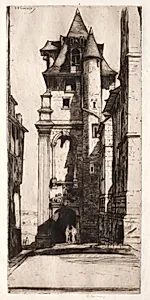
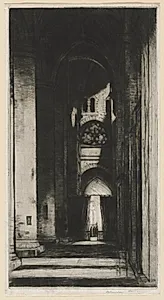
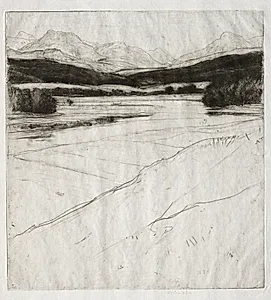
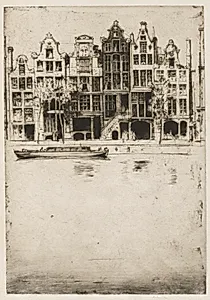
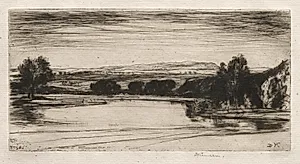
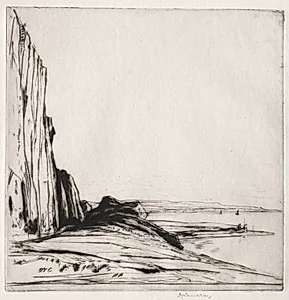
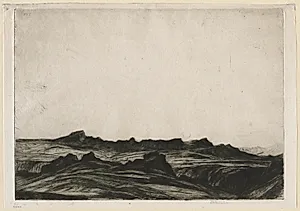
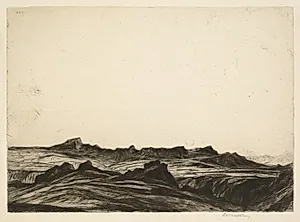
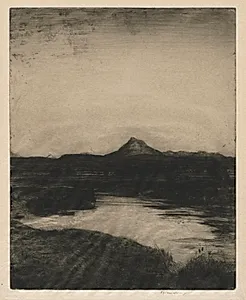
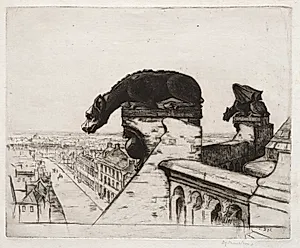
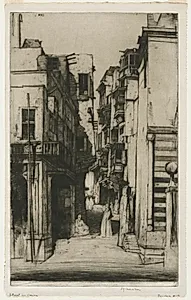
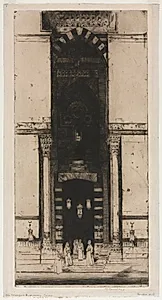
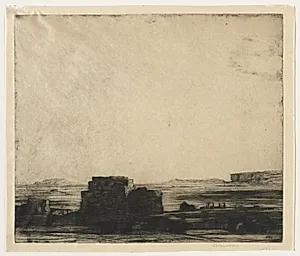
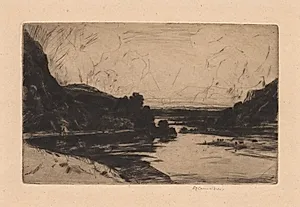
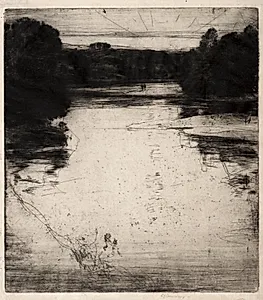
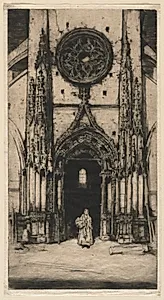
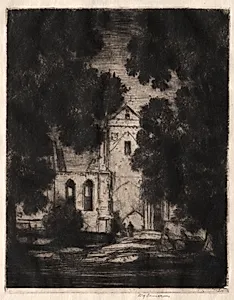
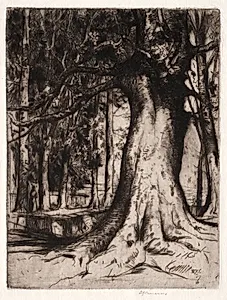
Sir David Young Cameron (1865-1945) was a Scottish painter and etcher who achieved international recognition primarily for his atmospheric etchings of architectural and landscape subjects. Born in Glasgow during the Victorian era, Cameron became one of Britain's most celebrated printmakers, eventually receiving a knighthood and serving in prominent positions including Trustee of the Tate Gallery and King's Painter and Limner in Scotland. Cameron's artistic achievement rests primarily on his mastery of etching, a medium in which he produced over five hundred plates during his career. His prints are characterized by strong tonal contrasts, dramatic compositions, and an ability to capture both the monumental grandeur of Gothic architecture and the sublime power of the Scottish landscape. While he was also a successful painter, creating stark and dramatic landscapes and cityscapes in oil, it was his etchings that brought him the greatest acclaim and influenced a generation of British printmakers.
David Young Cameron was born on June 28, 1865, in Glasgow, Scotland, into a clerical family as the son of a clergyman. Growing up in Victorian Glasgow, a city experiencing rapid industrial expansion and architectural development, Cameron was surrounded by the dramatic urban landscapes that would later feature prominently in his work.
In the early 1880s, Cameron began his formal artistic education at the Glasgow School of Art, one of Scotland's premier art institutions. The Glasgow School of Art during this period was known for its progressive approach to art education, emphasizing both technical skill and creative innovation.
By 1885, Cameron had gained admission to the Edinburgh School of Art, where he continued his studies. It was at Edinburgh that a crucial development occurred: his instructors recognized the exceptional quality of his pen drawings and encouraged him to take up etching, seeing in his linear work the potential for mastery in the intaglio medium.
This suggestion proved transformative. Cameron embraced etching with enthusiasm, discovering in the medium a perfect vehicle for his vision. The technical demands of etching—its requirement for decisive mark-making, its potential for rich tonal effects through careful inking and printing, and its capacity for both delicate detail and bold statement—suited his temperament and abilities.
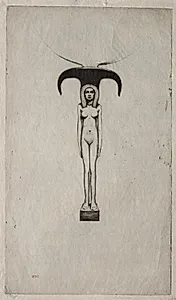
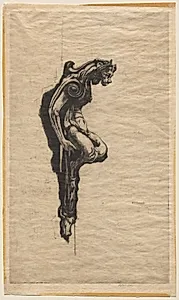
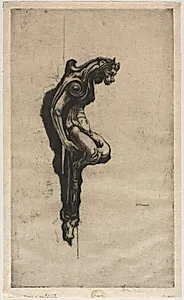
Throughout the 1890s and into the early twentieth century, Cameron dedicated himself to etching, producing plates that ranged from intimate interior studies to expansive landscape vistas and detailed architectural renderings. His subjects included atmospheric interiors of Gothic cathedrals, dramatic Highland landscapes, detailed studies of historic buildings, and figure compositions.
Cameron's etching style was characterized by strong tonal contrasts that created dramatic, almost theatrical effects. He achieved these through sophisticated use of aquatint, drypoint, and traditional line etching techniques, often combining multiple methods on a single plate to achieve the desired atmospheric effects.
His architectural subjects, particularly his renderings of medieval and Gothic buildings, demonstrated his ability to capture not just physical structure but also the spiritual and historical resonance of ancient monuments. His stark landscapes conveyed the sublime power of the Scottish Highlands with their windswept moorlands and dramatic skies.
By the early twentieth century, Cameron's reputation as one of Britain's foremost etchers was firmly established. His prints were collected internationally, and he was recognized as part of the etching revival movement that saw the medium elevated to new artistic heights in Britain and America.
In 1917-1918, during the final years of World War I, Cameron received a significant commission from the Canadian Government to paint the war in France. This appointment as an official war artist took him to the Western Front, where he documented the conflict through paintings rather than his customary etchings.
His war paintings captured the devastation of the battlefield landscape and the experience of industrial warfare. These works differed from his peacetime subjects in their direct engagement with contemporary events, yet maintained his characteristic dramatic composition and strong tonal contrasts.
In 1921, Cameron's artistic achievements and growing stature were recognized with his appointment as a Trustee of the Tate Gallery in London, a position he held until 1927. This role placed him among the most influential figures in British art, with responsibility for acquisitions and policy at one of the nation's premier art institutions.
He simultaneously served as a trustee of the National Gallery of Scotland, contributing to the artistic life of his native country. These dual appointments reflected Cameron's unique position bridging Scottish and broader British artistic spheres.
In 1924, Cameron received one of Britain's highest honors when he was knighted for his contributions to British art. Henceforth known as Sir David Young Cameron, he joined the ranks of the nation's most celebrated artists. The knighthood recognized both his artistic achievements and his service to British cultural institutions.
In 1933, Cameron received the ultimate recognition from the British Crown when he was appointed King's Painter and Limner in Scotland, an ancient and prestigious office that made him the official artist to the monarch for Scottish subjects. This position confirmed his status as Scotland's preeminent artist of his generation.
Throughout his later years, Cameron continued producing both etchings and paintings, though his output gradually decreased. His late works often revisited the themes and subjects that had defined his career: the Scottish landscape, historic architecture, and atmospheric studies of light and shadow.
Sir David Young Cameron died in Perth, Scotland, on September 16, 1945, shortly after the end of World War II. He left behind a legacy of over five hundred etching plates and numerous paintings that had helped define Scottish art in the early twentieth century and contributed to the international etching revival.
claude-biography-agent
Last updated: 2025-11-09
Biography length: ~476 words