Ctrl K
1905–1944
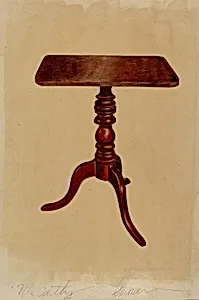
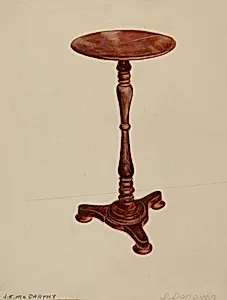
Donald Donovan (c. 1905–1944) was an American artist whose career centered on the Index of American Design, a Federal Art Project initiative under the Works Progress Administration (WPA) from 1935 to 1942. This ambitious endeavor commissioned artists across the United States to create meticulous watercolor renderings of everyday folk art objects, preserving the nation's vernacular design heritage amid the Great Depression. Donovan produced numerous such illustrations, capturing the whimsical and utilitarian beauty of American crafts with technical precision.
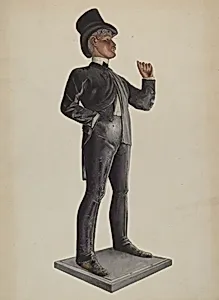
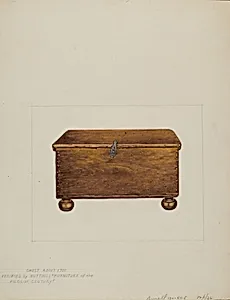
Details of Donovan's early life and artistic training are not well documented, with no records of specific teachers, art schools, or mentors identified in available sources. His known output aligns with the Index's emphasis on documentary realism, employing watercolor, graphite, pen and ink, and colored pencil to render three-dimensional folk artifacts in vivid, two-dimensional form. These works highlight regional craftsmanship, from carved carousel animals to trade figures and furniture, reflecting a modernist appreciation for pre-industrial American aesthetics within a government-sponsored folk art revival.
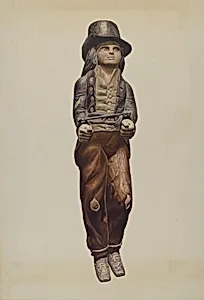
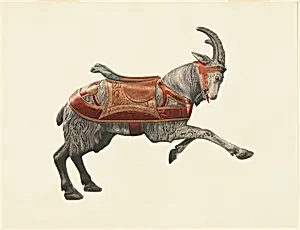
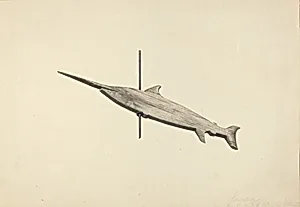
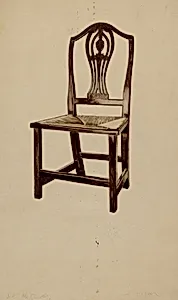
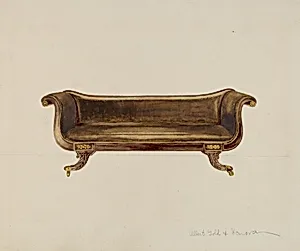
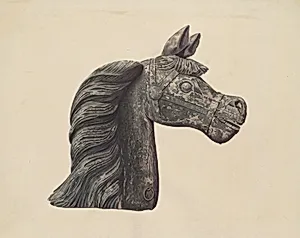
Among his major contributions are *Carousel Goat* (c. 1938), depicting a hand-carved amusement ride figure; *Figure of a Felon* (c. 1938), a stark wooden trade sign warning against crime; *Horse's Head* (1935/1942), from a carousel; and *Weather Vane* (c. 1937), showcasing sheet metal artistry. Donovan often collaborated on larger pieces, including *Tobacco Store – Male Figure* (c. 1937, with Harold Bliss), *Sea Chest* (1936, with Robert Birrell), and furniture renderings like *Sofa* (c. 1936, with Albert Gold) and items with McCarthy. These pieces, accessioned into the National Gallery of Art in 1943, exemplify the Index's goal of cataloging cultural artifacts before they vanished.
Donovan's legacy endures through the enduring value of the Index of American Design collection, now housed primarily at the National Gallery of Art, where his renderings educate on America's diverse artistic traditions. Though his life was cut short in 1944, his precise documentation bridges folk craft and fine art, influencing later studies in American design history and material culture.