Ctrl K
1855
Elizabeth Curtis (1873–1946) was an American artist born on April 21, 1873, in New York City, the youngest of seven children in a prominent family. Her father, William Edmund Curtis, served as Chief Justice of the Superior Court of New York State, while her mother, Mary Ann Scovill Curtis, hailed from the family behind the Scovill Manufacturing Company in Waterbury, Connecticut. Curtis received her formal training at the Art Students League of New York, studying under renowned impressionists John Henry Twachtman and William Merritt Chase, whose influences shaped her early landscape paintings with a focus on light, atmosphere, and loose brushwork.
By the late 1890s, Curtis was actively exhibiting her work, reflecting the impressionist traditions of her teachers and the vibrant artistic circles of the Art Students League. In fall 1899, she lived in Paris, immersing herself in the European art scene, which likely enriched her plein-air style evident in coastal landscapes of Mount Desert, Maine, such as *Bear Island Lighthouse*. Her breakthrough came in 1901 with a solo exhibition of 30 paintings at Clausen Gallery in New York, earning high praise from critics for her luminous depictions of nature. Curtis also collaborated as an illustrator, partnering with Florence Choate on children's books like *Pinafores and Pantalets*, blending her painterly skills with precise draftsmanship.
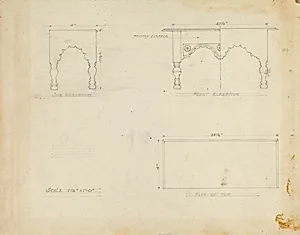
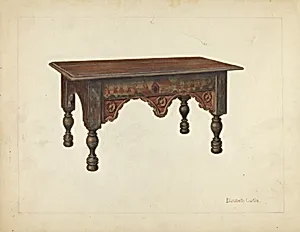
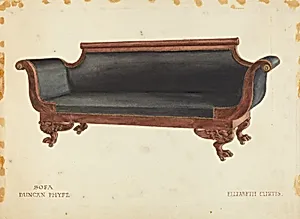
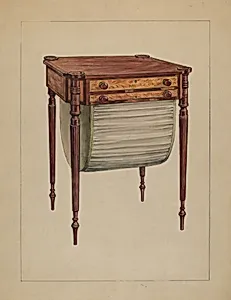
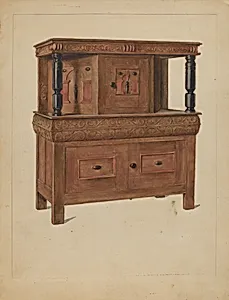
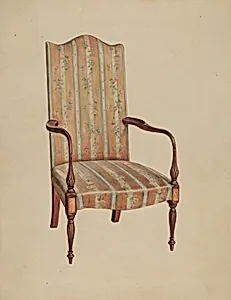
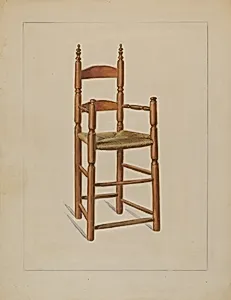
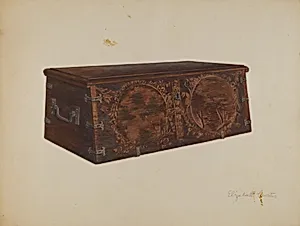
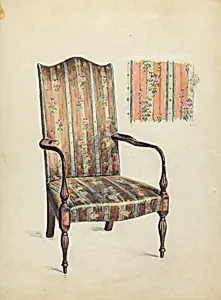
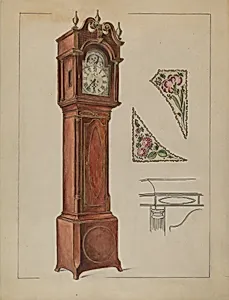
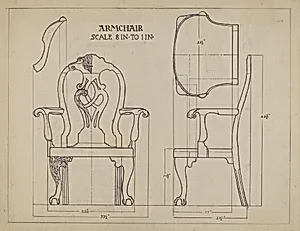
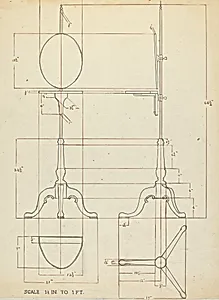
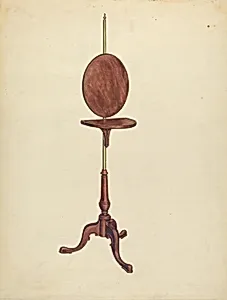
In the 1930s, Curtis contributed significantly to the Index of American Design, a Federal Art Project under the Works Progress Administration that documented everyday American objects through detailed renderings. She produced watercolor, graphite, and ink illustrations of colonial furniture, including *Bench* (c. 1953), *Sofa* (c. 1940), *Press Cupboard* (1936), *High Chair* (c. 1936), *Hepplewhite Arm Chair* (1936), *Sewing Table* (c. 1936), *Chest* (c. 1936), *Pole Screen and Candlestand* (c. 1936 and 1935/1942), *Armchair* (1936), and *Tall Clock* (1935/1942), now preserved in the National Gallery of Art collection. These works showcase her shift to meticulous realism, capturing intricate details of American craftsmanship.
Curtis's legacy endures through her dual contributions to impressionist landscape painting and cultural preservation. Her Index illustrations offer invaluable historical insight into early American design, while her Maine seascapes evoke the tonal impressionism of her mentors. With at least 13 artworks featured in virtual museum collections, she remains a testament to the versatility of early 20th-century American women artists.