Ctrl K
1855
**Eugene Shellady: Documenting American Folk Art Treasures**
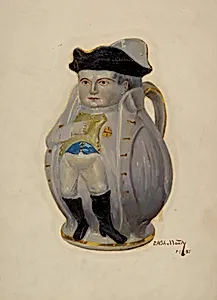
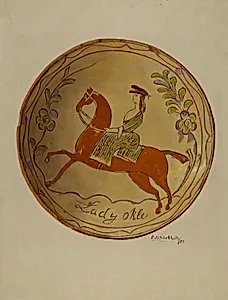
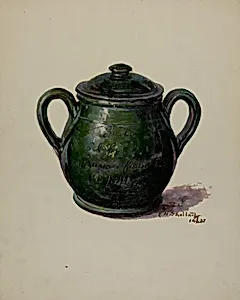
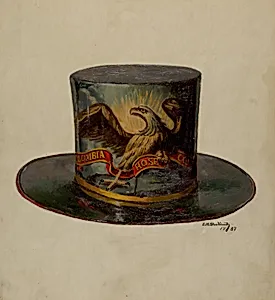
Eugene Shellady was an American artist active around 1935, best known for his contributions to the Index of American Design, a monumental Works Progress Administration (WPA) project under the Federal Art Project. Launched in 1935 and continuing through 1942, the Index employed some 400 artists across 34 states to create over 18,000 precise watercolor and gouache renderings of everyday American crafts and decorative arts from the colonial era to 1900, preserving them as a visual archive amid the Great Depression. Shellady's output, numbering 52 works in the National Gallery of Art's collection, focused on meticulously detailed depictions of regional folk objects, capturing their textures, colors, and cultural significance with documentary fidelity.
Little is known of Shellady's early life or formal training, as biographical details remain sparsely documented beyond his professional activity in the late 1930s. His style aligned with the Index's ethos: hyper-realistic reproductions prioritizing accuracy over artistic interpretation, often using oil paint, gouache, watercolor, or graphite on paperboard to evoke the tactile quality of original artifacts. This approach placed him within the broader American Scene movement's interest in vernacular culture, echoing contemporaries who celebrated regional traditions amid industrialization.
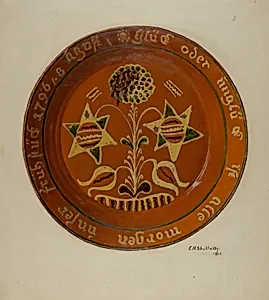
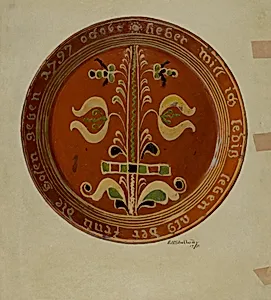
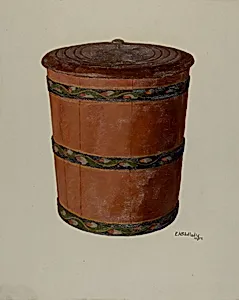
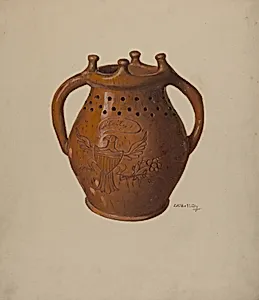
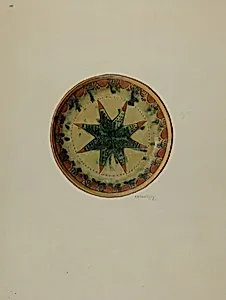
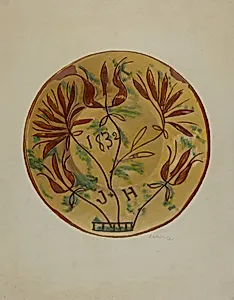
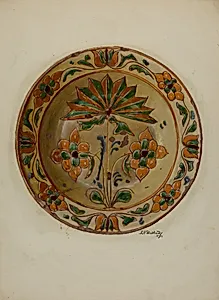
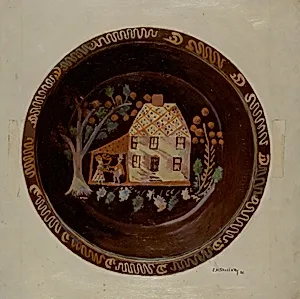
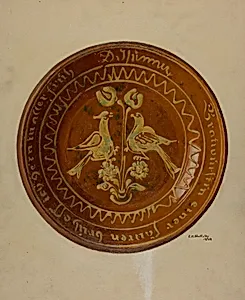
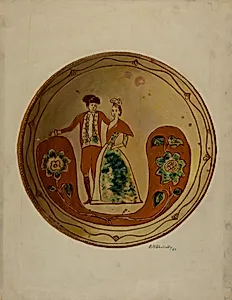
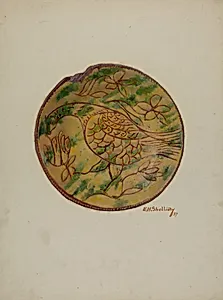
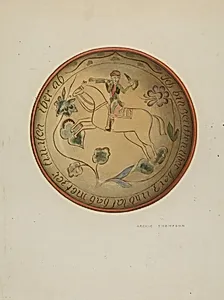
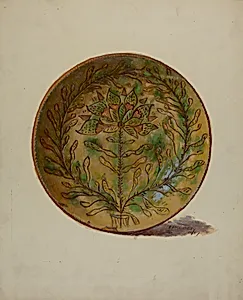
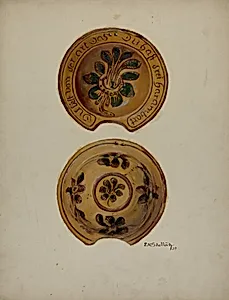
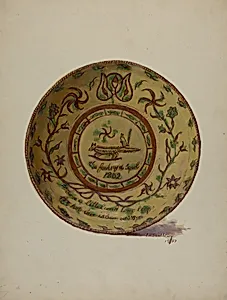
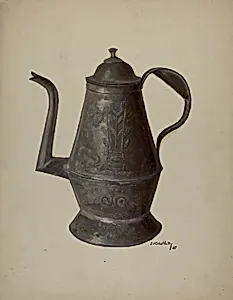
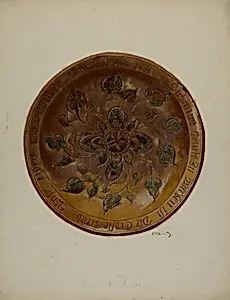
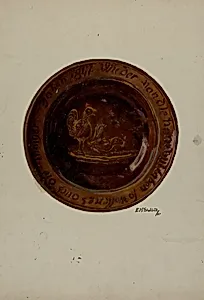
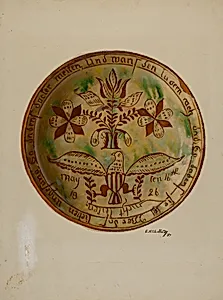
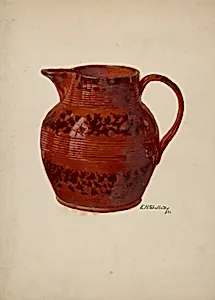
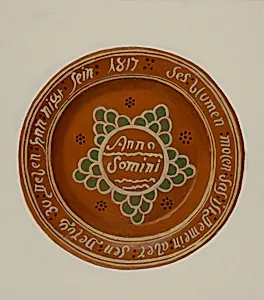
Shellady specialized in Pennsylvania German (Pa. German) pottery and ironwork, rendering everyday items like the *Pa. German Plate* (1937, oil on paperboard), with its vibrant sgraffito designs of birds and florals; the *Pa. German Jar* (1936), showcasing slip-decorated earthenware; and the *Pie Plate* (1936-1937), highlighting folk motifs of fruits and hearts. He also documented utilitarian crafts such as the *Cast Iron Gate* (1937, graphite and pen and ink), with its ornate filigree, and *Pa. German Puzzle Mug* (c. 1938), a whimsical drinking vessel with hidden compartments. These works, typically measuring around 50 x 38 cm, reveal the ingenuity of Pennsylvania Dutch craftsmanship.
Shellady's legacy endures through the National Gallery of Art, where his renderings serve scholars and the public as enduring proxies for fragile heirlooms, fostering appreciation for America's diverse folk heritage. By bridging art and anthropology, his efforts in the Index helped define a national design identity, influencing mid-century revivals of traditional motifs and underscoring the WPA's role in sustaining cultural memory during economic hardship.