Ctrl K
1439–1501
Francesco di Giorgio Martini (1439–1501) was a quintessential Renaissance polymath from Siena, Italy, excelling as a painter, sculptor, architect, engineer, and theorist in the Sienese School tradition. Baptized on September 23, 1439, to a poultry dealer named Francesco Maurizio di Giorgio di Martino, his early life remains sparsely documented, with the first record of his artistic activity appearing in 1464 when he was paid for a statue of Saint John the Baptist at Siena Cathedral. He married twice—first to Cristofana, who died shortly after their 1467 wedding, and then to Agnese, daughter of Antonio di Benedetto di Neroccio, with whom he shared a studio alongside the painter Neroccio di Bartolomeo de' Landi and fathered six children by 1488.
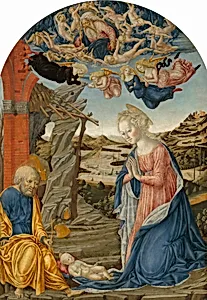
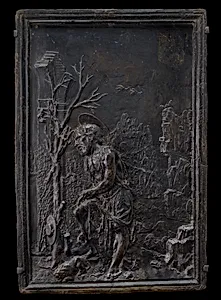
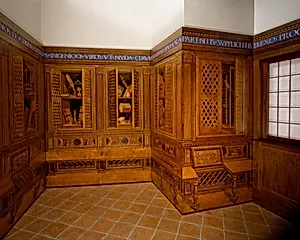
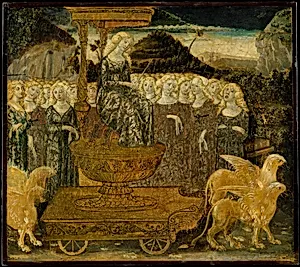
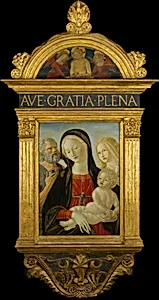
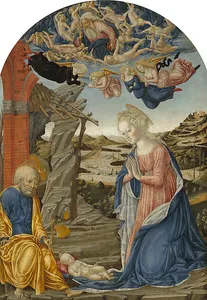
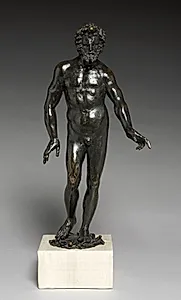
As a painter and sculptor, Martini innovated within Sienese lyricism, blending conservative grace with bold perspectives, as seen in his cassone panels depicting vast, symmetrical urban vistas and his 1471 altarpiece *Coronation of the Virgin* for Santa Maria della Scala in Siena. Other key paintings include *Madonna del Terremoto* (1467), *The Nativity* (1475), and *Birth of the Virgin*, while sculptures like the bronze *Deposition from the Cross* relief and pairs of candle-bearing angels (1489–97) for Siena Cathedral's high altar showcase his Verrocchio-influenced anatomy and drama. His architectural prowess emerged in service to patrons like Federico da Montefeltro, Duke of Urbino, for whom he designed innovative star-shaped fortifications with wedge bastions at sites including the Fortress of San Leo. Notable buildings encompass the church of Santa Maria delle Grazie al Calcinaio in Cortona (from 1485), contributions to Urbino's Palazzo Ducale, and oversight of Siena Cathedral from 1486 as city engineer.
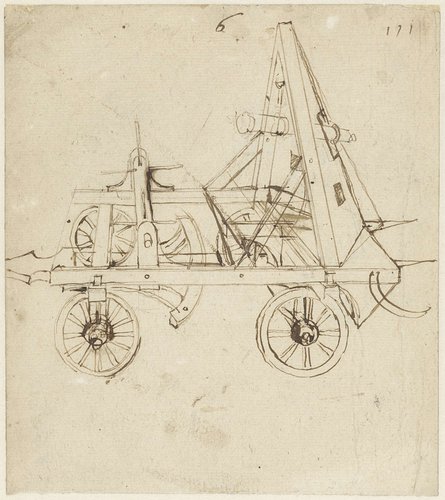
Martini's enduring legacy stems from his *Trattato di architettura civile e militare* (completed after 1482), the third major Quattrocento treatise after Alberti and Filarete, which explored city planning, military engineering, and Vitruvian principles; one manuscript copy was annotated by Leonardo da Vinci, whom Martini met in Milan in 1490 while modeling the cathedral dome. His pioneering bastion designs prefigured trace italienne star forts, and his integration of mining explosives in siege warfare advanced military architecture, cementing his influence on the High Renaissance despite his death outside Siena in late 1501 or early 1502.
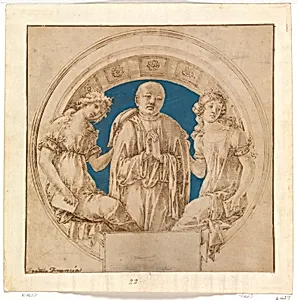
![Borghese Borghesi, 1414-1490, Jurisconsult of Siena [obverse]](https://images.artheonmuseum.org/nga/thumb/borghese-borghesi-1414-1490-jurisconsult-of-siena-nga-44493.webp)
![Minerva Holding a Spear and Shield [reverse]](https://images.artheonmuseum.org/nga/thumb/minerva-holding-a-spear-and-shield-reverse-nga-44494.webp)