Ctrl K
1855
Frank Budash was an American artist active during the late 1930s and early 1940s, best known for his contributions to the Index of American Design, a Federal Art Project under the Works Progress Administration (WPA). This ambitious initiative commissioned artists across the United States to create precise watercolor and graphite renderings of everyday American objects, folk crafts, and decorative arts, preserving a visual record of the nation's cultural heritage amid the Great Depression. Little is documented about Budash's early life, training, or personal background, though his output suggests a keen eye for vernacular craftsmanship, particularly Pennsylvania German folk traditions. His career appears centered in New York, where many Index artists were based.
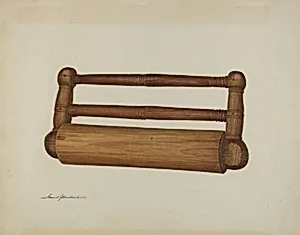
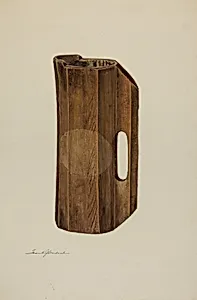
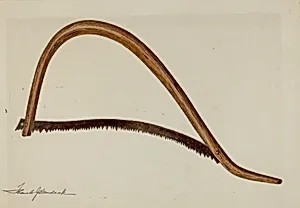
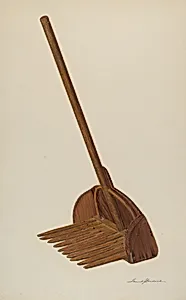
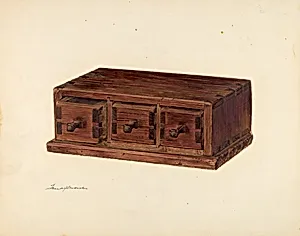
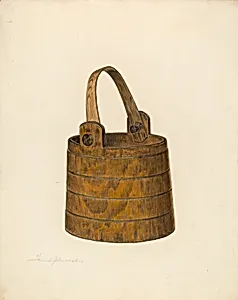
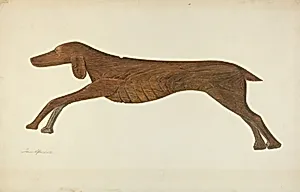
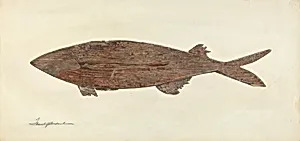
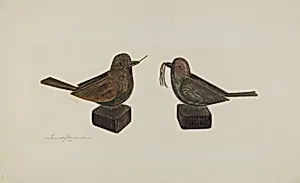
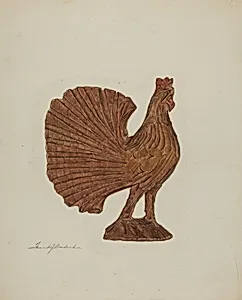
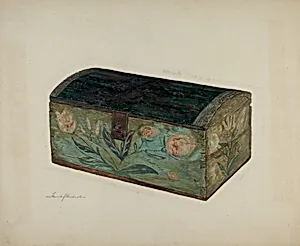
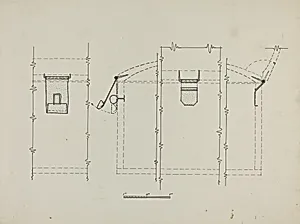
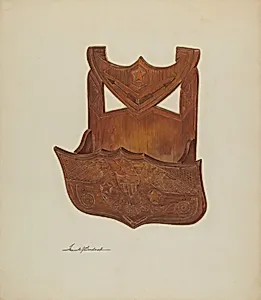
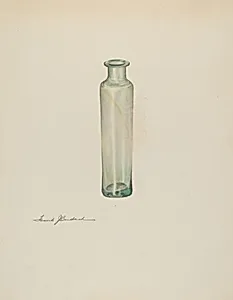
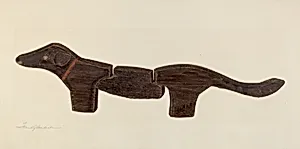
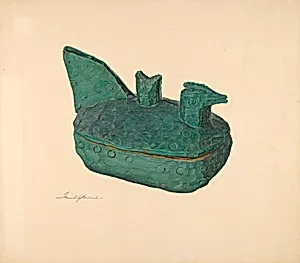
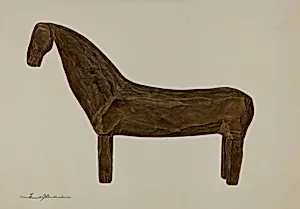
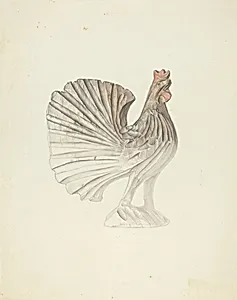
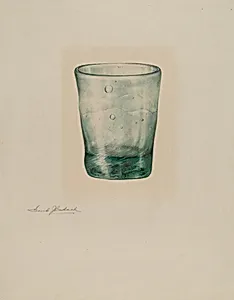
Budash specialized in meticulous depictions of utilitarian objects, tools, toys, and household items, capturing their textures, forms, and historical patina with technical precision. Working primarily in watercolor, graphite, and occasionally pen and ink on paper or paperboard, he produced dozens of studies that highlight the artistry in the ordinary. Among his major works are *Cranberry Picker* (c. 1941), *Saw* (c. 1941), *Pa. German Rolling Pin* (c. 1941), *Spice Box* (c. 1940), *Bucket* (c. 1940), *Weather Vane* (c. 1940), *Pa. German Toy Rooster* (c. 1939), and *Pa. German Box* (c. 1939), all held in the National Gallery of Art's collection as part of the Index. He occasionally collaborated, as seen in *Rooster* (c. 1939) with Elisabeth Fulda, blending their styles to document carved wooden figures. These pieces evoke the charm of rural American life, from whittled toys like hens on nests to functional weather vanes and medicine bottles.
Budash's legacy endures through the Index of American Design, which amassed over 18,000 renderings and influenced mid-20th-century appreciation for folk art. His 19 documented works at the National Gallery—many featuring Pennsylvania German motifs—serve as invaluable references for scholars, offering faithful reproductions that rival photographs in detail while infusing artistic interpretation. In an era of economic hardship, Budash helped democratize art history, elevating humble artifacts to museum-worthy status and ensuring their stories persist for future generations. Today, his drawings continue to inspire studies in American decorative arts and regional craftsmanship.