Ctrl K

Frederick Sommer (1905–1999) was one of the most singular and philosophically searching visual artists of twentieth-century America, a figure who defied easy categorization as he moved between photography, drawing, collage, and theoretical writing across a career spanning more than six decades. Born in Angri, Italy, and raised in Brazil, Sommer earned a master's degree in landscape architecture from Cornell University in 1927. After relocating to Arizona — first Tucson in 1931, then Prescott in 1935 — he began experimenting with photography in the early 1930s following a diagnosis of tuberculosis, and the medium became the central vehicle of his artistic inquiry. He became a naturalized U.S. citizen in 1939.
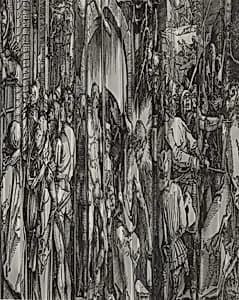
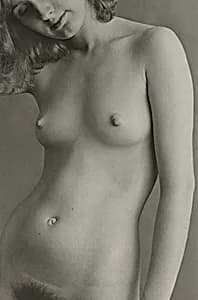
Sommer's photographic practice was shaped by deep engagement with Surrealism and by friendships with artists and thinkers including Edward Weston and Max Ernst. His subjects ranged from the stark, seemingly infinite expanse of the Arizona desert — landscapes he described in terms that evoke musical and cosmological structure — to macabre still lifes composed of animal remains, found objects, and fragments of commercial imagery. Unlike contemporaries who sought the luminous purity of natural form, Sommer was drawn to the uncanny, the decayed, and the combinatory, finding in these subjects a metaphysical richness that resisted sentimentality. He also made cliché-verre negatives by drawing directly on cellophane or foil, producing images that blurred the boundary between photography and drawing.
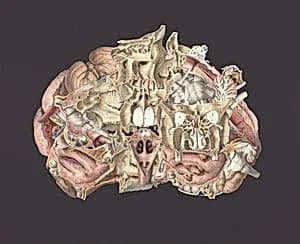
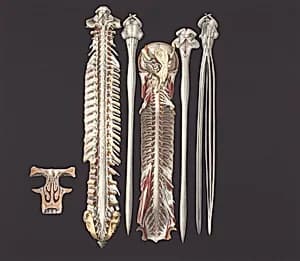
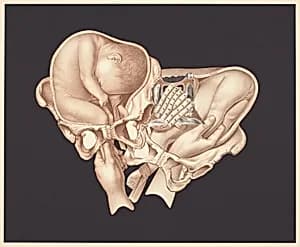
Sommer's influence extended well beyond his own production. He taught at Prescott College and substituted for Harry Callahan at the Institute of Design in Chicago and at the Rhode Island School of Design, forming lasting connections across the American photographic community. He was among the founding figures of the Center for Creative Photography at the University of Arizona in 1975, established alongside Ansel Adams, Harry Callahan, Wynn Bullock, and Aaron Siskind. His final body of work, produced from 1989 to 1999, consisted of collages built largely from anatomical illustrations, bringing his long meditation on the human body and natural form to a quietly extraordinary conclusion. The Getty Museum and the National Gallery of Art are among the major institutions holding significant bodies of his work.