Ctrl K
1590–1690
Giovanni Battista Bracelli was an Italian engraver and draftsman active in Florence in the early seventeenth century. Membership records of Florence's prestigious Accademia del Disegno place him in the institution between 1619 and 1635, providing the primary documentary evidence for his life and career. He studied under the Florentine painter Jacopo da Empoli (1551–1640), whose workshop produced refined religious and genre compositions in a late Mannerist idiom.
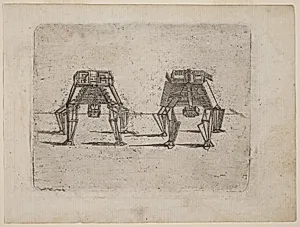
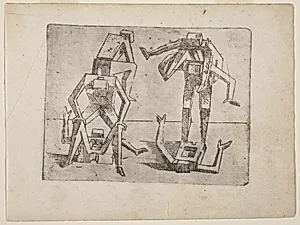
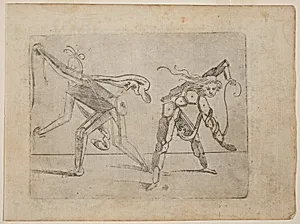
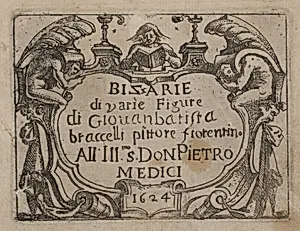
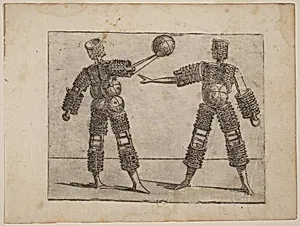
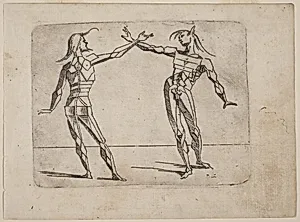
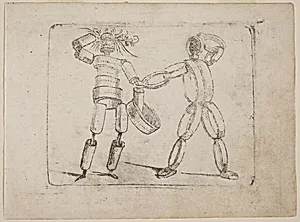
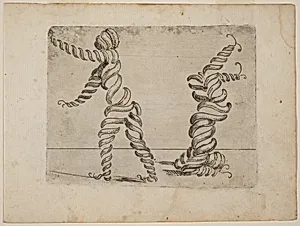
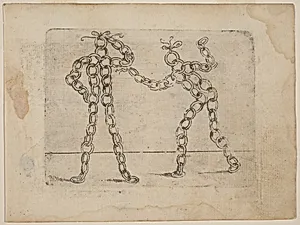
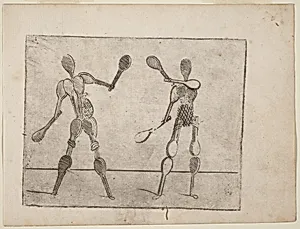
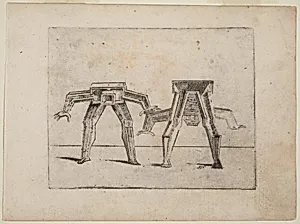
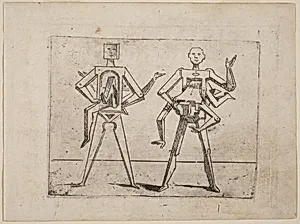
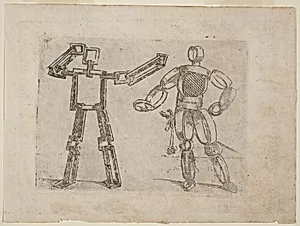
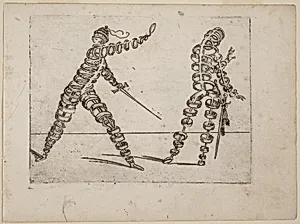
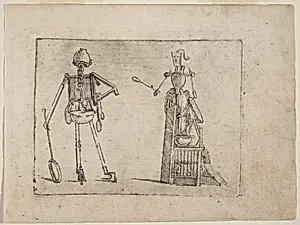
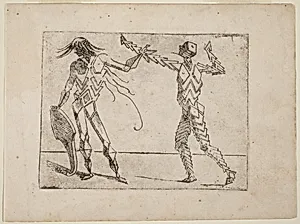
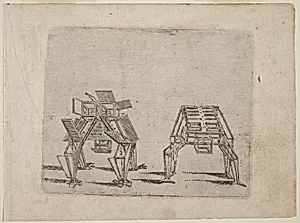
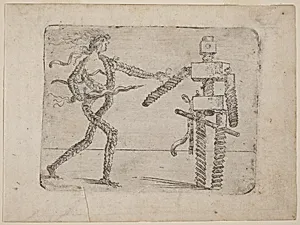
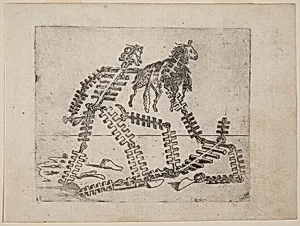
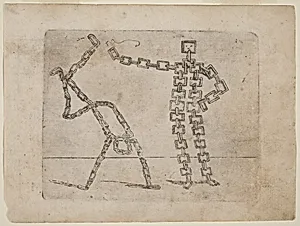
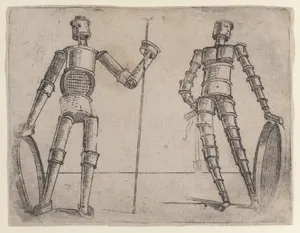
Bracelli's enduring reputation rests almost entirely on a single extraordinary publication: the Bizzarie di varie figure, a suite of forty-seven etchings issued in Florence in 1624. The plates depict human figures engaged in paired interactions, but the bodies themselves are constructed entirely from abstract and mechanical forms—interlocking cubes, spheres, rings, springs, braided ropes, and household objects such as rackets and sieves. The figures perform acrobatics, converse, and posture in ways that are simultaneously legible as human behavior and utterly alien in their formal constitution. A significant influence on the Bizzarie was Jacques Callot's Balli di Sfessania, published in Florence two years earlier in 1622, whose capering commedia dell'arte figures provided a template for Bracelli's far more radical formal experiments.
The Bizzarie was recognized from its earliest reception as an exceptional and eccentric achievement, but its full historical significance has only been appreciated in subsequent centuries. Twentieth-century writers noted the uncanny resemblance of Bracelli's mechanical bodies to the formal vocabulary of Cubism and Constructivism, movements that would not emerge until three hundred years later. The series has also been linked to ideas about automata, the mechanization of labor, and the relationship between the human body and the objects it produces—themes that have given Bracelli's work a renewed relevance in contemporary art-historical discussion.
Beyond the Bizzarie, little of Bracelli's oeuvre survives or has been firmly attributed. His training under Empoli suggests a broader activity as a painter and draftsman in the conventional Florentine mode, but it is the radical imagination of his one published suite of prints that has secured his place in the canon of early modern art.