Ctrl K
1734–1791
Giovanni Pichler, born on January 10, 1734, in Naples, emerged from a distinguished Tyrolean family of gem engravers led by his father, Johann Anton Pichler (1697–1779), who had settled first in Naples and later in Rome. Trained rigorously by his father in classical gem-carving techniques, Pichler also apprenticed under the painter Domenico Corvi, honing skills that blended glyptic precision with artistic depth. This foundation propelled him to Rome, where he became the most prolific and illustrious member of the Pichler dynasty, producing an astonishing 379 engraved gems noted for their exceptional clarity, sharpness, and neoclassical purity.
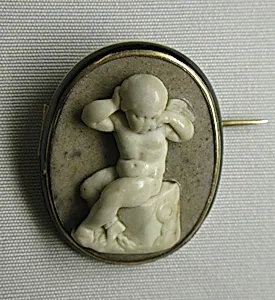
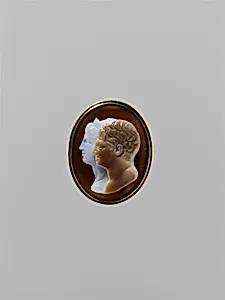
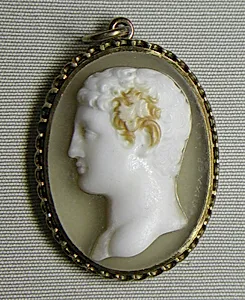
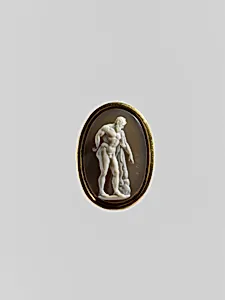
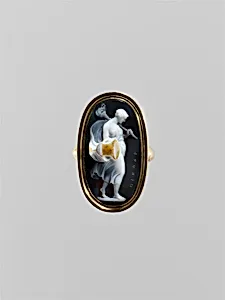
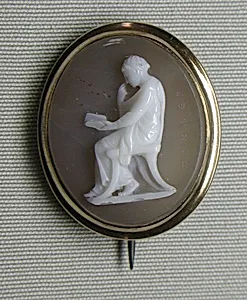
Working in the Roman tradition of glyptic art, Pichler specialized in both intaglios (recessed engravings) and cameos (embossed reliefs), often evoking ancient prototypes with modern mastery. His early triumph, *Hercules in Combat with the Nemean Lions*, came after fifteen years of practice, showcasing his command of dynamic figures and intricate details. Later masterpieces include the sardonyx intaglio of *The Farnese Hercules* (ca. 1770–90), a *Seated Female Figure*, *Young Woman with a Torch and Vase*, *Head of a Young Man in Roman Style*, and a *Jugate Portrait of a Couple*, all demonstrating his ability to capture classical vigor in miniature form on materials like onyx, sardonyx, and gold mounts. In 1790, he published a catalogue of 200 of his works, cementing his status as the era's most sought-after engraver among Grand Tour collectors and nobility.
Pichler's legacy endures through his influence on the Pichler family—brother to gem-engraver Luigi Pichler and stepbrother to Giuseppe Pichler—and his role in reviving ancient gem traditions during the Neoclassical revival. A portrait bust by sculptor Christopher Hewetson graces Rome's Musei Capitolini, symbolizing his prominence. He died on January 25, 1791, in Rome, leaving a corpus that continues to captivate museums worldwide, from the Metropolitan to the Getty.