Ctrl K
1855
Glenn Wilson was an American artist active around 1935, best known for his precise watercolor renderings created as part of the Index of American Design, a Federal Art Project under the Works Progress Administration (WPA). This ambitious initiative, launched in the 1930s, commissioned artists across the United States to document the nation's folk art, crafts, and design heritage through detailed illustrations. Wilson's contributions captured everyday objects with meticulous accuracy, preserving examples of American material culture that might otherwise have been lost to time.
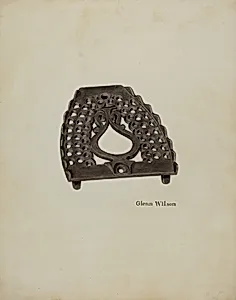
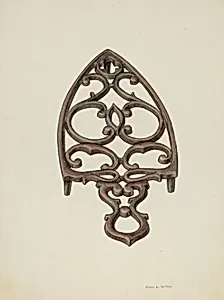
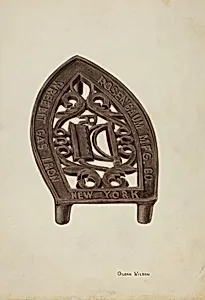
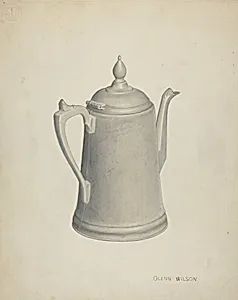
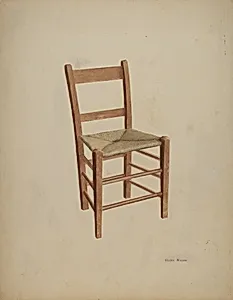
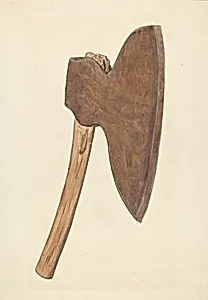
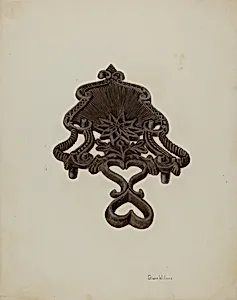
Little is known about Wilson's early life or formal training, as biographical details remain scarce in historical records. His known oeuvre consists primarily of works produced circa 1941–1942, all executed in watercolor, graphite, colored pencil, or pen and ink on paperboard. Among his major pieces are *Pewter Teapot* (c. 1941), *Pioneer Broad Axe* (c. 1941), *Chair (handmade)* (c. 1941), *Metal Trivet* (c. 1941), and several trivets (c. 1941–1942). These illustrations highlight functional crafts like household utensils and tools, rendered with a technical precision that emphasizes texture, form, and historical patina, reflecting the project's goal of celebrating vernacular American artistry.
Wilson's style aligns with the documentary realism of the Index of American Design, prioritizing faithful representation over personal expression to serve an ethnographic purpose. Housed today in the National Gallery of Art, his seven surviving works exemplify how New Deal-era programs supported artists while advancing cultural preservation. Though Wilson's career appears limited to this project, his illustrations endure as vital records of pre-industrial American craftsmanship, offering modern viewers insight into the nation's design traditions and the artistic labor behind public history initiatives.