Ctrl K
1465–1547
Hans von Reutlingen (c. 1465–after 1547), also known as Hans von Aich, was a master German goldsmith and seal engraver based in Aachen, a city renowned for its medieval craftsmanship at the Holy Roman Empire's heart. Born and trained locally amid the Rhineland's vibrant metalworking guilds, his early life remains sparsely documented, though he emerged as a journeyman by the late 1490s, securing citizenship and guild membership around 1500. Reutlingen's workshop thrived for over four decades, blending imperial commissions with ecclesiastical treasures during the stylistic shift from late Gothic to early Renaissance influences.
His oeuvre exemplifies the transition from Spätgotik rigidity to Frührenaissance humanism, incorporating mannerist architectural motifs like arcades and baldachins to lend ethereal lightness to heavy silver-gilt forms. High-relief chasing, intricate filigree, and luminous gilding defined his technique, often marked by his crossed "JR" initials. Figures feature elongated proportions, naturalistic drapery, and symbolic depth, bridging devotional piety with imperial propaganda—eagles and coats-of-arms adorning seals for emperors Maximilian I and Charles V.
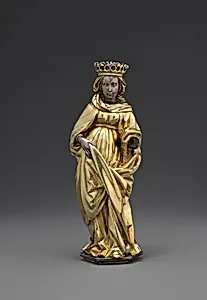
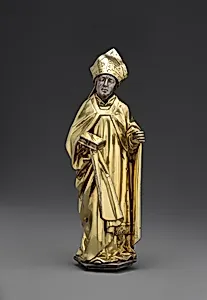
Among his masterpieces is the opulent gold cover for the Vienna Coronation Gospels (c. 1500), featuring God the Father enthroned amid evangelist medallions and gems, now in the Kunsthistorisches Museum. He crafted seals like Maximilian's majesty seal (1498) and produced the monumental bust reliquary of Saint Lambert (1508–1512) for Liège Cathedral, including silver-gilt figures such as the Standing Bishop and Standing Female Saint (both ca. 1510) in our collection, originally part of this consecrated ensemble commissioned by Prince-Bishop Erard de la Marck. Other highlights include the Saint Peter statuette (c. 1510) in Aachen Cathedral Treasury and various monstrances, like the Agnus Dei reliquary (c. 1515).
Reutlingen's legacy endures as Aachen's preeminent goldsmith, with 75% of his documented works profane seals elevating the craft's political role, while sacral pieces enriched Europe's treasuries. His influence rippled through Rhineland apprentices, and in 2001, a street in Aachen's old town honored him—testimony to a craftsman whose intricate metalwork captured an empire's sacred and secular splendor.
All 2 artworks loaded