Ctrl K
1864–1951
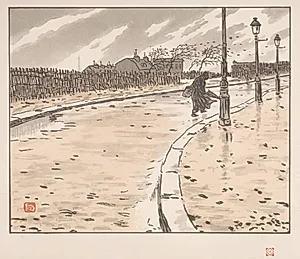
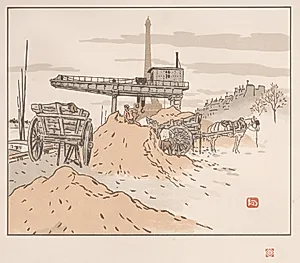
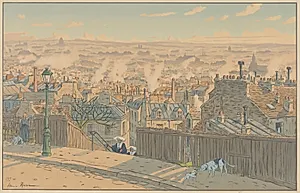
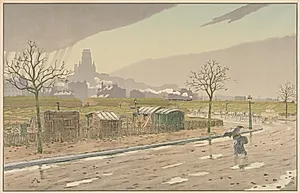
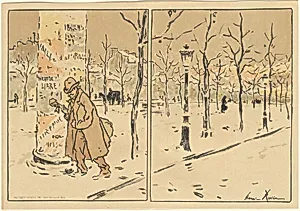
Henri Rivière (1864-1951) stands as a pioneering figure in European printmaking, particularly recognized as the father of color lithography and color woodcut techniques in the West. Born in Paris during the Second Empire, Rivière achieved distinction in two distinct artistic realms: as the creator of innovative shadow theater performances at the legendary Chat Noir cabaret, and as a printmaker whose Japanese-influenced works captured the transformation of modern Paris and the timeless beauty of Brittany. Rivière's most significant contribution was his technical innovation in printmaking. At a time when Japanese woodcuts were just beginning to influence Western artists, and years before other European artists would fully explore the artistic potential of color lithography, Rivière was already creating sophisticated multi-color prints using techniques he developed himself. He made his own cutting tools, mixed his own inks, and performed his own printing, maintaining complete control over the artistic process in a manner that presaged the artist-printmaker movement of the twentieth century.
Henri Rivière was born on March 11, 1864, in Paris, France, during the final years of Napoleon III's Second Empire. Growing up in the vibrant cultural atmosphere of late nineteenth-century Paris, Rivière was exposed to the bohemian artistic world that would shape his creative vision.
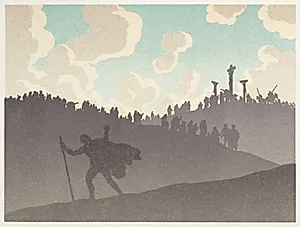
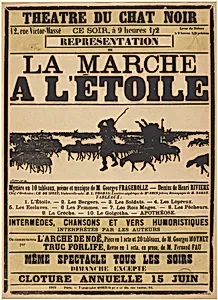
In 1886, Rivière created a revolutionary form of shadow theater at the Chat Noir cabaret in Montmartre, performing under the name 'ombres chinoises' (Chinese shadows). This innovative theatrical form combined silhouette puppetry with sophisticated lighting effects, projected narratives, and musical accompaniment, creating a multimedia spectacle that captivated Parisian audiences.
The shadow theater at Chat Noir became a notable success, running for an entire decade until the café closed in 1897. During these years, Rivière developed skills in visual narrative, composition, and the dramatic use of light and shadow that would later inform his printmaking practice.
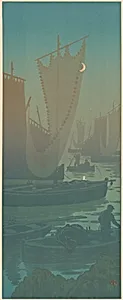
During this period, Rivière became fascinated with Japanese woodcut prints, particularly the works of Ando Hiroshige and Katsushika Hokusai. The influence of ukiyo-e (Japanese woodblock prints) became increasingly evident in his developing artistic vision, particularly their flat color areas, bold compositions, and innovative perspectives.
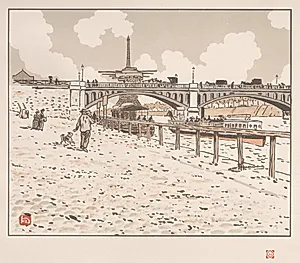
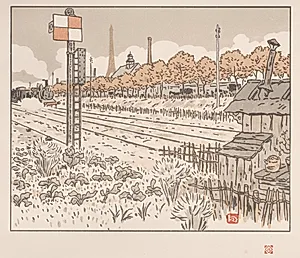
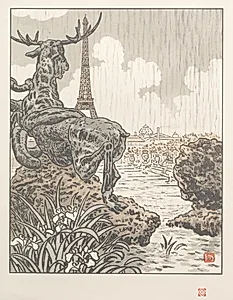
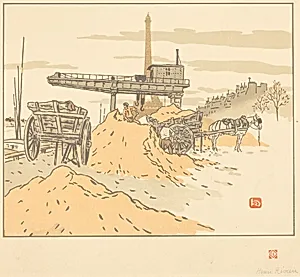
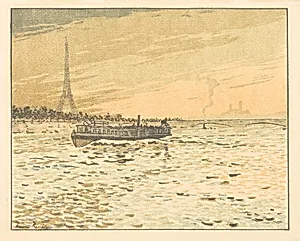
As the Eiffel Tower rose above Paris between 1887 and 1889, Rivière found his signature subject. He began documenting the tower's construction and its impact on the Parisian skyline, creating a remarkable series of prints that captured both the engineering marvel and its integration into the city's fabric.
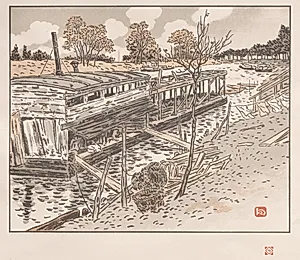
Rivière's approach to printmaking was revolutionary. He experimented extensively with different techniques to recreate the aesthetic of Japanese woodcuts while developing his own methods. Unlike most European printmakers of his era who relied on professional printers, Rivière maintained complete control of the process: he made his own cutting tools, mixed his own inks, and executed his own printing.
His color woodcuts and lithographs demonstrated a sophisticated understanding of color theory and registration. Each print required multiple blocks or stones, carefully aligned to build up layers of color. This technical mastery allowed him to achieve subtle gradations and atmospheric effects that distinguished his work from that of his contemporaries.
The Eiffel Tower series represents Rivière's mature synthesis of Japanese aesthetic principles with modern Parisian subject matter, creating images that were simultaneously documentary and poetic, capturing the transformation of Paris into a modern metropolis.
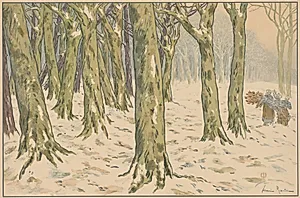
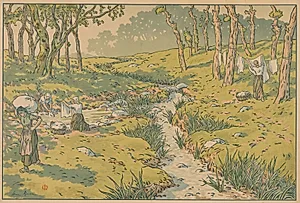
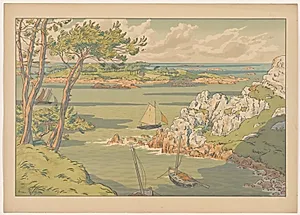
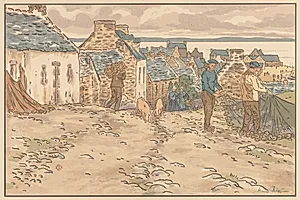
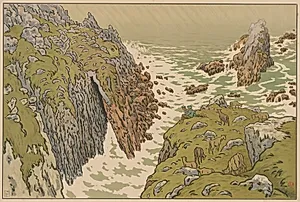
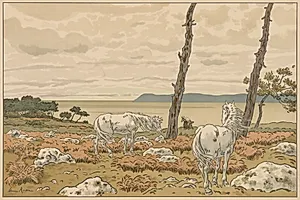
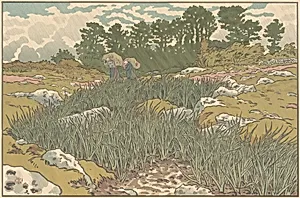
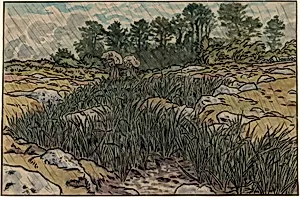
Beginning in the 1890s, Rivière began making regular trips to Brittany, the northwestern region of France known for its dramatic coastlines, ancient Celtic culture, and distinctive light. The Breton landscape became his second great subject, complementing his Parisian urban scenes.
In his Breton works, Rivière captured the timeless quality of the region's seascapes, fishing villages, and rural life. These prints demonstrated his ability to work with both the bold, graphic simplifications of Japanese woodcuts and the atmospheric, light-filled sensibility of French Impressionism.
His Breton series was influenced by Impressionism and Post-Impressionism, yet maintained the structural clarity and flat color areas derived from Japanese prints. The works often featured high horizons, asymmetrical compositions, and careful attention to the changing effects of weather and light on the coastal landscape.
These landscape prints established Rivière's reputation beyond the Parisian avant-garde, bringing his work to collectors throughout Europe and America who appreciated both his technical virtuosity and his sensitive observation of French regional character.
By the early twentieth century, Rivière's pioneering role in color printmaking was widely recognized. His influence extended to younger artists who began exploring lithography and woodcut as independent artistic media rather than merely reproductive techniques.
Throughout the early decades of the twentieth century, Rivière continued producing prints while also working in watercolor and other media. His work evolved while maintaining the essential characteristics that defined his artistic vision: precise craftsmanship, sensitivity to atmospheric effects, and the integration of Japanese compositional principles with French subjects.
Rivière's works entered major museum collections during his lifetime, including institutions that would later preserve his legacy: the Art Institute of Chicago, the Musée d'Orsay in Paris, The Museum of Modern Art in New York, and the National Gallery of Art in Washington, D.C.
Henri Rivière died on August 24, 1951, in Paris, at the age of eighty-seven, having witnessed and participated in the complete transformation of printmaking from a reproductive craft to a major fine art medium, a revolution he had helped to create.
Artheon Research Team
Last updated: 2025-11-09
Biography length: ~462 words

![Poster for Le Chat Noir [L'enfant prodigue]](https://images.artheonmuseum.org/nga/thumb/poster-for-le-chat-noir-lenfant-prodigue-nga-143947.webp)