Ctrl K
1635–1719
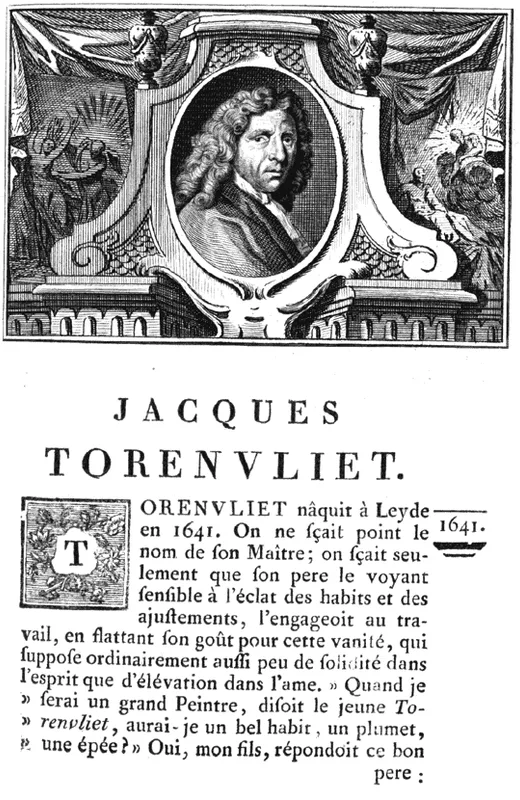
**Jacob Toorenvliet (1640–1719)**
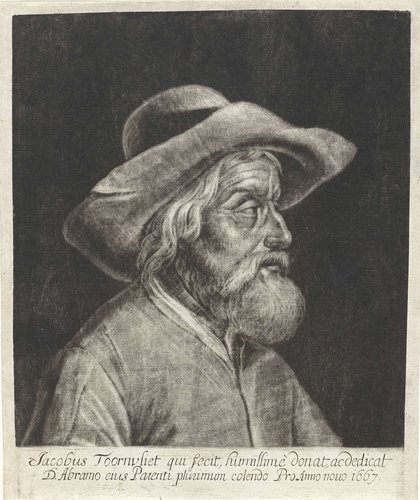
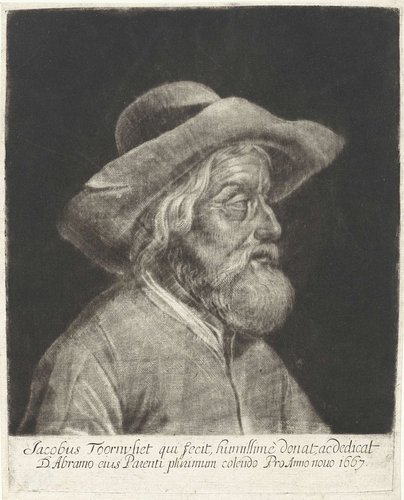
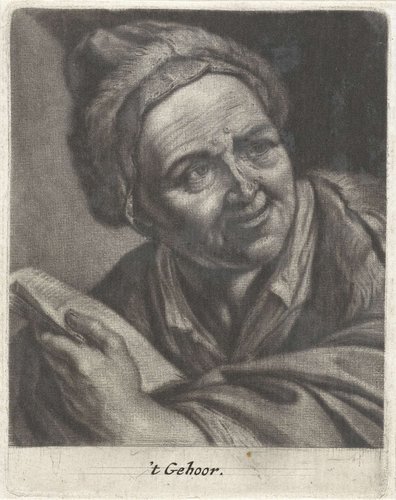
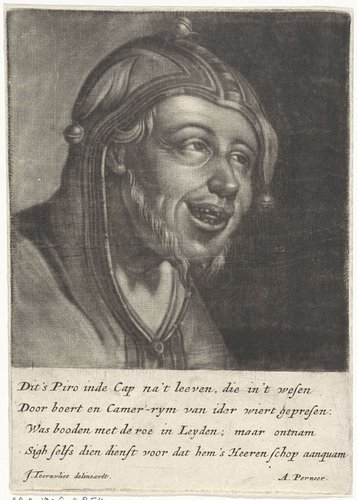
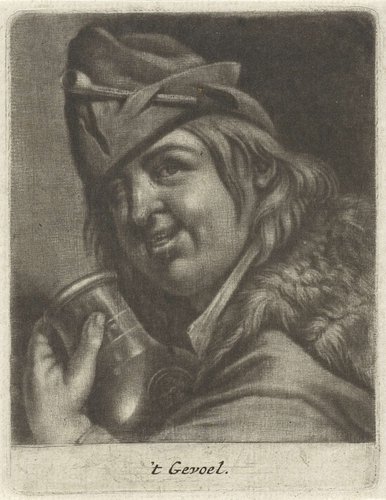
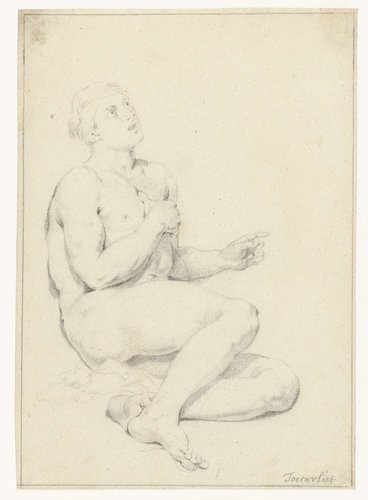
Jacob Toorenvliet was baptized on 1 July 1640 in Leiden, in the Dutch Republic, the son of Abraham Toorenvliet, a prominent glass painter, drawing master, and member of both the Glassmakers’ Guild and the Guild of Saint Luke. He learned the rudiments of painting from his father, who also instructed artists like Frans van Mieris the Elder and Matthijs Naiveu, before completing his training under Gerrit Dou, his father's brother-in-law, until 1659. By age fifteen, Toorenvliet drew his first self-portrait in 1655, and he signed his debut painting, *The Young Composer*, four years later, marking his early prowess in the Leiden tradition of fijnschilderij—the meticulous "fine painting" style epitomized by Dou.
Toorenvliet's career blended genre scenes, portraits, and occasional religious or allegorical subjects, reflecting the Dutch Golden Age's diverse output while adhering to the Leiden school's polished realism and intricate detail. After embarking on his Grand Tour in 1659, he worked abroad extensively: in Vienna around 1663–1674, where he painted small figures on copper; Rome in 1669 and 1671, joining the Bentvueghels artists' society as "Jazon"; and Venice from 1670 to 1673 alongside Nicolaes Roosendael. Returning to Leiden by 1679 via Amsterdam, he rejoined the Guild of Saint Luke, serving as headman and dean nearly continuously from 1695 to 1712, and co-founded the Leiden Drawing Academy in 1694 with Willem van Mieris and Carel de Moor.
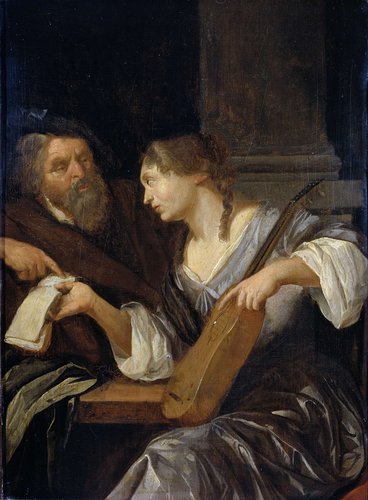
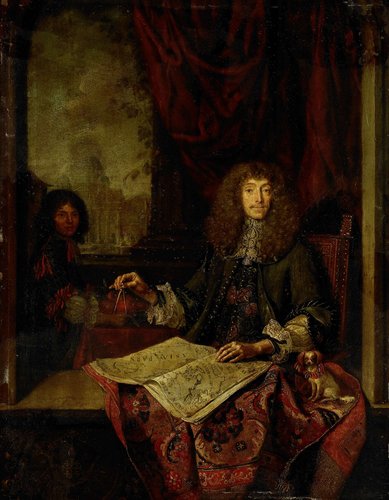
Among his notable works are the intimate genre piece *The Music Lesson* (ca. 1660–1690, Rijksmuseum), depicting musicians in a domestic interior; *An Alchemist*, showcasing his skill in scholarly pursuits; and portraits like *Portrait of Carel Quina (1622–1689), Knight of the Holy Sepulchre and Amsterdam-born explorer of Asia* (1669, Rijksmuseum), *Portrait of Ole Borch* (1661), and a 1660 family portrait of the Schrevelius clan. He also produced a 1687 family portrait of his brother Dirck and ornamental designs, with his son Abraham Toorenvliet (b. 1682) following in the artistic trade.
As one of the last fijnschilders after Dou's death in 1675 and Van Mieris's in 1681, Toorenvliet bridged Leiden's golden era and its twilight, holding esteemed guild roles despite later financial straits. His oeuvre of around 19 known paintings in major collections endures for its luminous detail and narrative depth, illuminating everyday life, exploration, and intellect in 17th-century Netherlands.