Ctrl K
1812–1867
James Goodwyn Clonney (1812–1867) was an American genre painter and miniaturist whose warm, gently humorous depictions of rural and small-town American life place him among the most appealing practitioners of the antebellum genre tradition. Born in England and brought to the United States as a child, he studied drawing and miniature painting in New York and worked for a period as a miniature portraitist — a trade that sharpened his eye for precise characterization and intimate detail. By the late 1830s he had turned his attention primarily to genre scenes, exhibiting regularly at the National Academy of Design, of which he became an associate.
Clonney's genre paintings engage the everyday life of rural America with affection and quiet wit. His subjects include fishing scenes, children at play, Mexican War encampments, and moments of domestic leisure in the northeastern countryside. Compared to his more prominent contemporaries such as William Sidney Mount, Clonney worked on a smaller scale and with a lighter touch, but his paintings share Mount's commitment to recording American democratic life with dignity and good humor. His handling of light is confident, and his figures, though unpretentious, are rendered with genuine care.
After several years based in New York, Clonney moved to Cooperstown in upstate New York, where he lived during the final decades of his life. This rural relocation aligned naturally with the pastoral subjects that defined his work. He continued to paint and exhibit, though his output diminished in his later years.
Clonney's reputation faded in the later nineteenth century as tastes shifted, but twentieth-century scholarship brought renewed appreciation for the antebellum genre tradition in which he worked. His paintings are now recognized as charming and historically valuable documents of American rural life in the decades before the Civil War, and they are held in important American collections including the Museum of Fine Arts, Boston.
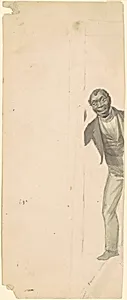
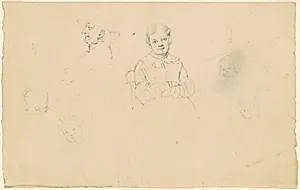
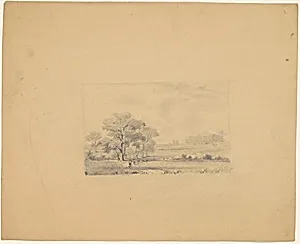
![Studies of Dogs and a Seated Boy [recto]](https://images.artheonmuseum.org/nga/thumb/studies-of-dogs-and-a-seated-boy-recto-nga-197307.webp)
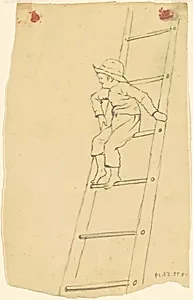
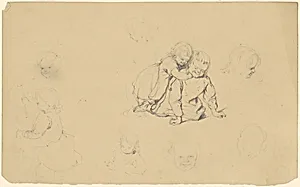
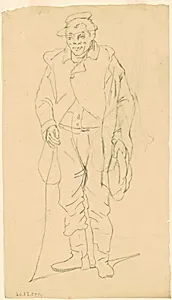
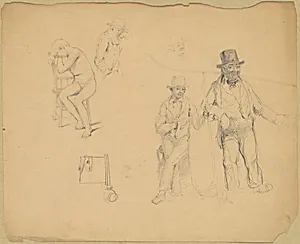
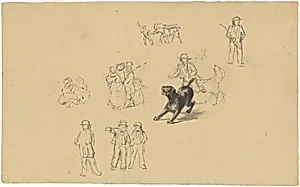
![Studies of Dogs and Men [verso]](https://images.artheonmuseum.org/nga/thumb/studies-of-dogs-and-men-verso-nga-212699.webp)