Ctrl K
1883–1959
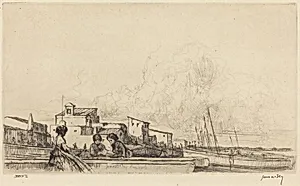
James McBey (1883–1959) was a Scottish artist renowned for his etchings and paintings, emerging from humble beginnings in Newburgh, Aberdeenshire, as the illegitimate son of a blacksmith's daughter. Largely self-taught, he left school at fifteen to work as a bank clerk in Aberdeen, where he devoured art books from the public library and attended evening classes at Gray's School of Art to hone his drawing skills. Inspired by Maxime Lalanne’s treatise *Traité de la Gravure à l’Eau-Forte*, McBey taught himself etching on zinc plates in 1902, improvising prints with a domestic mangle and later building his own press. By 1910, a transformative trip to the Netherlands exposed him to Rembrandt’s prints, fueling his command of light, atmosphere, and intricate line work in the British etching revival tradition.
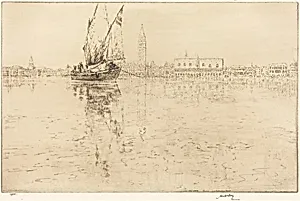
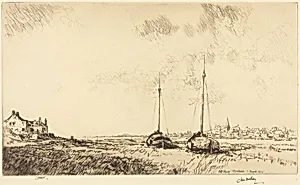
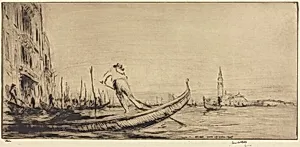
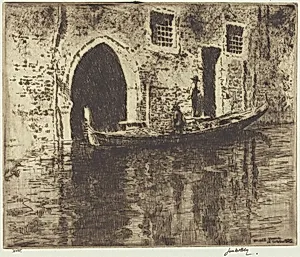
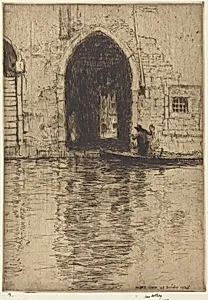
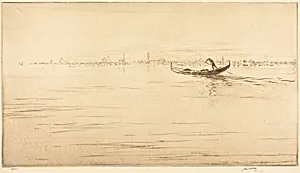
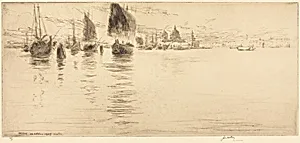
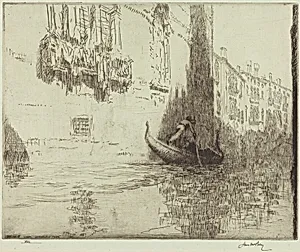
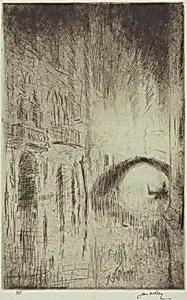
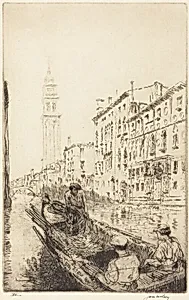
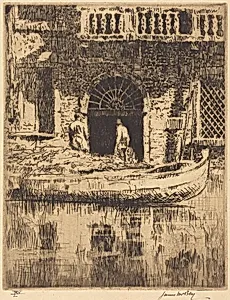
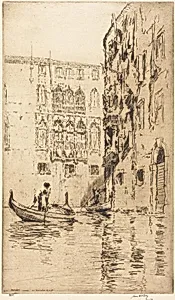
Abandoning banking, McBey rocketed to fame with his 1911 solo exhibition at London’s Goupil Gallery, selling dozens of prints depicting Scottish harbors like *A Fishing Harbour (Stonehaven)* (1913) and early travels. His wanderlust led to Morocco in 1912 alongside artist James Kerr Lawson, yielding vibrant Orientalist scenes such as *The Banderillas* (1911) and *The Ford* (1913). During World War I, as official war artist for the Egyptian Expeditionary Force, he documented the Sinai patrols and Allenby’s advance into Jerusalem, producing over 300 works including the poignant *The Long Patrol – the Wadi* (1917) and portraits of T.E. Lawrence in Damascus (1918) and Emir Faisal—many now in the Imperial War Museum. Venice etchings from 1925, like *A Tartane Leaving Venice*, marked his technical peak, fetching Old Master prices at auction.
In 1931, McBey married American photographer Marguerite Loeb in New York, settling in Tangier and Marrakesh after buying homes there, though they relocated to the U.S. during World War II, where he became a citizen in 1942. Shifting to oils amid the Depression’s toll on prints, he painted commissioned portraits like Sir Harry Lauder (1921) and Moroccan subjects such as *Acrobats, Marrakesh* (1936). McBey saw himself as a craftsman unbound by movements, prioritizing skill over trends. His legacy endures in major collections—the National Gallery of Art, Aberdeen Art Gallery (home to the McBey Reference Library), and Boston Public Library—revived by recent exhibitions celebrating his global vision and etching mastery. He died in Tangier in 1959, leaving a corpus of some 314 documented works that capture the poetry of place and human endeavor.