Ctrl K
1724–1785
John Goddard (1723/24–1785) was a preeminent American cabinetmaker whose innovative designs defined the Newport school of furniture making in colonial Rhode Island. Born in Massachusetts, where he trained as a house carpenter, Goddard relocated to Newport in the 1740s with his family. There, he and his younger brother James worked for the esteemed cabinetmaker Job Townsend. Goddard solidified his place in the trade by marrying one of Townsend's daughters, forging a vital family alliance that blended the Goddard and Townsend dynasties—two of America's most renowned woodworking families. By the 1760s, Goddard had established his own thriving workshop, emerging as Newport's leading cabinetmaker and producing pieces that blended English Rococo influences with distinctly American ingenuity.
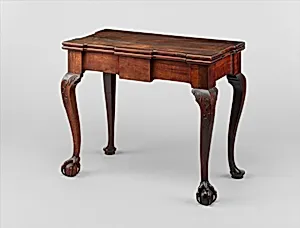
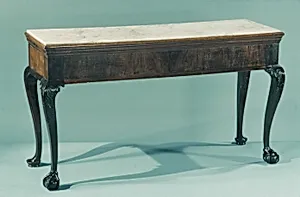
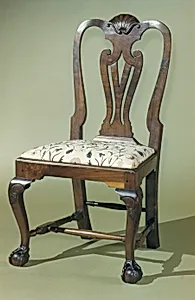
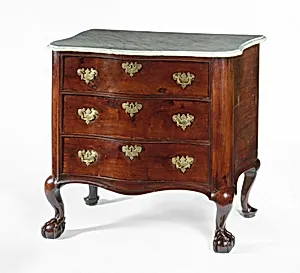
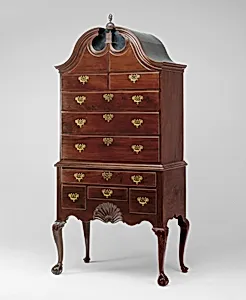
Goddard's oeuvre epitomized the Newport tradition, characterized by bold block-front facades, shell-carved drawers, and cabriole legs, often executed in mahogany imported from the West Indies. His designs favored dramatic contrasts through inlaid feathers, scalloped aprons, and pierced brackets, creating furniture that was both functional and sculptural. Notable works include masterful high chests of drawers and desks, such as the iconic block-front bureau tables and card tables from around 1770, preserved in collections like the Art Institute of Chicago. These pieces showcase his mastery of complex veneering and carving techniques, where raised central blocks alternate with recessed sides for a rhythmic, three-dimensional effect.
Goddard's legacy endures as a cornerstone of American decorative arts, influencing generations of craftsmen and elevating Newport furniture to the status of fine art. His workshop's output, produced amid the Revolutionary era, symbolized colonial prosperity and craftsmanship. Today, Goddard-attributed pieces command top prices at auction, gracing museums worldwide and underscoring his pivotal role in shaping early American identity through exquisite, enduring forms. (312 words)