Ctrl K
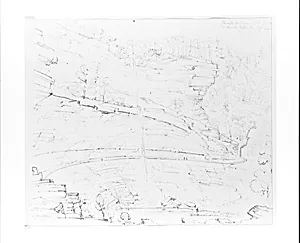
1811–1893
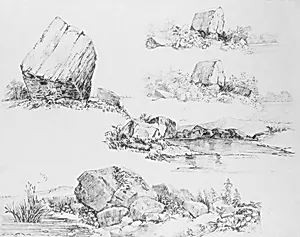
John William Casilear, born on June 25, 1811, in New York City, began his artistic career as an engraver, apprenticed under the prominent Peter Maverick in 1826. He later studied painting under Asher B. Durand in 1831, forming a close friendship that profoundly shaped his path. Durand, influenced by Thomas Cole, introduced Casilear to landscape painting by the mid-1830s, transitioning him from banknote engraving to the Hudson River School tradition. Elected an associate of the National Academy of Design in 1833 and a full academician in 1851, Casilear exhibited there from 1833 until 1893, alongside venues like the Pennsylvania Academy of the Fine Arts and the American Art-Union.
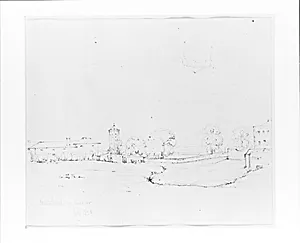
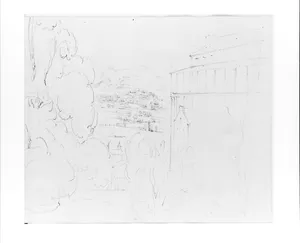
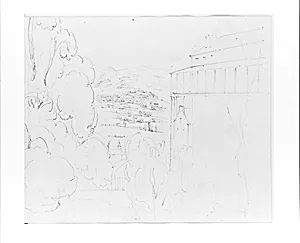
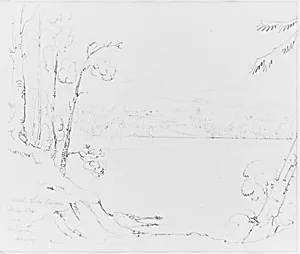
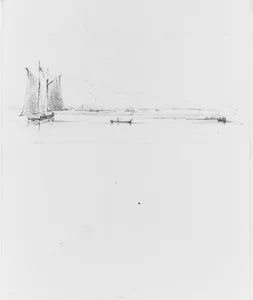
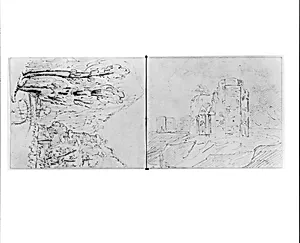
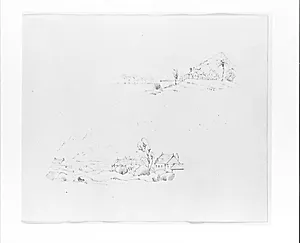
In 1840, Casilear traveled to Europe with Durand, John Frederick Kensett, and Thomas Prichard Rossiter, sketching landscapes and studying Old Masters in museums, which honed his plein air skills. Returning in 1843, he continued engraving until the mid-1850s, when he devoted himself fully to painting, opening a studio on West 10th Street in New York City from 1859 onward. A member of the Century Association from 1851, he painted serene, detailed landscapes reflective of the Hudson River School's second generation, emphasizing luminous skies and meticulous natural forms akin to Luminism.
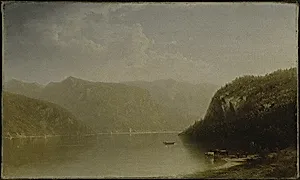
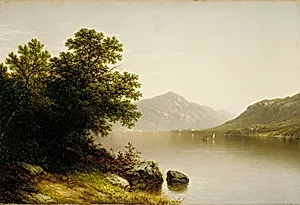
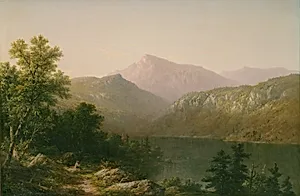
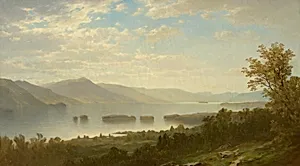
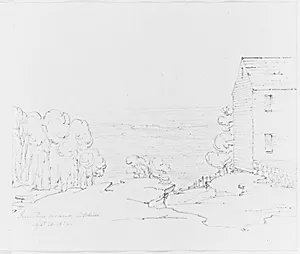
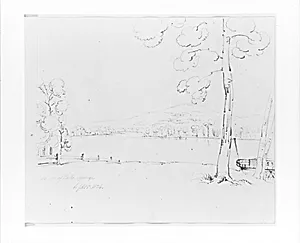
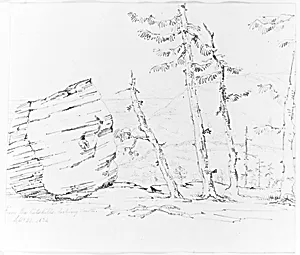
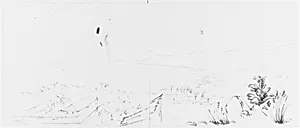
Casilear's oeuvre includes iconic works such as *Lake George* (1860), a tranquil Adirondack vista showcasing his precise engraving-derived detail; *Study of Mount Washington* (c. 1855), praised for its grand, lofty topography; *Niagara Falls* (1872); and *Lake at Sunset* (1863). These pieces capture the sublime American wilderness, blending topographic accuracy with poetic light effects. In 1867, he married Helen M. Howard in Tamworth, New Hampshire; their son, John William Casilear Jr., was born that year.
Casilear died suddenly on August 17, 1893, in Saratoga Springs, New York, at age 82, from uremia. His legacy endures in major collections, including the Metropolitan Museum of Art, National Gallery of Art, and Woodmere Art Museum, where his works exemplify the Hudson River School's celebration of national identity through nature's majesty.