Ctrl K
1867–1945
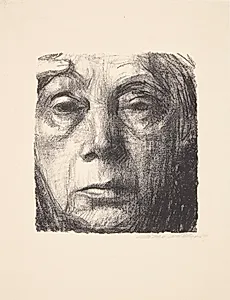
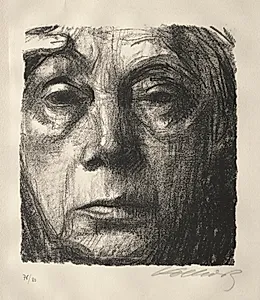
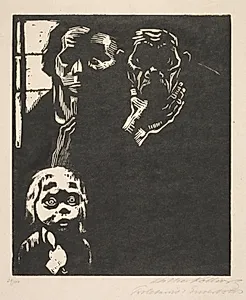
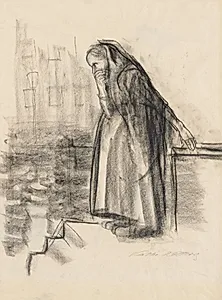
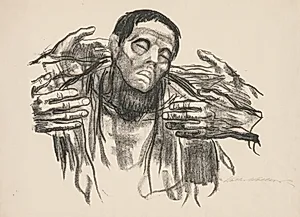
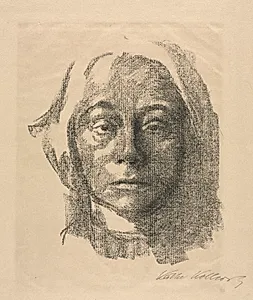
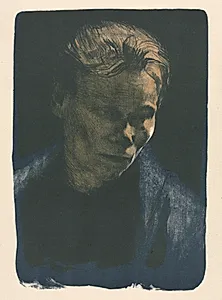
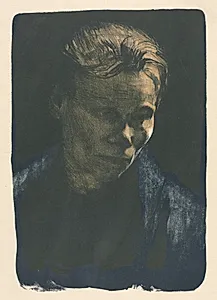
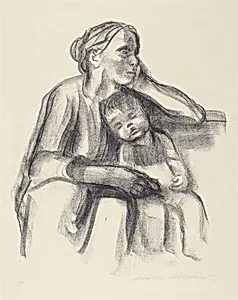
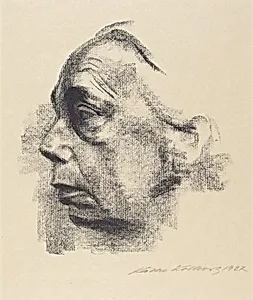
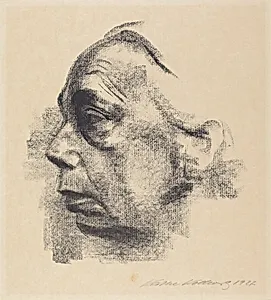
Käthe Kollwitz (1867–1945) was a German artist whose powerful images of poverty, war, and maternal grief established her as the foremost practitioner of socially engaged art in early 20th-century Europe. Working primarily in printmaking—including etching, lithography, and woodcut—as well as drawing and sculpture, Kollwitz created works of raw emotional power that gave voice to the suffering of working-class people. Her major cycles, The Weavers and The Peasant War, depicted historical struggles with contemporary relevance, while her later works responded to the tragedies of two world wars. The first woman elected to the Prussian Academy of Arts and granted honorary professor status, Kollwitz achieved recognition despite working outside modernist movements, creating art rooted in human compassion rather than formal innovation. The death of her son Peter in World War I profoundly shaped her pacifist convictions and artistic vision.
Born Käthe Schmidt on July 8, 1867, in Königsberg, Prussia (now Kaliningrad, Russia), she grew up in a progressive family. Her father, a mason and builder, was influenced by socialist and religious reform movements, creating an environment that valued social justice and intellectual inquiry.
Recognizing her artistic talent, her family encouraged her training. She studied art in Königsberg, Berlin, and Munich during the 1880s, receiving instruction in drawing, painting, and printmaking. Unlike most women of her era, who were excluded from official academies, Kollwitz received relatively thorough professional training.
In 1891, she married Karl Kollwitz, a physician who established his practice in a working-class district of Berlin. This marriage would prove crucial to her artistic development, as daily exposure to the poverty, illness, and suffering of her husband's patients provided both subject matter and moral imperative for her work.
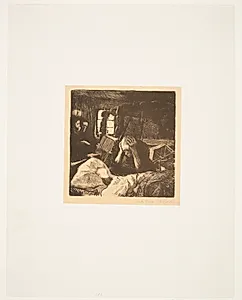
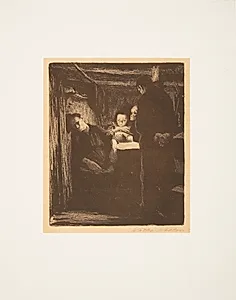
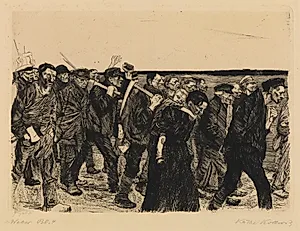
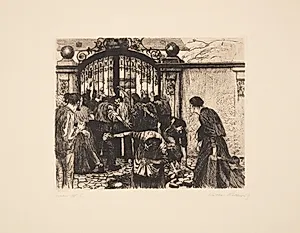
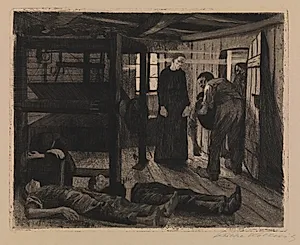
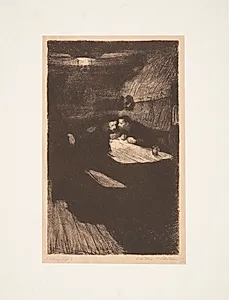
Inspired by Gerhart Hauptmann's play The Weavers, which depicted the 1844 Silesian weavers' uprising, Kollwitz created her first major work: a cycle of six prints (three etchings and three lithographs) titled The Weavers (1893–1897). The series depicted the progression from misery through revolt to brutal suppression, rendered with unprecedented emotional force.
The Weavers cycle brought Kollwitz immediate recognition but also controversy. The work was awarded a gold medal, but Kaiser Wilhelm II personally intervened to prevent the award, objecting to its revolutionary subject matter. This censorship ironically increased public interest in her work.
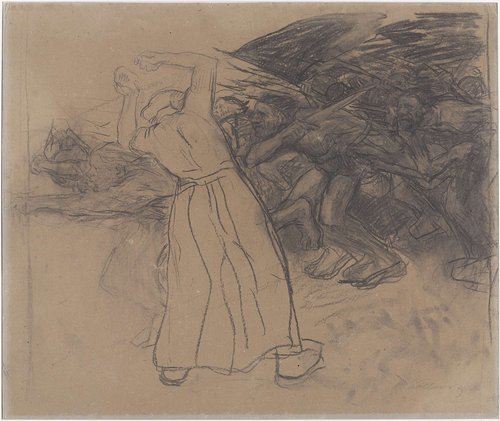
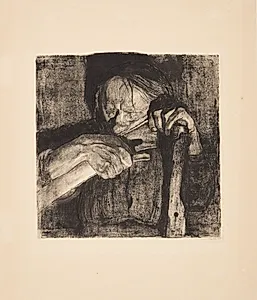
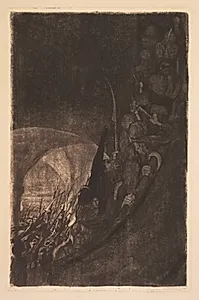
Following this success, Kollwitz created another major cycle, The Peasant War (1902–1908), seven prints depicting the 16th-century German peasants' revolt. This series further developed her themes of social injustice and popular resistance, establishing her reputation as Germany's leading graphic artist of social commentary.
The outbreak of World War I in August 1914 brought catastrophe to Kollwitz's life. Her younger son, Peter, volunteered with patriotic enthusiasm and was killed in action in October 1914, just two months after the war began. This loss devastated Kollwitz and fundamentally transformed her art.
She struggled for years to create an adequate memorial to Peter, finally completing the sculpture The Grieving Parents in 1932. The work, showing two kneeling figures consumed by grief, was placed in the Belgian cemetery of Roggevelde where Peter was buried.
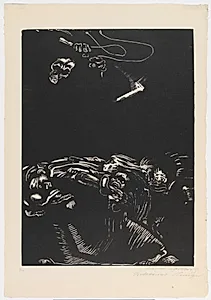
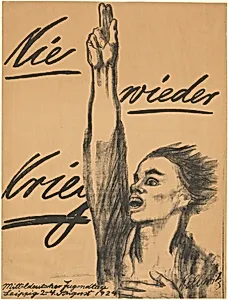
Kollwitz's personal loss intensified her commitment to pacifism. She created powerful anti-war images, including the print cycle War (1922–23) and the poster Never Again War (1924). In 1919, she became the first woman elected to the Prussian Academy of Arts, and in 1928 became director of the master studio for graphic arts there.
The Nazi rise to power in 1933 brought persecution. Kollwitz was forced to resign from the Academy due to her pacifist views and leftist sympathies. Her work was removed from museums as degenerate art, and she was forbidden to exhibit publicly.
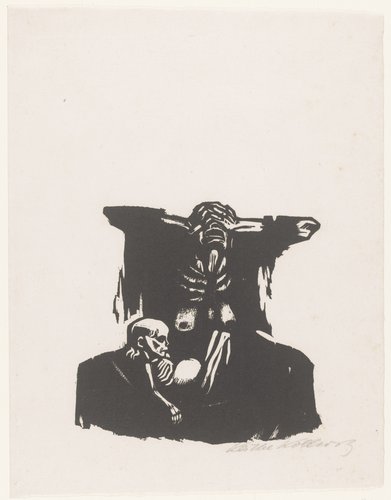
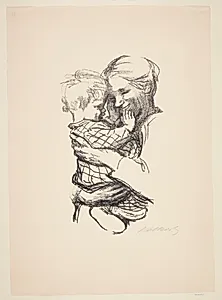
Despite harassment, Kollwitz continued working, creating increasingly simplified and universal images of maternal protection, death, and human solidarity. Her 1938 lithograph series Death became her final major work.
In 1943, her Berlin home and studio were destroyed by bombing. Her grandson, also named Peter, was killed fighting in World War II in 1942, echoing the loss of her son. Evacuated from Berlin, Kollwitz died in Moritzburg near Dresden on April 22, 1945, just sixteen days before Germany's surrender.
Her legacy proved enduring: more than forty German schools bear her name, and museums in Berlin, Cologne, and Moritzburg are dedicated to her work.
Artheon Research Team
Last updated: 2025-11-09
Biography length: ~497 words