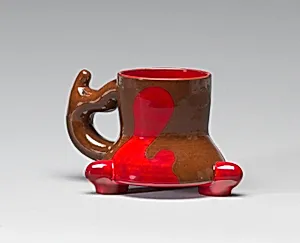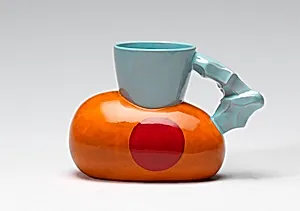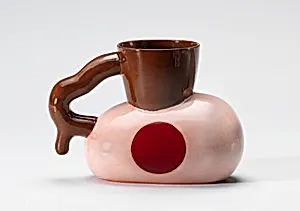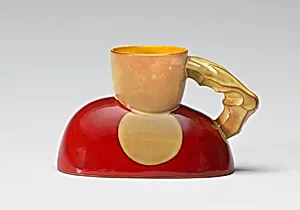
Ken Price (1935–2012) was an American sculptor whose idiosyncratic, brilliantly colored ceramic works occupy a unique position at the intersection of the California craft movement, Pop art, and abstract sculpture. Born in Los Angeles, Price studied at the Chouinard Art Institute and later at the University of Southern California before completing his MFA at the New York State College of Ceramics at Alfred University — one of the foremost centers for ceramic education in the country. His time at Alfred connected him with the wider world of ceramics as a serious fine art medium, a conviction he would spend his entire career advancing.
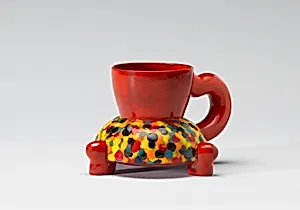
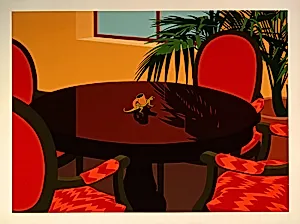
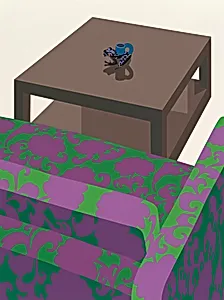
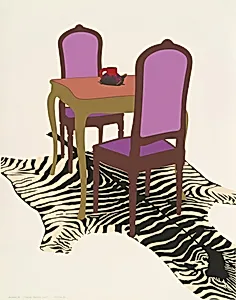
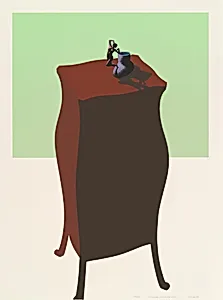
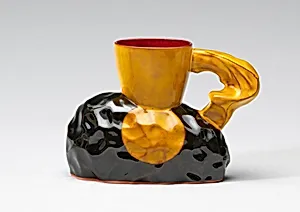
Price was part of the influential Los Angeles art scene of the 1960s alongside artists such as Ed Ruscha and Larry Bell, and his early cup and egg-form sculptures brought a cool, witty sensibility to clay that aligned with the spirit of Pop art without being reducible to it. Over decades, his forms evolved into increasingly complex biomorphic shapes — lumpy, organic masses finished with many layers of acrylic paint that were laboriously sanded and polished to create surfaces of extraordinary depth and luminosity. The forms suggested geological formations, sea creatures, or embryonic life, while the colors ranged from acid yellows and hot pinks to deep earth tones of astonishing complexity.
Among his most celebrated bodies of work are the large-scale sculptures of his later career, which were exhibited at major venues including the Los Angeles County Museum of Art and the Hammer Museum. His retrospective exhibition traveled widely and confirmed his standing as a singular figure in American sculpture. A monograph and numerous catalogue essays have cemented the critical literature surrounding his practice.
Ken Price's legacy is that of an artist who transformed the cultural status of ceramics by treating clay not as a medium bound by function or tradition, but as an infinitely flexible vehicle for sculptural invention and chromatic exploration. He died in Taos, New Mexico in 2012, having reshaped the possibilities of what a ceramic sculpture could be.