Ctrl K
1588–1662
Leonhard Kern (1588–1662), born in Forchtenberg as the fourth son of stonemason Michael Kern the Elder, emerged from a family of masons steeped in architectural sculpture. After attending the Gymnasium in Öhringen, he apprenticed from 1603 to 1609 with his older brother, the sculptor Michael Kern (1580–1649), in Würzburg, mastering stone carving in the family workshop. In 1609, Kern embarked on formative travels to Italy, spending two years in Rome studying life drawing—possibly at the Accademia di San Luca—along with time in Naples, Venice, and a detour to North Africa. His first dated work, the high altar of the collegiate church in Gornji Grad (1613), marked his return route through Slovenia.
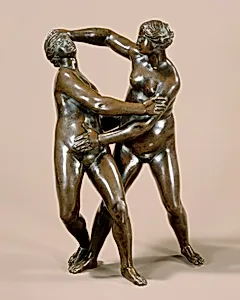
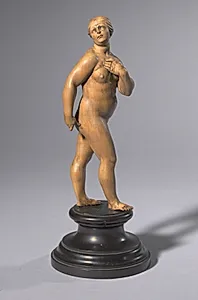
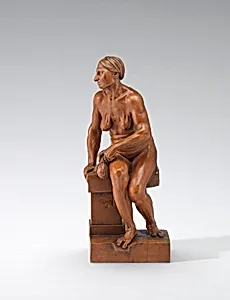
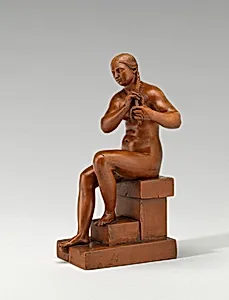
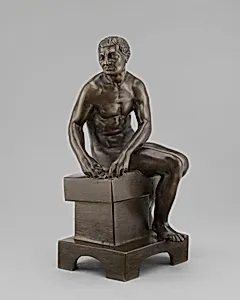
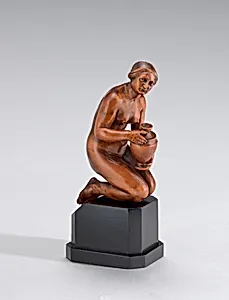
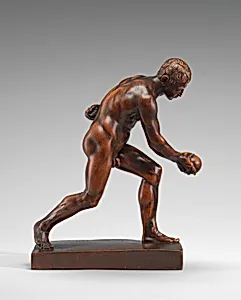
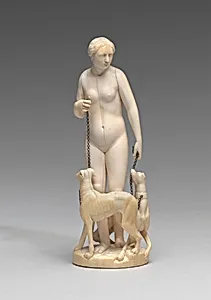
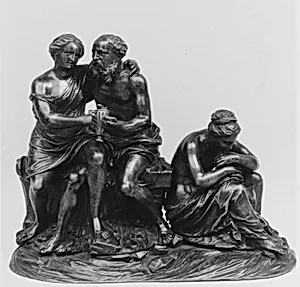
Back in Germany, Kern worked in Forchtenberg, at the Heidelberg court of Elector Friedrich V., and contributed the monumental Daniel group—including four beasts—to Nuremberg Town Hall's portals in 1617. In 1620, he settled in Schwäbisch Hall, founding a prolific workshop renowned for small-scale cabinet sculptures in ivory, wood, alabaster, and stone, catering to princely collectors across Europe. Appointed court sculptor to the Elector of Brandenburg in 1648, he amassed wealth to purchase Tullau Castle amid the Thirty Years' War. Kern's style epitomized early Baroque sculpture in the classically realistic Swabian tradition, fusing Northern European naturalism with Italianate grace from 16th-century masters like Giambologna—evident in his athletic figures, hearty children, and dynamic compositions blending religious pathos, mythology, and genre scenes.
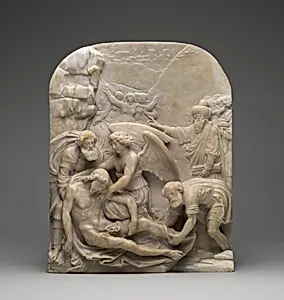
Among his masterpieces are the alabaster *Lamentation of Christ* and *Adam and Eve Hiding from God* (c. 1630, Kolumba, Cologne); *Man of Sorrows* (alabaster relief, Liebieghaus); *The Deposition* (alabaster, c. 1640–1650, Metropolitan Museum); ivory *Man-Eater* and *Muse Calliope* (c. 1640); and *Lust* (fruitwood, National Gallery of Art). Kern's oeuvre, hard to fully attribute due to his workshop's output, captured war's horrors alongside classical poise.
Celebrated as one of 17th-century Germany's premier sculptors, Kern's innovative Kleinplastik influenced princely Kunstkammern, securing his legacy as a bridge between Italian Renaissance and German Baroque. His technical virtuosity endures in museums worldwide, embodying the era's dramatic tension.