Ctrl K
1858–1925
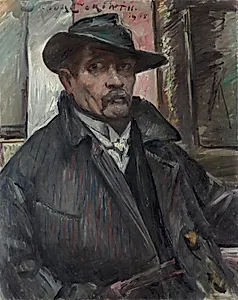
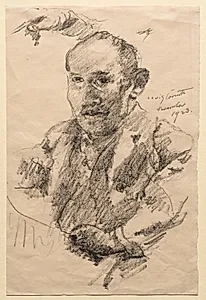
Lovis Corinth, born Franz Heinrich Louis on July 21, 1858, in Tapiau, East Prussia (now Gvardeysk, Russia), to a tanner father, displayed prodigious drawing talent from childhood. He began formal training at the Königsberg Academy in 1876, then moved to the Academy of Fine Arts in Munich from 1880 to 1884, studying under Ludwig von Löfftz and briefly Franz von Defregger, where he absorbed a Realist emphasis on the human figure. A brief stay in Antwerp in 1884 introduced him to Rubens's vitality, followed by studies at Paris's Académie Julian under William-Adolphe Bouguereau and Tony Robert-Fleury until 1888, honing his draftsmanship amid Impressionist currents he later claimed to ignore.
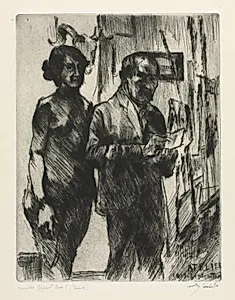
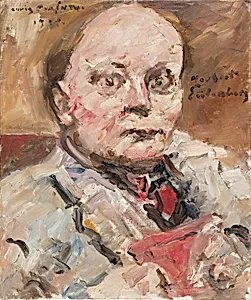
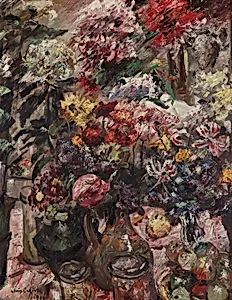
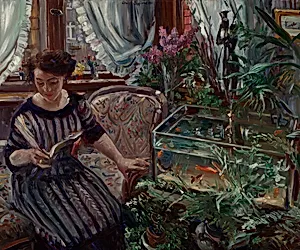
Settling in Berlin in 1901, Corinth married his student Charlotte Berend in 1902; she became his muse, model, and mother of their two children, inspiring intimate family portraits like *The Artist and His Family* (1909) and *Flowers and Daughter Wilhelmine* (1920). He joined the Munich Secession in 1892 and Berlin Secession in 1899, rising to its presidency from 1915 to 1925 after Max Liebermann. His early naturalistic style evolved toward Impressionism, but a stroke in December 1911—leaving him partially paralyzed on his left side with a chronic hand tremor—unleashed a vigorous Expressionism: loose, impasto brushwork, vibrant colors, and emotional intensity in landscapes, nudes, and religious scenes.
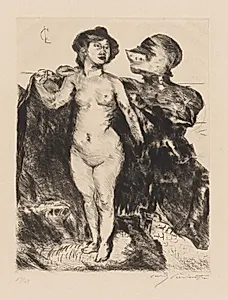
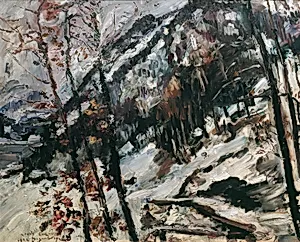
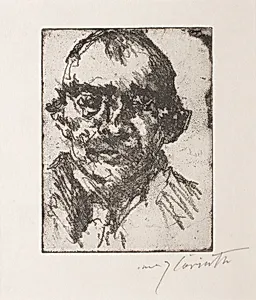
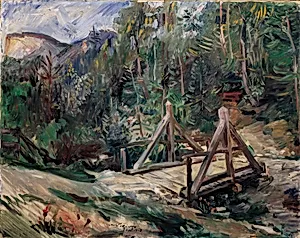
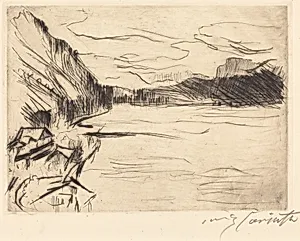
Key works span his arc: the morbid *Self-Portrait with Skeleton* (1896); the raw *Slaughtered Ox* (1905); post-stroke triumphs like *The Blinded Samson* (1912), *The Red Christ* (1922), and *Ecce Homo* (1925), alongside Walchensee landscapes and prints like *Apocalypse* (1921). As a Secession leader bridging Impressionism and Expressionism, Corinth's bold figuration influenced German modernism, though Nazis deemed 295 works "degenerate" in 1937, removing them from collections. Retrospectives and restitutions affirm his enduring legacy as a masterful colorist and humanist.