Ctrl K
1827–1886
François Antoine Maxime Lalanne (1827–1886) was born in Bordeaux into a family of civil servants, initially pursuing classical studies and a law career. At the Institution Oré, he learned drawing from instructor Saulnier and showed early promise, exhibiting pencil and pastel works at Bordeaux's Philomathique Society in 1850, where he earned a bronze medal. Encouraged by architect Léo Drouyn, Lalanne abandoned law in 1852, moving to Paris to study under painter Jean François Gigoux, with whom he maintained a lifelong bond. He debuted at the Paris Salon that year with charcoal drawings, marking his shift to professional art.
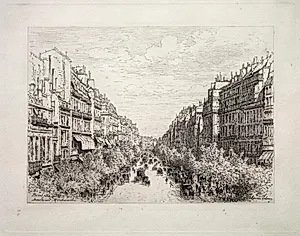
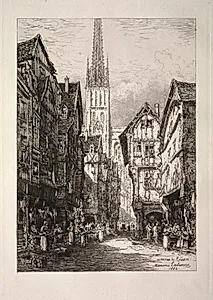
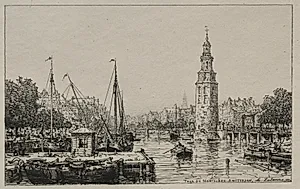
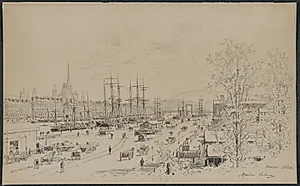
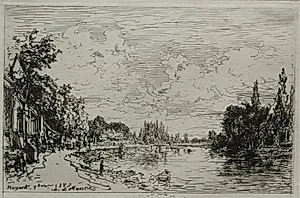
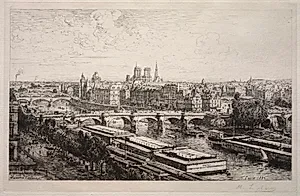
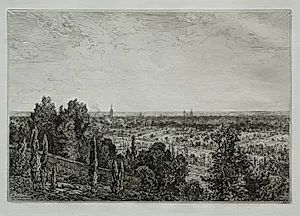
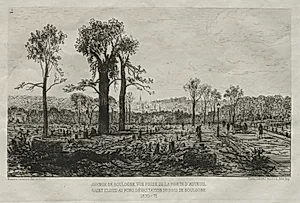
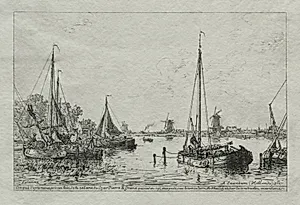
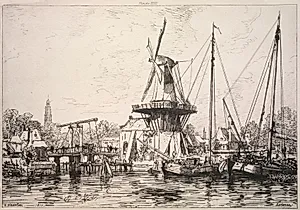
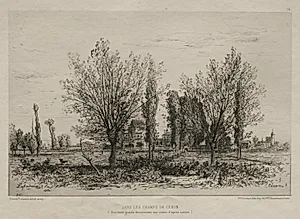
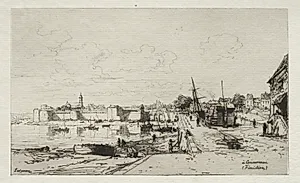
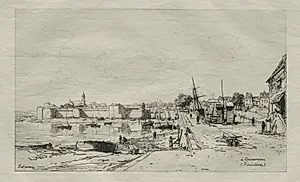
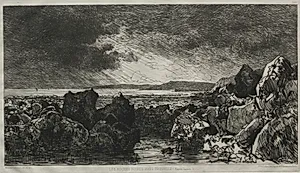
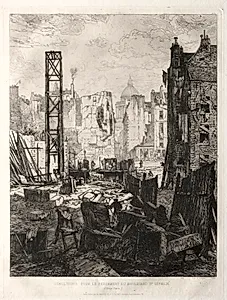
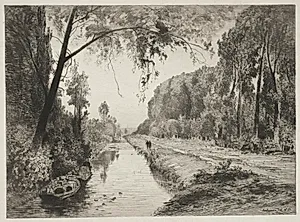
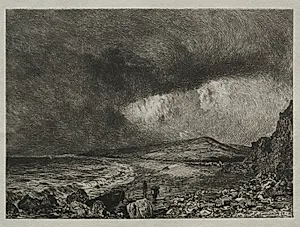
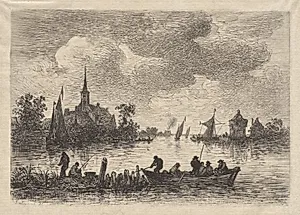
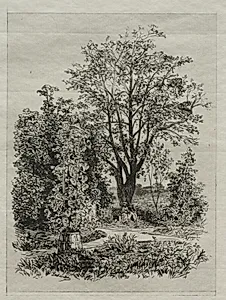
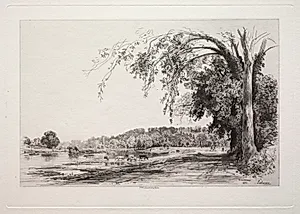
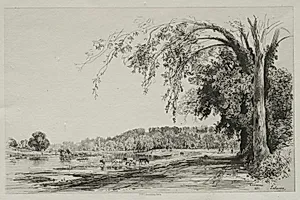
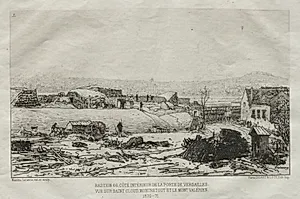
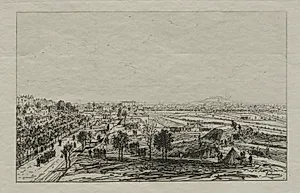
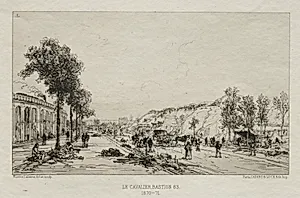
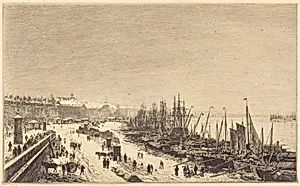
Lalanne specialized in etchings and fusain (charcoal) drawings, becoming a leader in France's mid-19th-century etching revival. As a founding member of Alfred Cadart's Société des Aquafortistes in 1862, he produced over 145 etchings by 1881, favoring pure line techniques with multi-stage acid biting to evoke atmosphere, depth, and effects like fog or snow—without relying on drypoint or aquatint except sparingly. His subjects—urban streets, harbors, and landscapes—featured harmonious compositions of architecture and nature, as in *Rue des Marmousets* (1862), his etching debut; *Rade de Bordeaux (Effet de Neige)*, showcasing seven biting stages for snowy realism; *Une Rue de Rouen*; and *Bords de la Tamise*, capturing foggy Thames views. He also created 47 lithographs, including Pyrenees series, and exhibited over 120 etchings at the Salon from 1863 to 1886, earning medals in 1866, 1873, and 1874.
Lalanne's *Traité de la gravure à l’eau-forte* (1866) and *Le Fusain* treatises codified etching and charcoal techniques, influencing etchers like John Taylor Arms and James McBey for generations. Knighted in the Legion of Honour (1875) and Portugal's Order of Christ, he donated his etchings to Bordeaux and held a 640-work retrospective there in 1874. Faithful to Salon traditions amid Impressionism's rise, Lalanne's elegant, precise prints—over 200 total—cemented his legacy as a master of line and tonal subtlety, with works in major collections like the National Gallery of Art and Art Institute of Chicago.