Ctrl K
1855
**Michael Riccitelli** (American, active c. 1935) was a skilled draftsman whose precise watercolor renderings captured the essence of American folk art during the Great Depression era. Little is known about his early life or formal training, as biographical details remain scarce. He gained prominence through his contributions to the Index of American Design (IAD), a Works Progress Administration (WPA) Federal Art Project launched in 1935 to document the nation's artistic heritage. Riccitelli produced at least 19 detailed studies of vernacular objects, employing watercolor, graphite, colored pencil, and occasionally pen and ink on paper or paperboard to faithfully reproduce their forms, textures, and historical significance.
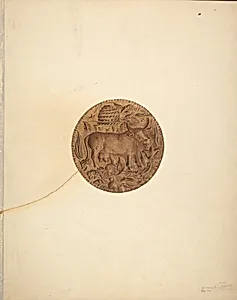
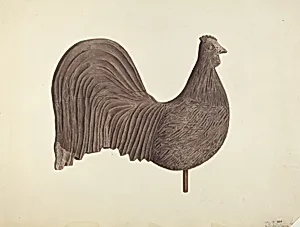
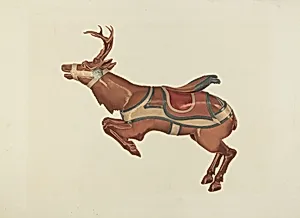
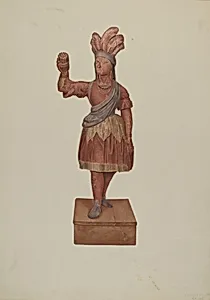
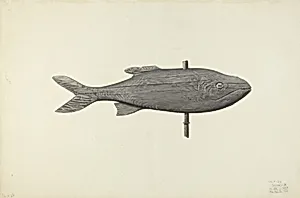
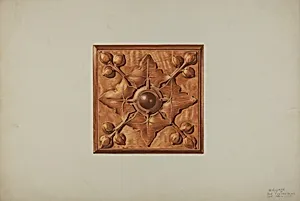
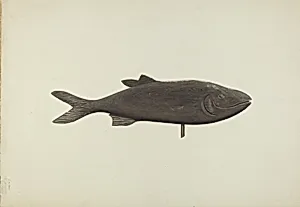
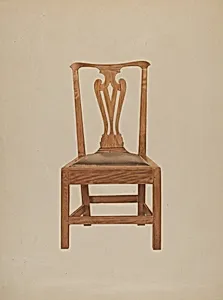
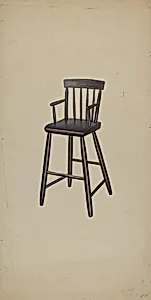
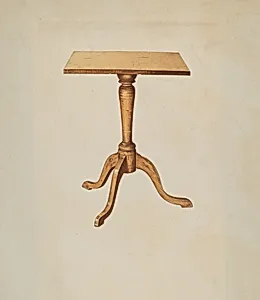
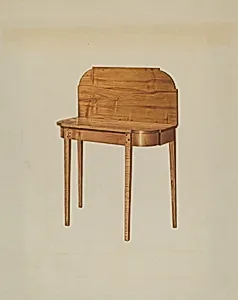
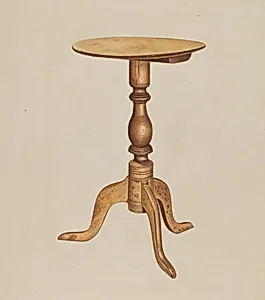
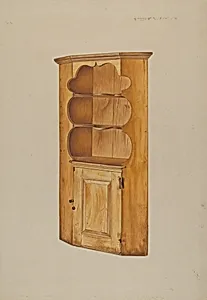
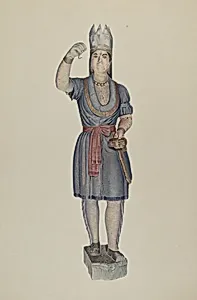
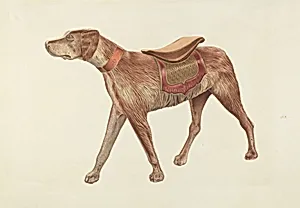
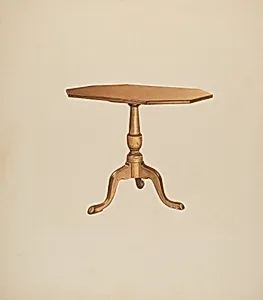
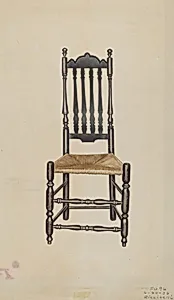
Riccitelli's oeuvre focuses on everyday American artifacts that embodied regional craftsmanship and cultural identity. Among his standout works are *Rooster Weather Vane* (probably 1940), *Butter Mold* (1940), and *Mantel Carving* (1939), which highlight carved wooden functional objects with intricate detailing. He also rendered dynamic folk sculptures like *Cigar Store Indian* (c. 1938 and c. 1939), *Carousel Reindeer* (c. 1939), and two *Fish Weather Vanes* (1939 and c. 1939), capturing their whimsical yet robust designs. Furniture pieces, such as *Banister Back Side Chair* (1938), *Occasional Table* (c. 1938), *Corner Cupboard* (c. 1938), and *Wall-table* (c. 1938), further demonstrate his eye for colonial and vernacular woodworking traditions. These renderings, now housed in the National Gallery of Art's collection, serve as invaluable records of objects that might otherwise have been lost to time.
Working in a hyper-realistic style suited to the IAD's documentary mission, Riccitelli eschewed personal interpretation to prioritize accuracy, often including measurements and notations. His approach aligned with the project's goal of celebrating America's diverse artistic legacy—from whirligigs and trade figures to household heirlooms—reflecting the folk art revival of the 1930s. Though not affiliated with a specific art school or movement beyond the WPA, his technical precision elevated utilitarian crafts to fine art status.
Riccitelli's legacy endures through the enduring accessibility of his IAD portfolio, which educates on pre-industrial American creativity. Preserved digitally and in museum exhibitions, these 19 works underscore the WPA's role in cultural preservation, ensuring that the vibrancy of folk traditions remains vivid for future generations. (312 words)