Ctrl K
1793–2001
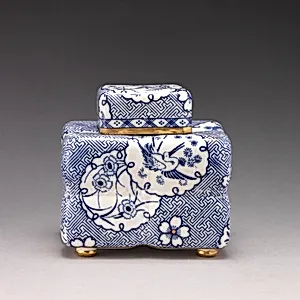
Minton is among the most distinguished names in the history of British ceramics, a firm whose two and a quarter centuries of production encompass everything from blue transfer-printed earthenwares to the most rarefied decorative porcelain of the Victorian age. The company was founded in 1793 by Thomas Minton (1765–1836) in Stoke-upon-Trent, Staffordshire — the heart of England's pottery industry. Thomas Minton had previously worked as an engraver, and he is credited with the design of the famous Willow pattern, one of the most widely reproduced motifs in the history of British ceramics. His factory initially produced pearlware and blue transfer-printed tablewares before adding bone china to its range around 1796 in partnership with Joseph Poulson.
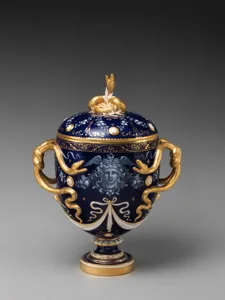
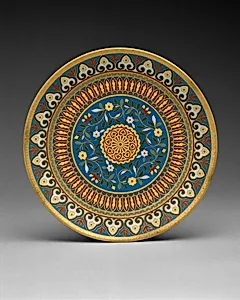
The firm's transformation into a major artistic force came under Herbert Minton (1793–1858), Thomas's son, who took control on his father's death in 1836. Herbert Minton was one of the outstanding entrepreneurial figures of Victorian industry: he recruited leading European artistic talent, invested in new technologies, and positioned the firm at the forefront of successive design movements. In 1848 he hired Léon Arnoux as Art Director; Arnoux developed the richly colored, lead-glazed earthenware known as majolica, which was unveiled to spectacular critical and commercial success at the Great Exhibition of 1851. Minton majolica — produced in elaborate forms from garden ornaments to dessert services — became one of the defining luxury objects of mid-Victorian taste. Herbert Minton also revived Renaissance-inspired inlaid earthenwares and produced painted decoration in the style of Limoges enamel.
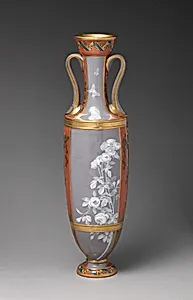
In 1870, the Franco-Prussian War brought a further transformative talent to the firm: Léon Arnoux recruited Marc-Louis Solon, a modeler who had developed the technique of pâte-sur-pâte at the Sèvres manufactory in France. Pâte-sur-pâte involved building up a design in relief by applying successive layers of liquid slip to a colored ground, each layer dried before the next was added. Solon's Minton plaques and vases — typically depicting maidens and putti in translucent white relief against dark grounds — were produced until his retirement in 1904 and are among the most technically demanding objects made by any Victorian ceramics firm. Minton was also a major producer of architectural tiles, supplying work for the Houses of Parliament and the United States Capitol.
The company operated as Mintons Ltd from 1879 onward and remained under family control into the mid-twentieth century. Its wares are represented in museum collections around the world, and the Minton Archive, maintained at Stoke-on-Trent, preserves the design records of over two centuries of continuous production.