Ctrl K
1886–1980
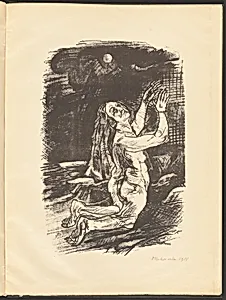
Oskar Kokoschka (1886–1980) was an Austrian painter, graphic artist, and writer who became one of the foremost Expressionist artists of the twentieth century. Born in Pöchlarn, Austria, he studied at the Vienna School of Arts and Crafts, where he was influenced by Gustav Klimt and the Vienna Secession. His early works — including his play "Murderer, the Hope of Women" (1909) and his disturbing psychological portraits — shocked Viennese society and established him as an enfant terrible of the Viennese avant-garde.
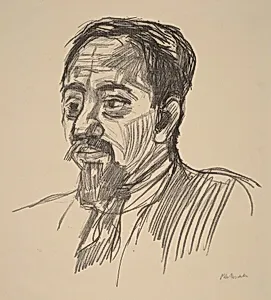
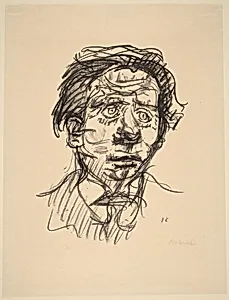
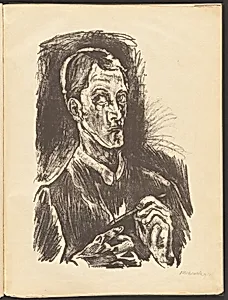
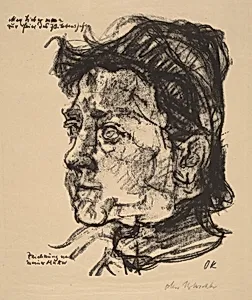
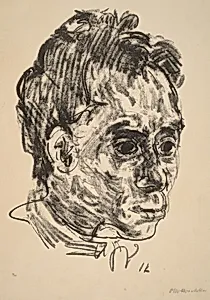
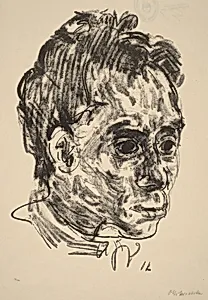
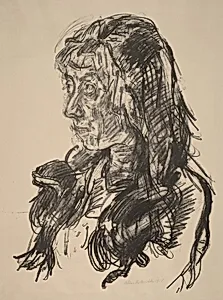
Kokoschka's portraits from the 1910s are among the greatest achievements of Expressionist art. Painted with agitated, nervous brushwork and psychologically penetrating characterization, these works seem to lay bare the inner emotional and psychological states of their sitters. His portraits of Karl Kraus, Adolf Loos, and other Viennese intellectuals are remarkable for their intensity and their radical departure from decorative Secessionist portraiture.
After being seriously wounded in World War I, Kokoschka traveled widely, producing panoramic city views and landscapes painted from elevated vantage points in a vibrant, energetic style. These cityscapes — of Prague, London, Jerusalem, Istanbul, and other cities — combine topographic specificity with an emotional, almost visionary intensity of color and brushwork.
Kokoschka fled the Nazi regime, which branded his work "degenerate," living in Prague, London, and finally settling in Switzerland. He continued painting into his nineties, producing a large body of portraits, landscapes, and politically engaged works. His art is held by the Belvedere and the Leopold Museum in Vienna, the Tate, the Kunsthaus Zürich, and the Museum of Modern Art.