
Ctrl K
1849–1922
**Otto Wegener (1849–1924)** was a Swedish-born French portrait photographer renowned for his elegant images of cultural and entertainment figures during the Belle Époque. Born on 20 January 1849 in Helsingborg, Sweden, he moved to Paris at the age of eighteen and established a photographic studio on the Place de la Madeleine in 1883. He signed his works simply “OTTO” in gold lettering, matching the prominent sign above his studio door, and eventually expanded to occupy four floors of the building.
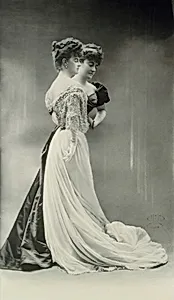
Wegener specialized in sophisticated portraits of women, children, and prominent personalities, working primarily in cabinet format. His subjects included the dancer Isadora Duncan, the writer Marcel Proust (a personal friend), and the poet Paul Verlaine, who sat for him in 1893 while preparing his candidacy for the Académie Française. He participated in numerous exhibitions in France and abroad and received two gold medals, though he rarely promoted these honors. A devastating fire at his studio in 1916 caused significant losses.
Notably, Wegener taught photography to Prince Eugen, Duke of Närke of Sweden, and counted the young Edward Steichen among his assistants. He had three sons, one of whom, Maurice Otto Wegener (1875–1918), showed promise as an artist before dying in Paris from the physical and mental toll of the First World War. Although he knew photographer Eugène Pirou, the two were never professionally linked, contrary to occasional mistaken claims.
Wegener’s legacy endures through his sensitive and stylish portraits that capture the spirit of Parisian high society and artistic circles. One of his notable surviving works, a 1899 gelatin silver print of Countess Greffulhe, is held in the collection of the Metropolitan Museum of Art. His contributions helped shape the professional standards of portrait photography in fin-de-siècle France.