Ctrl K
1864–1903
Phil May (1864–1903) was a British caricaturist and illustrator celebrated for his brilliantly economical line drawings that influenced generations of cartoonists. Born in Wortley, Leeds, into modest circumstances, he received little formal training but demonstrated extraordinary natural talent for comic drawing from childhood. He worked for various provincial papers before moving to Australia in 1885, where he drew for the Sydney Bulletin.
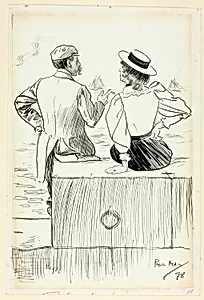
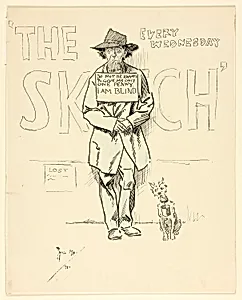
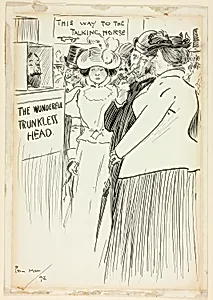
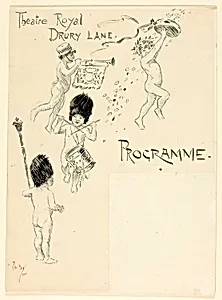
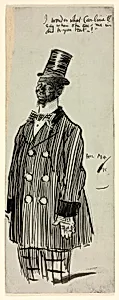
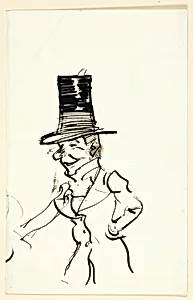
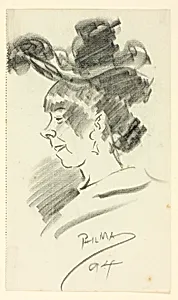
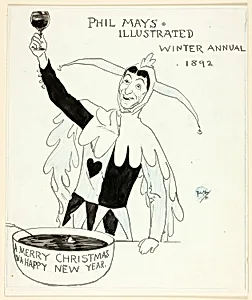
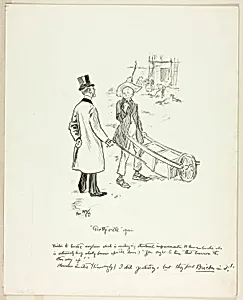
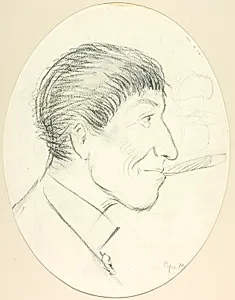
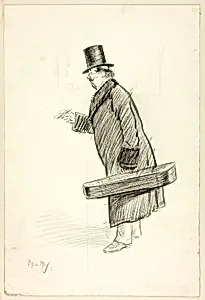
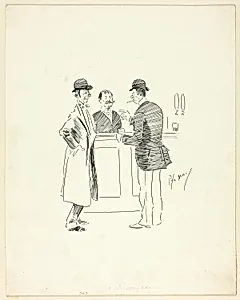
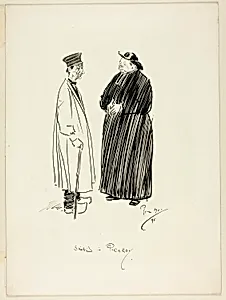
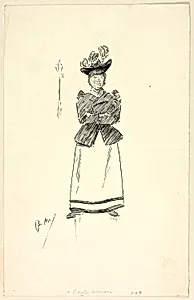
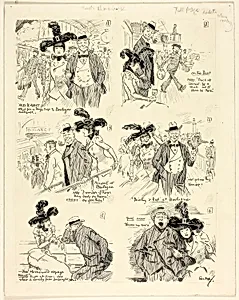
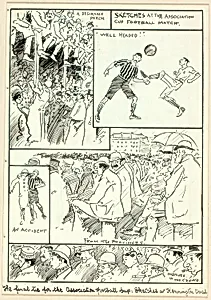
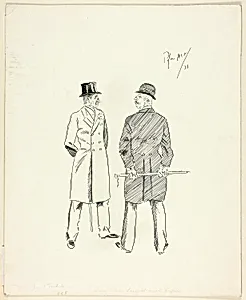
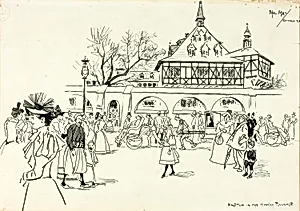
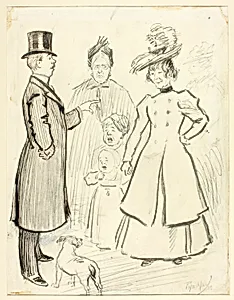
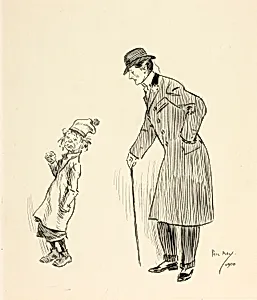
May's Australian years were formative. Working under tight deadlines and limited reproduction conditions, he developed his signature style: a pared-down, minimal line that could convey character, movement, and humor with astonishing efficiency. Where other illustrators relied on cross-hatching and dense shading, May achieved his effects with a few perfectly placed strokes, creating an illusion of completeness from the sparest means.
Returning to London in 1890, May quickly became the most celebrated comic artist in Britain, contributing regularly to Punch magazine and producing his own annual collections of drawings. His subjects were drawn primarily from London street life — costers, cabmen, urchins, charwomen, and music-hall performers — depicted with affection, wit, and an unerring eye for gesture and expression. His work offered a vivid chronicle of working-class London at the turn of the century.
May's influence on the art of illustration was profound; his economy of line anticipated the modern cartoon style and inspired artists from H.M. Bateman to Ronald Searle. Tragically, his career was cut short by alcoholism and tuberculosis, and he died at thirty-nine. His drawings are held by the Victoria and Albert Museum, the British Museum, and numerous other collections.