Ctrl K
1839–1911
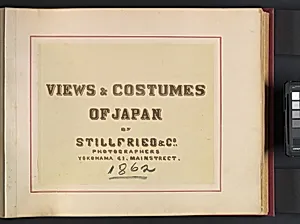
Raimund von Stillfried (1839–1911) was an Austrian photographer who became one of the foremost Western practitioners of photography in Japan during the Meiji era. Born Baron Raimund von Stillfried-Ratenicz in Bohemia into an aristocratic family, he pursued a military career before discovering photography and making his way to East Asia in the early 1870s. He settled in Yokohama — then the principal center of Western commercial and cultural activity in Japan — and established a photographic studio that would become one of the most important in the country.
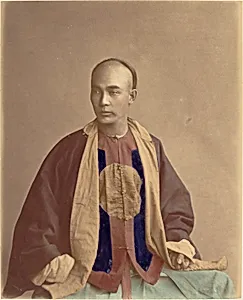
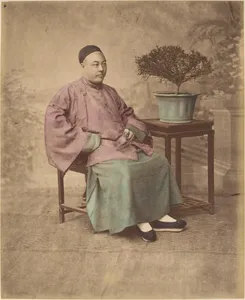
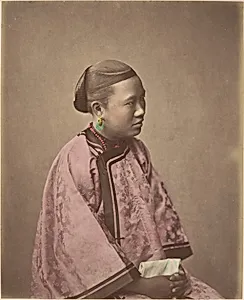
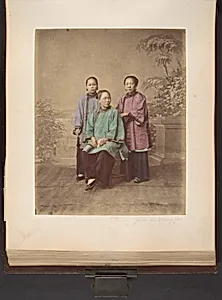
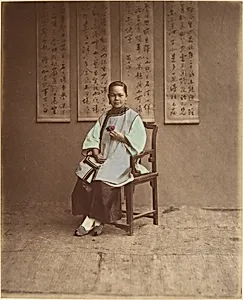
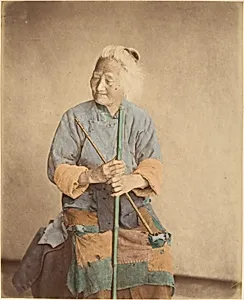
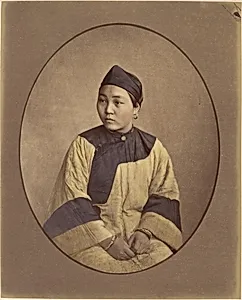
Stillfried's practice centered on the production of hand-colored souvenir photographs of Japan for the Western market, a genre sometimes called Yokohama Shashin (Yokohama photography). These images depicted Japanese landscapes, architecture, and people — from Buddhist temples and Shinto shrines to scenes of everyday life, theater, and craft — rendered in a style that balanced documentary intent with considerable aesthetic arrangement. The subjects were often posed and the compositions carefully constructed to convey to foreign audiences an idealized image of a Japan that was simultaneously exotic, picturesque, and ordered. His studio produced thousands of such images, many of them hand-colored with remarkable delicacy.
In 1877, Stillfried purchased the studio and negatives of Felice Beato, one of the pioneering photographers of Asia, significantly expanding his archive. He later sold his own business to Kusakabe Kimbei, one of his Japanese assistants, helping to establish a lineage of Yokohama photographic practice that extended well beyond his own tenure. His photographs were widely collected in Europe and North America and shaped Western perceptions of Japan for decades.
Stillfried returned to Europe in the 1880s and eventually settled in Vienna, where he died in 1911. His work occupies an important and complex place in the history of photography: valued as a visual record of Meiji Japan while also scrutinized for the ways in which it constructed and commodified an image of Japan for Western consumption.
![[Studio Portrait of a Japanese Man in Western Clothing]](https://images.artheonmuseum.org/met/ph/thumb/studio-portrait-of-a-japanese-man-in-western-clothing-287979.webp)
![[Two Chinese Men in Matching Traditional Dress]](https://images.artheonmuseum.org/met/ph/thumb/two-chinese-men-in-matching-traditional-dress-288525.webp)
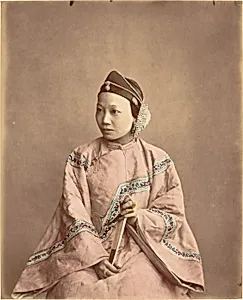
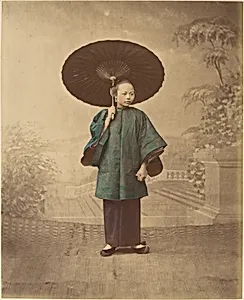
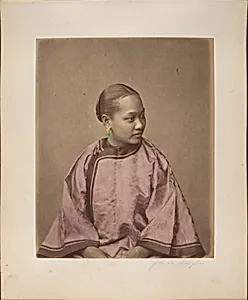
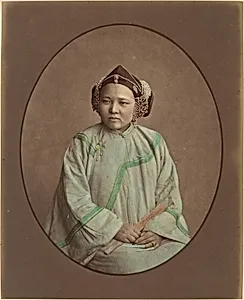
![[Woman from Canton]](https://images.artheonmuseum.org/met/ph/thumb/woman-from-canton-288499.webp)
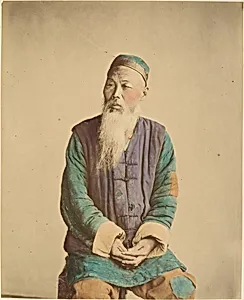
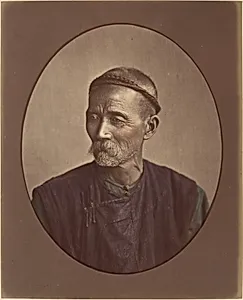
![[Chinese Man]](https://images.artheonmuseum.org/met/ph/thumb/chinese-man-288493.webp)
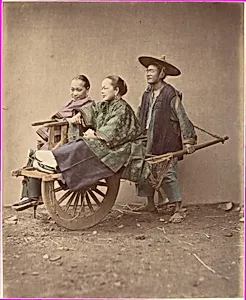
![[Chinese Gentleman]](https://images.artheonmuseum.org/met/ph/thumb/chinese-gentleman-288477.webp)
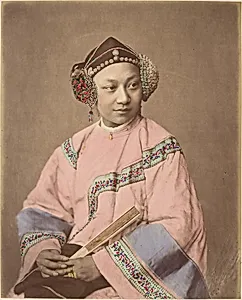
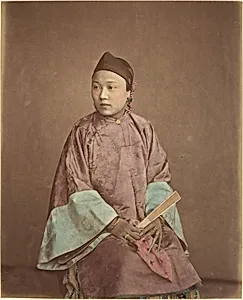
![[Seated Chinese Woman with Fan]](https://images.artheonmuseum.org/met/ph/thumb/seated-chinese-woman-with-fan-288517.webp)
![[Chinese Woman Sitting with Basket]](https://images.artheonmuseum.org/met/ph/thumb/chinese-woman-sitting-with-basket-288016.webp)