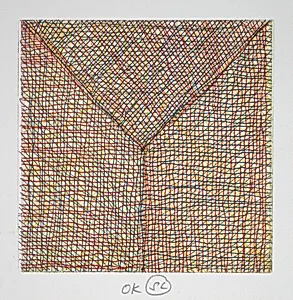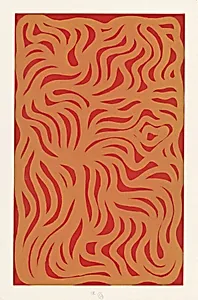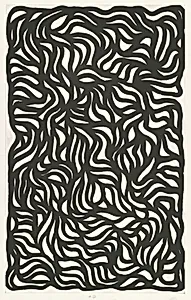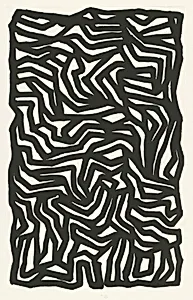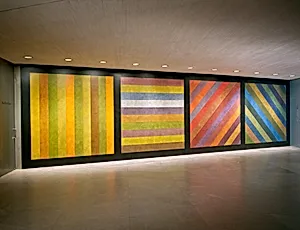
Solomon "Sol" LeWitt (1928–2007) was born in Hartford, Connecticut, to Russian Jewish immigrant parents; his father, a doctor and inventor, died when Sol was six, after which he lived with his mother, a nurse, and an aunt in New Britain. His mother enrolled him in art classes at the Wadsworth Atheneum, fostering his early interest in drawing. LeWitt earned a BFA from Syracuse University in 1949, where he created his first prints, then traveled to Europe to study Old Master paintings. He served in the Korean War from 1951 to 1953, designing posters in Special Services while stationed in Japan and Korea. Returning to New York in 1953, he studied at the Cartoonists and Illustrators School (later the School of Visual Arts), worked as a graphic designer for architect I. M. Pei around 1955, and took a receptionist job at the Museum of Modern Art in 1960, where he encountered emerging artists like Dan Flavin and Eva Hesse.
LeWitt pioneered Minimal and Conceptual art, prioritizing ideas over objects with his mantra that "the idea becomes the machine that makes the art." He rejected traditional sculpture, calling his geometric forms "structures," and revolutionized wall drawings as instructional diagrams executed by assistants using lines, arcs, and colors—ephemeral yet infinitely reproducible. Influenced by Eadweard Muybridge's sequential photography and Russian Constructivism, his serial works explored permutations of cubes, grids, and lines, as outlined in key texts like "Paragraphs on Conceptual Art" (1967) and "Sentences on Conceptual Art" (1969).
Among his major works are early modular open cubes from the mid-1960s, like *Serial Project, Three Part Variations on Three Different Cubes* (1966); the first wall drawing at Paula Cooper Gallery (Wall Drawing #1, 1968), featuring parallel lines in four directions; Wall Drawing #122 (1972) at MIT with all combinations of crossing lines and arcs; and later colorful, curvilinear series like *Loopy Doopy (Blue and Purple)* (1999) and scribble drawings such as Wall Drawing #1268 (2006). Public structures include the concrete *Four-Sided Pyramid* (1990s, National Gallery of Art) and *9 Towers* (conceived 2007). Married to sculptor Carol Androcchio, he had two daughters, Sofia and artist Eva LeWitt, and amassed a collection of nearly 9,000 works by peers.
LeWitt's legacy endures through over 1,200 wall drawings still installed posthumously worldwide, including MASS MoCA's retrospective of 105 works (2008–2033). Dividing time between Chester, Connecticut, and Spoleto, Italy, he taught at NYU and SVA, co-founded Printed Matter, Inc., and influenced generations by democratizing art production. He died of cancer on April 8, 2007, leaving a blueprint for idea-driven creation.

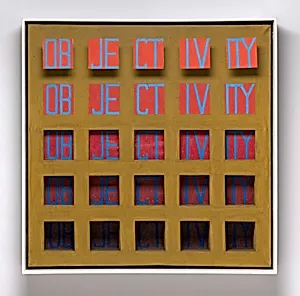
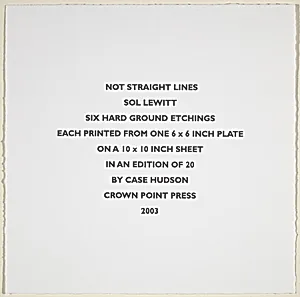
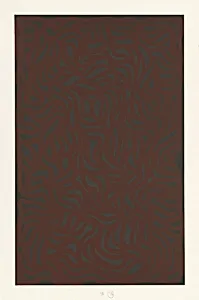
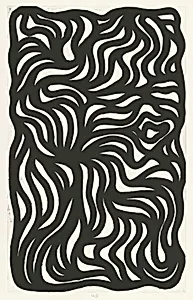
![Untitled (unpublished 3D [working proof 1]](https://images.artheonmuseum.org/nga/thumb/untitled-unpublished-3d-working-proof-1-nga-230419.webp)
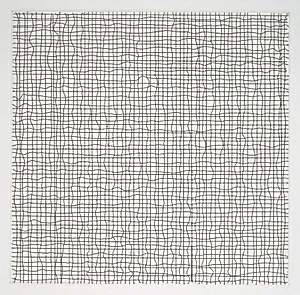
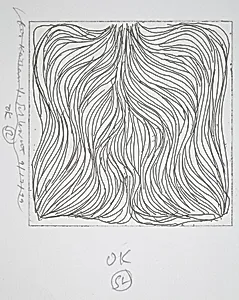
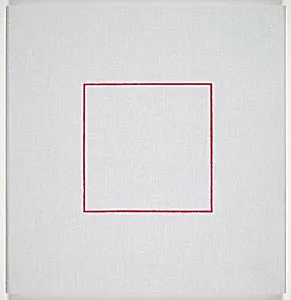
![Untitled (unpublished) 3B [working proof 1]](https://images.artheonmuseum.org/nga/thumb/untitled-unpublished-3b-working-proof-1-nga-230417.webp)
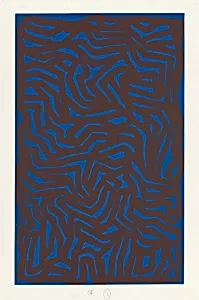
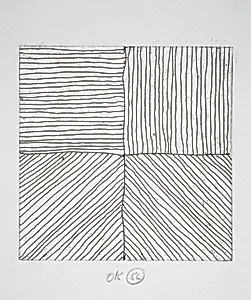
![Untitled (unpublished) 3C [working proof 1]](https://images.artheonmuseum.org/nga/thumb/untitled-unpublished-3c-working-proof-1-nga-230418.webp)
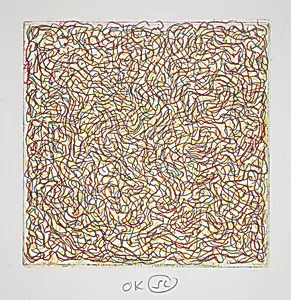
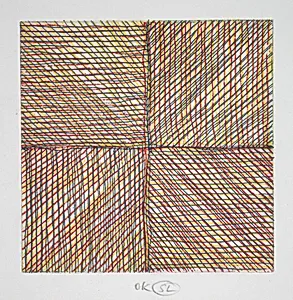
![Untitled (unpublished) 3E [working proof 1]](https://images.artheonmuseum.org/nga/thumb/untitled-unpublished-3e-working-proof-1-nga-230420.webp)
![Untitled (unpublished) 4A [working proof 1]](https://images.artheonmuseum.org/nga/thumb/untitled-unpublished-4a-working-proof-1-nga-230421.webp)
![Untitled (unpublished) 4B [working proof 1]](https://images.artheonmuseum.org/nga/thumb/untitled-unpublished-4b-working-proof-1-nga-230422.webp)
![Untitled (unpublished) 4C [working proof 1]](https://images.artheonmuseum.org/nga/thumb/untitled-unpublished-4c-working-proof-1-nga-230423.webp)
![Untitled (unpublished) 4E [working proof 1]](https://images.artheonmuseum.org/nga/thumb/untitled-unpublished-4e-working-proof-1-nga-230425.webp)
![Untitled (unpublished) 4D [working proof 1]](https://images.artheonmuseum.org/nga/thumb/untitled-unpublished-4d-working-proof-1-nga-230424.webp)