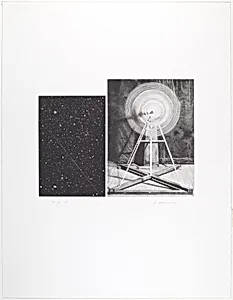
Vija Celmins, born on October 25, 1938, in Riga, Latvia, endured a tumultuous early life marked by World War II displacement. Her family fled Soviet occupation, living in German refugee camps before immigrating to the United States in 1948 via sponsorship from a Lutheran church. Settling in Indianapolis, Indiana, where her father worked as a carpenter and her mother in a hospital laundry, young Vija—accompanied by her older sister Inta—found solace in drawing, encouraged by supportive school teachers. In 1955, she enrolled at the John Herron School of Art (now Herron School of Art and Design), graduating with a BFA in 1962. That year, she also attended a summer fellowship session at Yale University, immersing herself in Giorgio Morandi's monochromatic still lifes alongside future artists Chuck Close and Brice Marden. She then pursued an MFA at the University of California, Los Angeles, completing it in 1965.
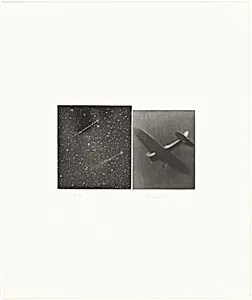
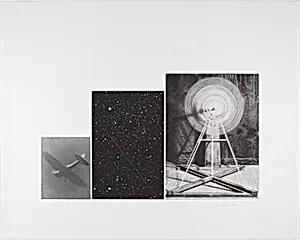
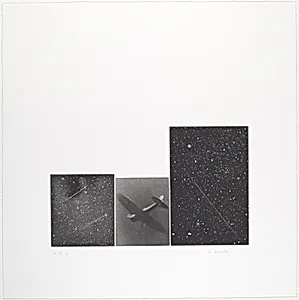
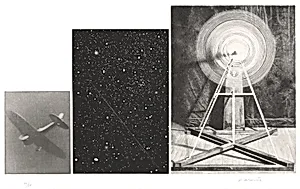
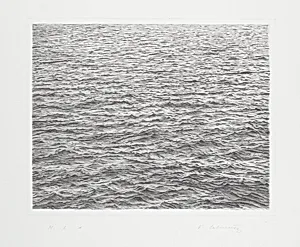
In Los Angeles during the 1960s, Celmins initially produced pop-inflected paintings and sculptures of everyday objects and media imagery, such as the oil-on-canvas *Heater* (1964) and *Suspended Plane* (1966), a photorealistic rendition of a warplane drawn from a photograph amid her anti-Vietnam War protests. By the late 1960s, she abandoned color and shifted to labor-intensive, grayscale drawings and paintings "redescribing" vast natural phenomena—oceans, deserts, moon surfaces, and rocks—sourced from photographs, erasing horizons and scale to evoke infinite, meditative spaces. Influenced by Jasper Johns's casts and Malcolm Morley's photorealism, her work straddles minimalism and photorealism, emphasizing surface texture and perceptual illusion through graphite, charcoal, mezzotint, and later painted bronzes.
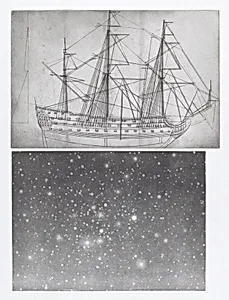
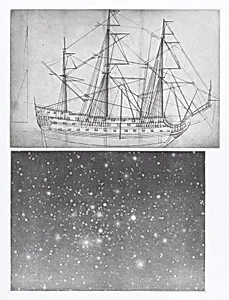
Celmins's oeuvre expanded in the 1970s–2000s with iconic series like *Untitled (Ocean)* (1969), painstaking graphite seascapes; painted stone replicas *To Fix the Image in Memory* (1977–82); celestial charts such as *Night Sky #19* (1998); and intricate spider webs in charcoal (*Web #1*, 1999). Relocating to New York in 1981, she taught at institutions including Yale and Cooper Union while refining these motifs in prints and sculptures. Her legacy endures through over 40 solo exhibitions and major retrospectives—at the Metropolitan Museum of Art (2020), San Francisco Museum of Modern Art (2018–19), Whitney Museum, MoMA, and others—earning accolades like the 1997 MacArthur Fellowship, 1980 Guggenheim, and 2009 Roswitha Haftmann Prize. Celmins's hypnotic re-renderings invite viewers to contemplate the fragile boundary between reality and representation, cementing her as a pivotal figure in postwar American art.

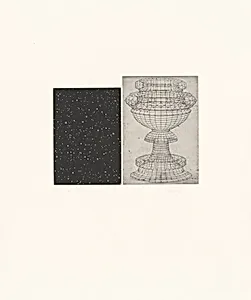
![Night Sky 2 (Reversed) [special proof]](https://images.artheonmuseum.org/nga/thumb/night-sky-2-reversed-special-proof-nga-141835.webp)
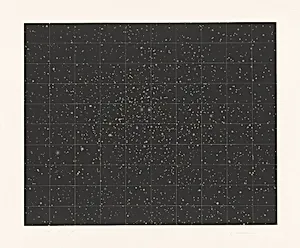
![Night Sky 3 [special proof]](https://images.artheonmuseum.org/nga/thumb/night-sky-3-special-proof-nga-141836.webp)
![Untitled (Web 3) [special proof]](https://images.artheonmuseum.org/nga/thumb/untitled-web-3-special-proof-nga-138146.webp)
![Untitled (Web 4) [special proof]](https://images.artheonmuseum.org/nga/thumb/untitled-web-4-special-proof-nga-138060.webp)
![Night Sky 1 (Reversed) [special proof]](https://images.artheonmuseum.org/nga/thumb/night-sky-1-reversed-special-proof-nga-138147.webp)
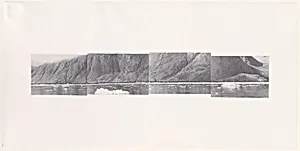
![December 1984 [special proof]](https://images.artheonmuseum.org/nga/thumb/december-1984-special-proof-nga-71153.webp)
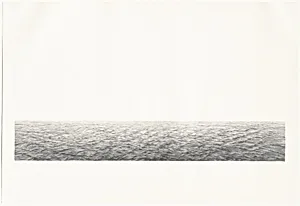
![Drypoint—Ocean Surface (Second State) [special proof]](https://images.artheonmuseum.org/nga/thumb/drypointocean-surface-second-state-special-proof-nga-72347.webp)