
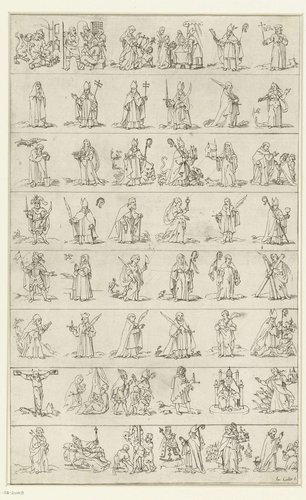
48 heiligen
1600 - 1699
Medium
etching
Dimensions
186; 303
Rights
Public Domain
About this artwork
height 303 mm x width 186 mm
Art Historical Context
Jacques Callot's *48 Heiligen* (48 Saints), an etching from the early 17th century ( 1600–1699), exemplifies the artist's mastery of printmaking during the Baroque era. Measuring 303 mm high by 186 mm wide, this work is part of a renowned series where Callot depicted holy figures with intricate detail, capturing the devotional fervor of Counter-Reformation Europe. Born in Nancy, France, Callot revolutionized etching techniques, using multiple biting processes on the metal plate to achieve unprecedented fine lines and textures, making complex compositions accessible through affordable prints. Callot's style blends Mannerist elegance with emerging Baroque drama, evident in the saints' expressive poses and ornate attire. These etchings were hugely popular, disseminating Catholic iconography across courts and households amid religious conflicts like the Thirty Years' War. As a virtuoso printmaker, Callot produced over 1,400 works, influencing later artists like Rembrandt. This piece invites visitors to appreciate how etchings democratized art, turning spiritual devotion into portable treasures that bridged sacred and everyday life.
About the Artist
Jacques Callot · 1592–1635
Jacques Callot (1592–1635) was a French printmaker and draftsman from the Duchy of Lorraine, widely regarded as one of the first great artists to practice the graphic arts exclusively. His more than 1,400 etchings chronicled the breadth of 17th-century life, from Medici court festivities to the brutal realities of warfare. Callot revolutionized etching through technical innovations including the é...