
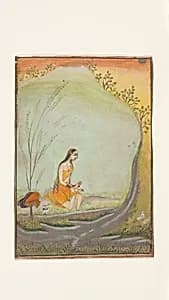
A Lady Applying Henna to Her Foot
ca. 1720–30
Medium
Ink and opaque watercolor on paper
Dimensions
5 7/16 x 3 3/4 in. (13.8 x 9.5 cm)
Classification
Paintings
Culture
India (Rajasthan, Bikaner)
Department
Asian Art
Museum
Metropolitan Museum of Art, New York, NY
Credit
Gift of John and Evelyn Kossak, The Kronos Collections, 1978
Accession Number
1978.534.1
Rights
Public Domain
Tags
Art Historical Context
In the opulent courts of 18th-century Rajasthan, the Bikaner school of painting flourished, blending Mughal finesse with local vibrancy. *A Lady Applying Henna Her Foot*, created around 1720–30 by Ustad, son of Murad, exemplifies this tradition. This intimate miniature captures a moment of quiet elegance: a woman delicately applying henna—a cherished ritual for adornment and celebration—to her foot, reflecting the refined daily life of elite Rajput women. Rendered in ink and opaque watercolor on paper, the work showcases the meticulous techniques of Indian miniature painting. Opaque watercolors allowed for luminous, jewel-like hues and intricate details, from the flowing drapery of her sari to the subtle textures of her skin and the intricate henna patterns. At just 5 7/16 x 3 3/4 inches, its small scale invited close contemplation, much like a precious talisman. Henna application held deep cultural significance in Rajasthan, symbolizing beauty, fertility, and auspiciousness, often featured in bridal preparations. This painting, now in the Metropolitan Museum of Art's Asian Art collection (gift of John and Evelyn Kossak, 1978), offers a window into Bikaner's artistic legacy, celebrating feminine grace amid royal splendor.