
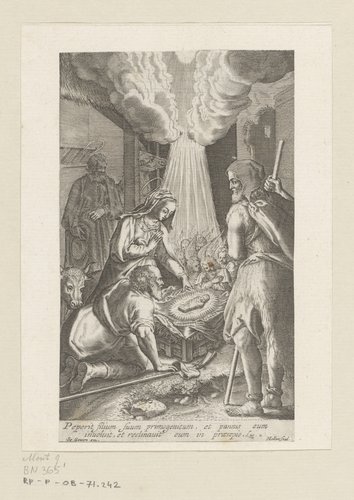
Aanbidding der herders
1619 - 1624
Medium
engraving
Dimensions
153; 92
Rights
Public Domain
About this artwork
blad: hoogte 153 mm (binnen plaatrand afgesneden) x breedte 92 mm (binnen plaatrand afgesneden)
Art Historical Context
Claude Mellan's *Aanbidding der her* (Adoration of Shepherds), created between 1619 and1624, captures a timeless biblical scene from the Nativity story, where humble shepherds pay homage to the infant Christ. This intimate engraving, measuring just 153 mm high by 92 mm wide (trimmed within the plate border), exemplifies the French artist's mastery during his formative years. Mellan, a pioneering engraver influenced by the Baroque movement's emerging drama and realism, trained under Simon Vouet and later flourished in Rome, blending Italianate grandeur with precise French technique. As a copperplate engraving, the work showcases Mellan's virtuosic line work—fine, varied incisions that evoke texture, light, and shadow on a small scale. Engravings like this were revolutionary for their reproducibility, allowing religious imagery to reach wide audiences across Europe before mass printing dominated. The medium's durability and detail made it ideal for devotional art, inviting close contemplation of the shepherds' awe and the holy family's serenity. Produced amid the Counter-Reformation's push for emotive sacred art, *Aanbidding der herders* reflects Baroque ideals of accessibility and fervor. Though modestly sized, its technical finesse underscores Mellan's reputation as one of the era's finest reproductive engravers, bridging painting and printmaking for collectors and the faithful alike.
About the Artist
Claude Mellan · 1598–1688
Claude Mellan (1598-1688) was a French draughtsman, engraver, and painter who became one of the most innovative printmakers of the French Baroque period. Born in Abbeville to a family of coppersmiths, Mellan rose to become Peintre et Graveur Ordinaire du Roi (Painter and Engraver in Ordinary to the King), achieving recognition for his extraordinary technical mastery. Mellan's artistic significanc...