
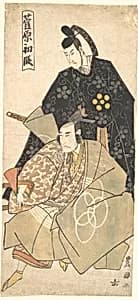
Act I of the Drama "Sugawara"
1769–1825
Medium
Woodblock print; ink and color on paper
Dimensions
12 1/8 x 5 1/2 in. (30.8 x 14 cm)
Classification
Prints
Culture & Period
Japan · Edo period (1615–1868)
Department
Asian Art
Museum
Metropolitan Museum of Art, New York, NY
Credit
Henry L. Phillips Collection, Bequest of Henry L. Phillips, 1939
Accession Number
JP2900
Rights
Public Domain
Tags
Art Historical Context
Utagawa Toyokuni I (1769–1825), a leading figure in Japan's ukiyo-e tradition, created this vibrant woodblock print depicting Act I from the kabuki drama *Sugawara Denju Tenarai Kagami* (Sugawara and the Secret of Tenarai). Produced during the Edo period (1615–1868), the artwork captures the dynamic world of kabuki theater, showcasing male actors in elaborate costumes and expressive poses. Toyokuni, founder of the influential Utagawa school, was renowned for his yakusha-e (actor prints), which immortalized the stars of Edo's bustling playhouses. This intimate print, measuring just 12⅛ × 5½ inches, exemplifies the woodblock technique's mastery: intricate carving on wooden blocks allowed for layered ink and color applications, yielding bold reds, blacks, and golds that convey dramatic tension and character depth. Kabuki, an all-male performance art blending dance, music, and stylized acting, was a cultural phenomenon in urban Japan, and prints like this served as affordable souvenirs and publicity for popular productions. Housed in the Metropolitan Museum of Art's Asian Art Department from the Henry L. Phillips Collection, *Act I of the Drama "Sugawara"* offers a window into Edo Japan's entertainment culture, where theater mirrored societal themes of loyalty and fate. Toyokuni's keen observation of performers' gestures elevated these prints to high art, bridging everyday life and timeless storytelling.
About the Artist
Utagawa Toyokuni I · 1777–1835
Japanese, 1777–1835