
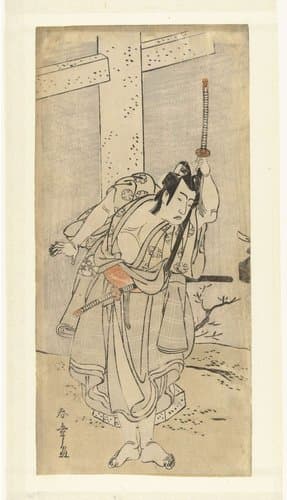
Acteur Bando Mitsugoro I in de rol van Umeomaru
Medium
color woodcut
Dimensions
315; 151
Rights
Public Domain
About this artwork
kleurenhoutsnede; lijnblok in zwart met kleurblokken
Art Historical Context
Step into the vibrant world of 18th-century Japanese theater with Katsukawa Shunsho's *Acteur Bando Mitsug I in de rol vanomaru* (1779), a color woodcut print. Shunsho, a leading figure in the ukiyo-e tradition—meaning "pictures of the floating world"—specialized in yakusha-e dynamic portraits of kabuki actors Here, the renowned performer Bando Mitsugoro embodies the dramatic role of Umeomaru, capturing a moment of intense expression amid the theatrical flair of Edo-period Japan. This narrow vertical print (315mm × 151mm) exemplifies the meticulous woodblock technique: a black line block outlines the bold contours and flowing robes, while separate color blocks layer vibrant hues like deep reds and blues. Developed in the late 1700s, this nishiki-e (brocade picture) process allowed affordable mass production, making art accessible to everyday viewers and fueling ukiyo-e's popularity. Culturally, such prints preserved kabuki's star power, blending artistry with entertainment. Shunsho's realistic yet stylized faces and poses immortalized fleeting performances, offering museum visitors a window into Japan's theatrical golden age. A true gem of printmaking innovation!