
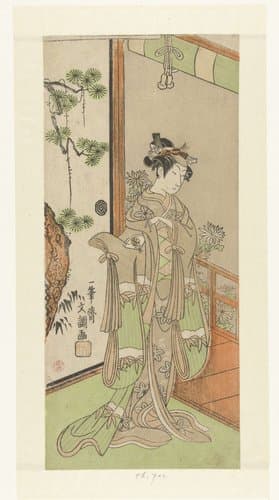
Acteur Onoe Tamizo in vrouwenrol
1768 - 1772
Medium
color woodcut
Dimensions
304; 136
Rights
Public Domain
About this artwork
blad: hoogte 304 mm (hosoban) x breedte 136 mm
Art Historical Context
In the vibrant world of 18th-century Japan, Ippitsusai Bunch's *Acteur Onoe Tamizo vrouwenrol* (Actor Onoe Tamizō in a Female Role), created between 1768 and 1772, captures the theatrical glamour of kabuki. This color woodcut print showcases the famed actor Onoe Tamiz, a master onnagata—specialists in portraying women with exquisite grace and emotional depth. Kabuki, born in the Edo period's "floating world" (ukiyo), was a popular spectacle blending drama, dance, and music, where male actors like Tamizō embodied female characters to perfection, reflecting cultural ideals of beauty and performance. Printed in the narrow hosoban format (304 × 136 mm), this intimate half-sheet size was ideal for affordable yakusha-e (actor prints), allowing fans to own a piece of the stage. Bunchô, a leading ukiyo-e artist rivaling contemporaries like Katsukawa Shunshō, employed sophisticated nishiki-e techniques—multi-block woodcuts layered with vibrant pigments for lifelike textures in fabrics, makeup, and expressions. These prints democratized art, fueling a print culture boom. This work highlights kabuki's cultural allure and the artistry of gender performance, offering a window into Edo Japan's entertainment heart—a timeless celebration of transformation and star power.