
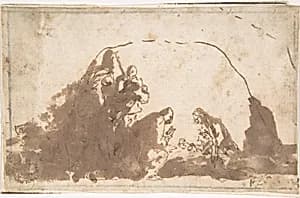
Adoration of the Magi
17th century
Medium
Pen and brown ink and brown wash. Traces of framing line in black chalk.
Dimensions
2 15/16 x 4 11/16 in. (7.4 x 11.9 cm)
Classification
Drawings
Department
Drawings and Prints
Museum
Metropolitan Museum of Art, New York, NY
Credit
Gift of Cornelius Vanderbilt, 1880
Accession Number
80.3.450
Rights
Public Domain
Tags
Art Historical Context
Nestled in the Metropolitan Museum of Art's Drawings and Prints collection, this 17th-century Dutch drawing, *Adoration of the Magi captures a timeless biblical scene: the three wise men presenting gifts to the infant Jesus, Mary, and Joseph. Created anonymously during the Dutch Golden Age—a period of artistic flourishing despite Protestant restraint on religious imagery—this small work (just under 3 by 5 inches) exemplifies the intimate, preparatory sketches favored by artists of the era. Gifted to the Met in 1880 by Cornelius Vanderbilt, it reflects the era's collecting passion for Old Master drawings. Executed in pen and brown ink with brown wash, and subtle traces of a black chalk framing line, the piece showcases virtuoso techniques of the time. The fine ink lines define figures and drapery with precision, while the wash adds depth and shadow, evoking a soft, atmospheric glow around the holy family. Such methods were ideal for studies, possibly for larger paintings or engravings, highlighting Dutch mastery in monochrome media. This artwork's cultural resonance lies in its enduring motif, symbolizing universal reverence for Christ across centuries of European art. Though anonymous, it embodies the anonymous yet skilled draftsmen who fueled the Netherlands' artistic legacy, inviting visitors to appreciate the quiet power of a humble sketch.