
Adze
Unknown Artist
Medium
Nephrite
Dimensions
H. 2 1/8 in. (5.4 cm); W. 1 3/8 in. (3.5 cm); D. 7/16 in. (1.1 cm)
Classification
Jade
Culture & Period
North America (Alaska, Diomede Island) · Prehistoric
Department
Asian Art
Museum
Metropolitan Museum of Art, New York, NY
Credit
Gift of Heber R. Bishop, 1902
Accession Number
02.18.255
Rights
Public Domain
Art Historical Context
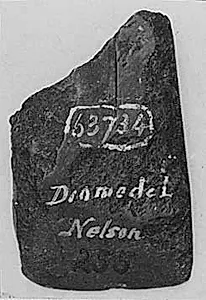
This petite nephrite adze,ailing from prehistoric Diomede Island in Alaska exemplifies the ingenuity of North American Arctic cultures. Measuring just over 2 inches tall, this handheld woodworking tool—used for shaping wood by striking with a handle attached perpendicular to its blade—reflects the daily lives of ancient peoples in a harsh environment. Donated to the Metropolitan Museum of Art in1902 by Heber R. Bishop, it resides in the Asian Art department hinting at intriguing cultural connections across the Bering Strait. Crafted from nephrite, a dense and exceptionally tough form of jade, the adze showcases masterful prehistoric stoneworking techniques. Nephrite's durability made it ideal for tools enduring rigorous use, and its smooth, polished surfaces suggest skilled grinding and abrasion methods honed over generations. At such a compact size (2 1/8 x 1 3/8 x 7/16 inches), it was perfectly suited for precision tasks like carving canoes or tools essential for survival. This artifact offers a window into prehistoric North American ingenuity, where functional objects doubled as testaments to material mastery and cultural resilience. Its presence in a world-class collection underscores the global threads linking Arctic traditions to broader jade-working legacies.