
27/40
1612
Medium
etching
Dimensions
206; 185
Rights
Public Domain
About this artwork
plaatrand: hoogte 185 mm x breedte 206 mm
Art Historical Context
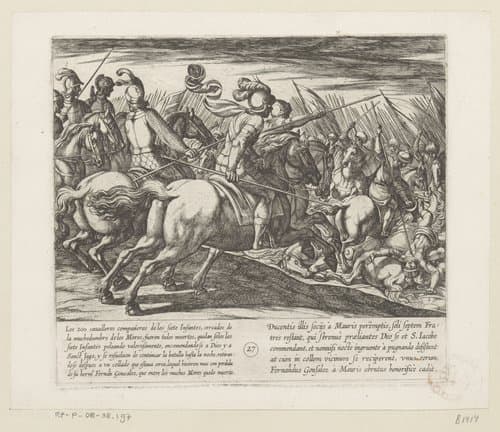
Antonio Tempesta's *27/40* (1612) is a finely crafted etching, measuring 185 mm high by 206 mm wide—compact yet intricate, perfect for collectors' albums of the era. As the 27th plate in a series of 40, exemplifies Tempesta's prolific output as a leading Italian printmaker active in early 17th-century Rome Born in Florence around 1555, Tempesta bridgedism and the emerging Baroque, collaborating with patrons like the Medici family to produce dynamic scenes from mythology, hunts, and biblical narratives. Etching, Tempesta's favored medium, involved drawing into a wax ground on a copper plate with acid biting the lines, allowing for fluid, expressive marks that captured movement and texture with remarkable precision. This technique democratized art, enabling affordable reproductions of his vivid compositions to circulate across Europe. In 1612, amid the Catholic Church's push for visually compelling imagery during the Counter-Reformation, Tempesta's prints served both decorative and devotional purposes, blending artistic virtuosity with cultural resonance. Visitors will appreciate how this modest plate invites close inspection, revealing the artist's mastery in evoking drama within a small frame—a testament to printmaking's golden age.
About the Artist
Antonio Tempesta · 1555–1630
Antonio Tempesta (1555–1630), known as 'Il Tempestino,' was a Florentine painter and printmaker whose extraordinary output of approximately 1,700 etchings made him one of the most influential printmakers of the early Baroque period. Born in Florence and trained under Santi di Tito and the Flemish master Joannes Stradanus, he enrolled in the Accademia del Disegno in 1576 before relocating to Rome i...