
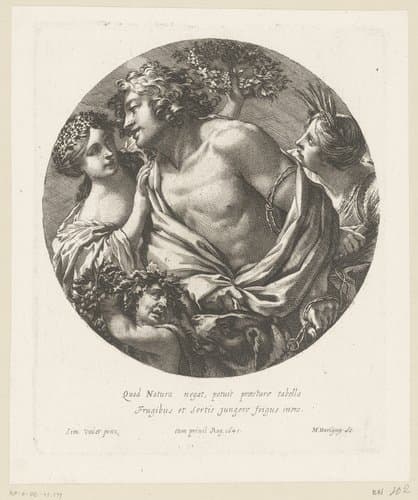
Allegorische voorstelling over de natuur
1645
Medium
engraving
Dimensions
194; 234
Rights
Public Domain
About this artwork
collector's mark: Lugt 2228
Art Historical Context
### Allegorische voorstelling over de natuur (Allegorical Representation of NatureCreated in 1645 by French Michel Dorigny, this engraving exemplifies the Baroque era's fascination with allegory, where nature is personified to convey deeper philosophical or moral ideas. Dorigny, a skilled painter and engraver who trained in Rome under his father Nicolas Dorigny and collaborated with masters like Pietro da Cortona, often drew from classical mythology and emblematic traditions. Measuring 234 mm high by 194 mm wide, the intimate scale suits the medium's precision, allowing for intricate details that would have captivated 17th-century collectors and scholars across Europe. As an engraving, the work highlights a key artistic technique of the time: intaglio printing, where Dorigny's burin carved fine lines into a copper plate, inking them to produce rich, tonal contrasts. This method revolutionized art dissemination, making elaborate Baroque compositions accessible beyond oil paintings. The allegorical theme reflects the period's blend of science and symbolism—nature as a nurturing force or divine gift—echoing emblem books and vanitas motifs popular in the Dutch and French circles Dorigny influenced. Bearing the collector's mark Lugt 2228 (attributed to Dutch noble Comte Isaac de Bruyn, 1748–1814), this print boasts a storied provenance, linking it to Enlightenment-era connoisseurs who prized such works for their intellectual depth. A window into 17th-century imagination, it invites visitors to ponder nature's timeless mysteries. (198 words)
About the Artist
Michel Dorigny · 1616–1665
French painter. Comment on works: Painter; History; Portrait; Engraver; Religious; Mythology; Draughtsman